
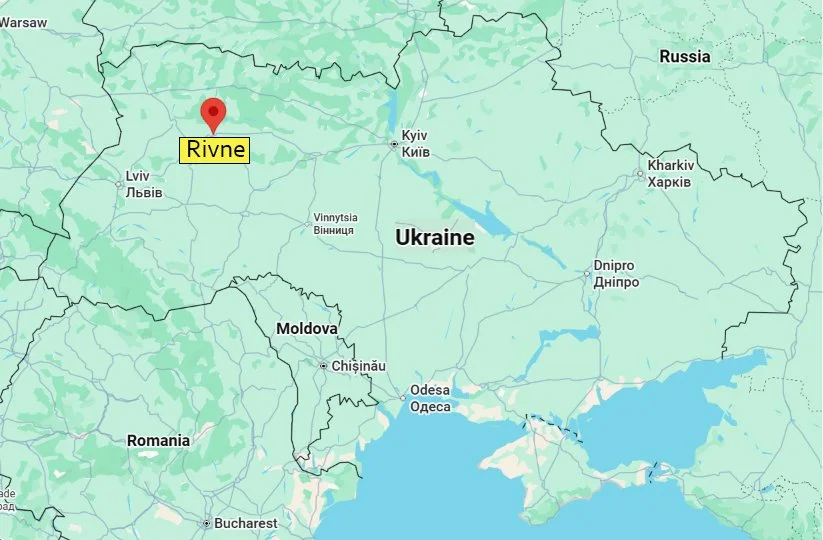
This INSIDE UKRAINE story is from THE CITY OF Rivne.
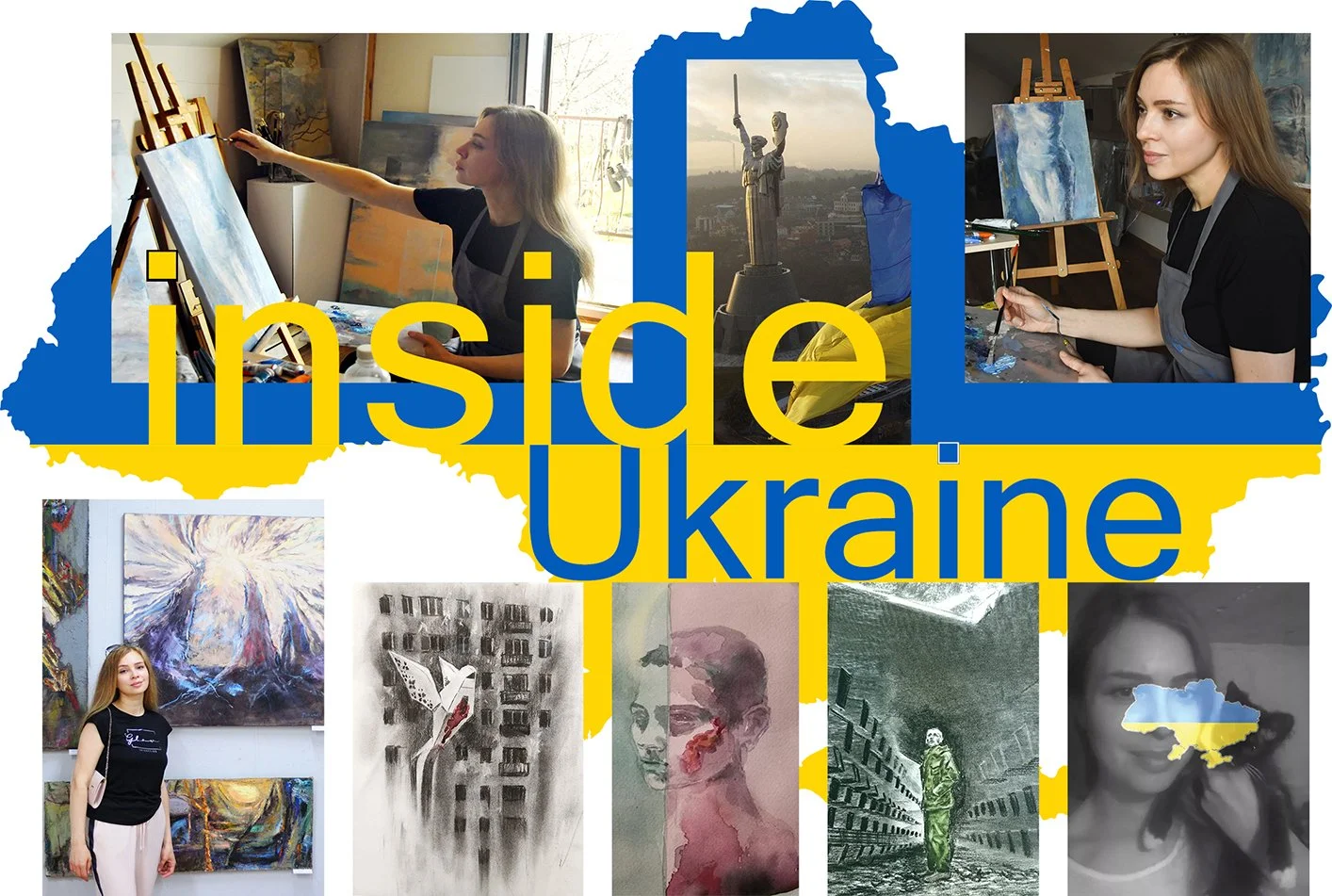
* All images and answers in the feature were provided by the WOW Woman, unless otherwise specified.
INSIDE UKRAINE SERIES: A SNAPSHOT, A DAY-IN-THE-LIFE, A GLIMPSE OF WHAT IT’S LIKE TO LIVE, RESIST, SURVIVE AND PERSEVERE IN A NATION UNDER ATTACK.
GLORY TO THE UKRAINIAN WOW WOMEN, for SUPPORTING THEIR COUNTRY AND BRINGING UKRAINE CLOSER TO VICTORY.
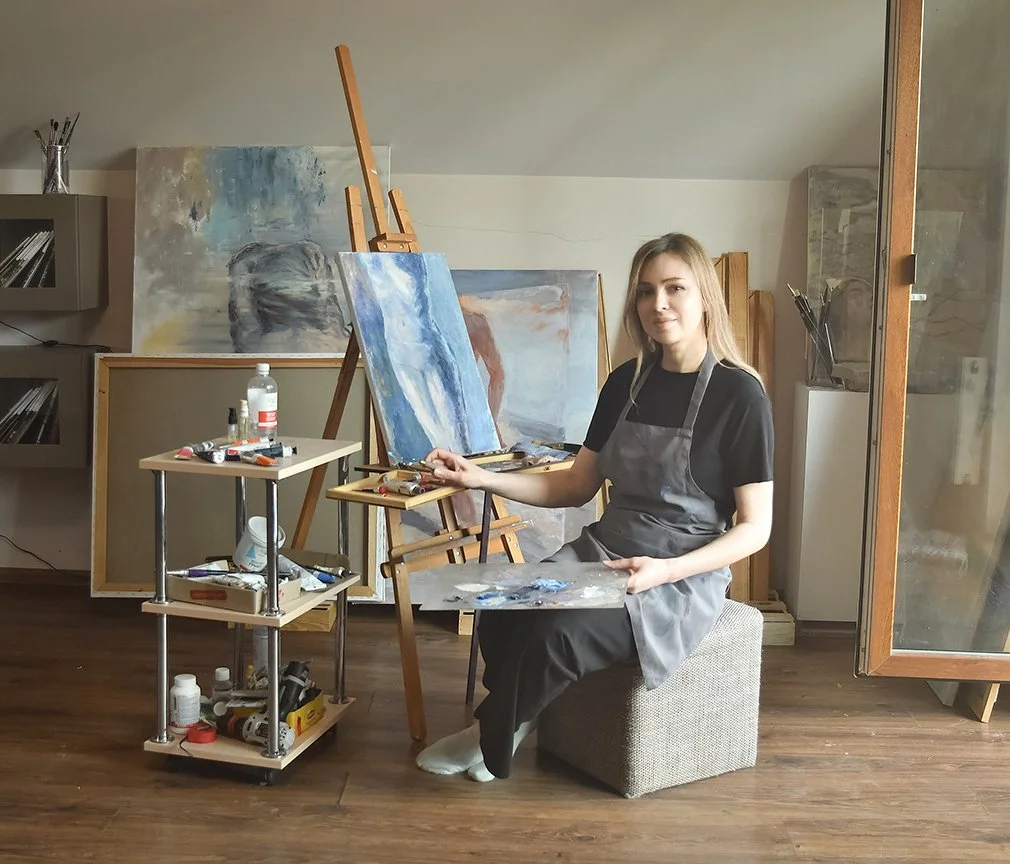
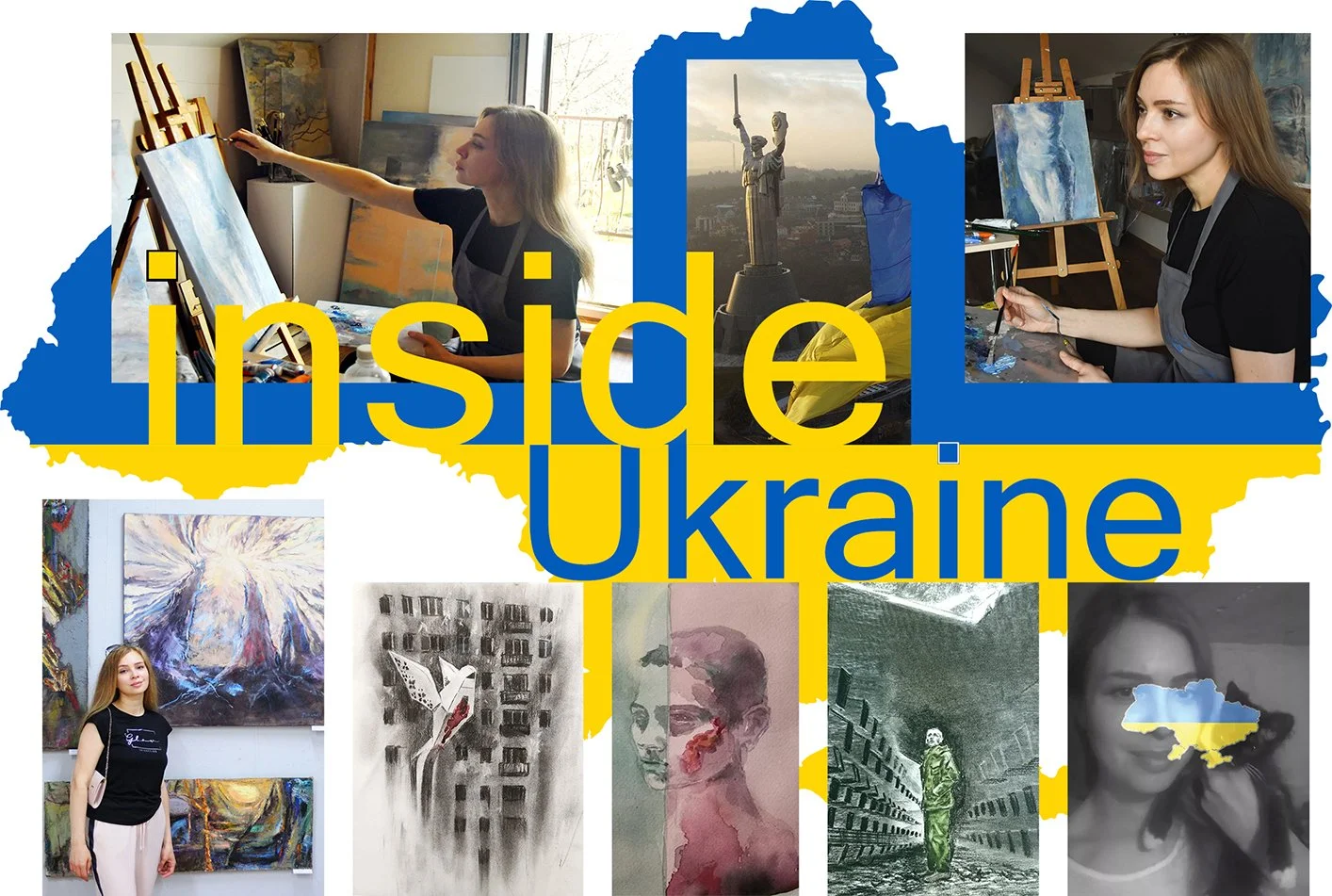
The night before russia’s full-scale invasion, Olga Polianska was in her Rivne studio finishing an oil abstraction of flowers. At 4 a.m. she heard the rumble in the sky and knew. After spending three weeks sleeping in a basement, Olga felt the pull to return to work. Only her hands would no longer reach for oils. They reached for charcoal instead. Creating under conditions of war must be a maddening experience, as the need to express oneself competes daily with fear, anger and loss. Yet four and a half years into the full-scale war, Ukrainian artists continue to paint, sculpt, write and perform. They process trauma not only for themselves, but for the entire nation. Their work becomes evidence, therapy, resistance and hope, all at once.
Invaders always come for culture first. They loot museums, bomb theaters, censor books, ban music and kill artists. That has been the pattern of russian aggression in Ukraine. They know perfectly well what history keeps proving: art is how a nation under attack refuses to disappear. Picasso's Guernica made a bombed Basque town impossible to forget or deny. Vedran Smailović, the Cellist of Sarajevo, played Adagio in G minor for 22 consecutive days after civilians were killed while waiting in a breadline. Snipers couldn't stop him.
Ukraine's artists are doing this work right now and paying for it. Olga remembers the 26-year-old painter Oleh Drobotsky, killed at the front, and Kostya Yuzvyuk, the volunteer who bought her war series to spread it abroad and was killed on a mission in 2024. Olga keeps painting anyway. She keeps organizing exhibitions and sheltering rescue animals (five cats, two dogs, and counting), because as she puts it, Ukrainians are like grapevines: they cling to a support and hold on to one another so the vine grows upward.
This is Olga Polianska. Artist. WOW Woman. Keeper of Ukraine's wartime experience.
- Olga Shmaidenko, Founder of WOW Woman
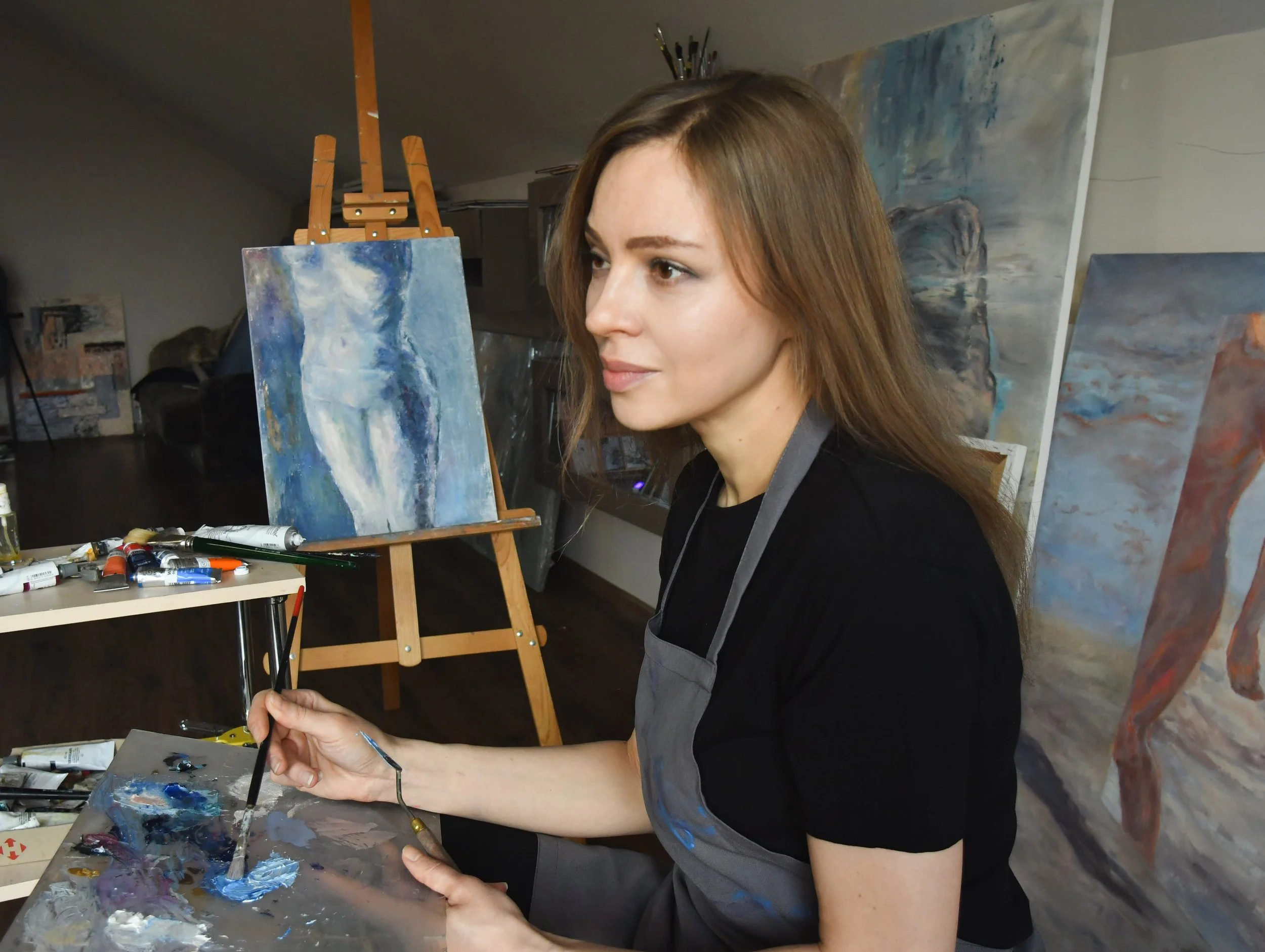
Ukrainian Artist in Rivne
1. Name
Olga Polianska.
2. Where were you born and where do you live now?
I was born in the Lviv region, in the town of Sambir. I live and work in the city of Rivne.
3. What did you train in and what profession do you work in now?
My first degree is in foreign philology; the next one, already in adulthood, I chose by a calling that would not let me go - Fine Art.
4. What did your ordinary day look like before the full-scale war, and how did your life change after the invasion of Ukraine? What is your typical day like now (if that is even possible)?
Before the full-scale invasion I usually worked in my studio on the second floor. The day before, I had just been finishing an oil abstraction on the theme of flowers.
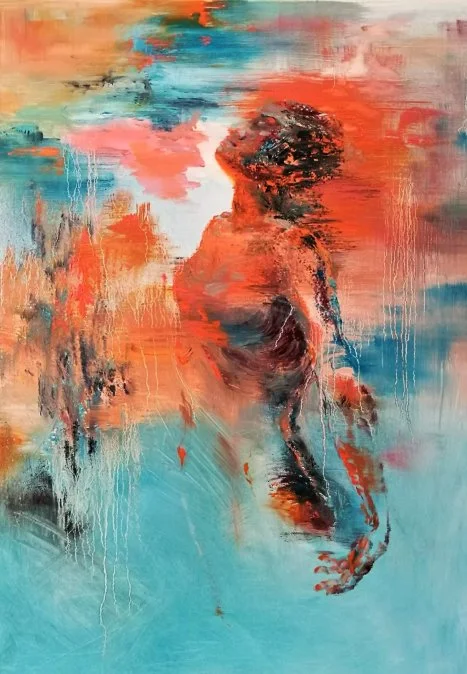
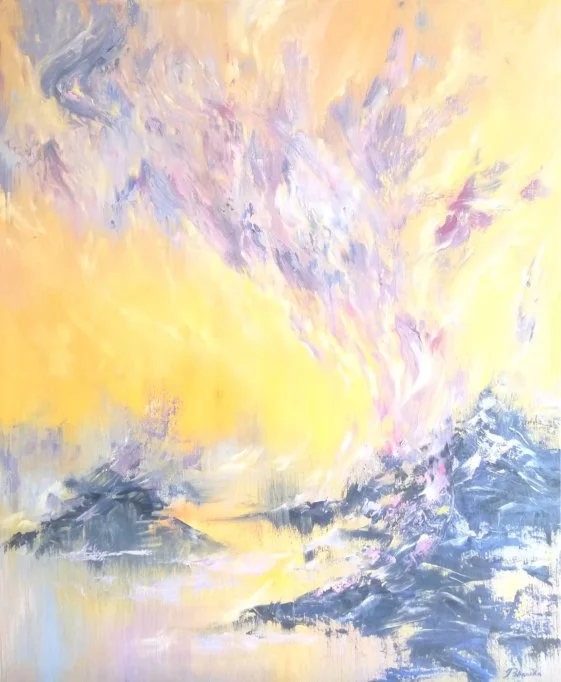
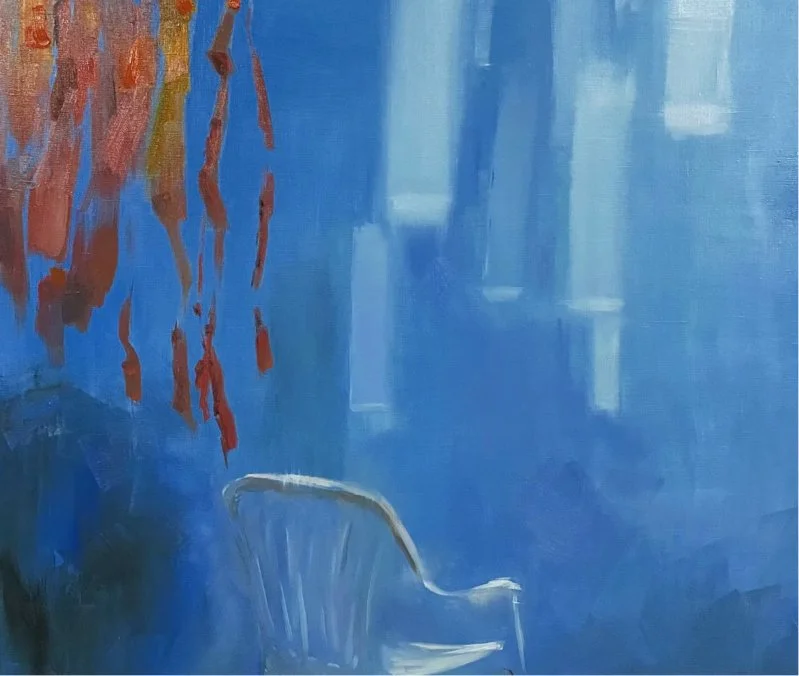
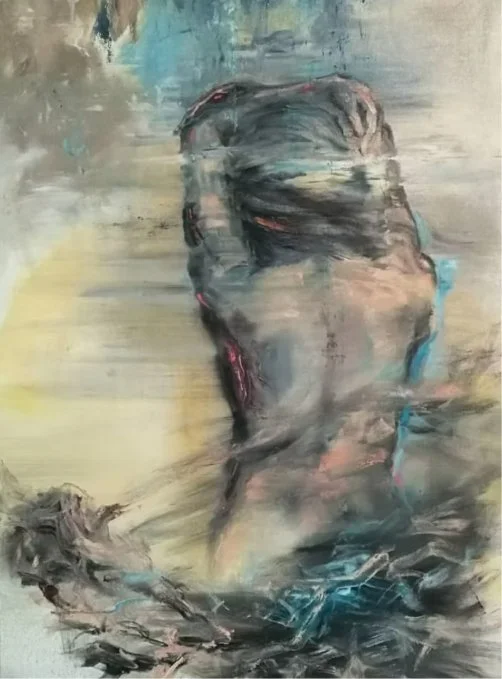
At 4 in the morning I heard a rumble in the sky and understood that the war had begun. The first weeks, of course, there was no talk of painting. The uncertainty, the first shellings and the bombing of the airport. We spent the nights in the basement. About three weeks into a complete stupor, I felt an impulse toward creativity. But it was completely different - instead of my usual oil painting, I was drawn to charcoal, because against the backdrop of those tragic events the associations were with the color black.
“Ukraine Stands”
“The Color of War” Series
That is how the series of graphic works "The Color of War" appeared. It is a reflection on the significant events of that time, such as the destroyed high-rise in the city of Borodyanka, the destruction of the largest airplane in the world "Mriya" (which means “Dream”), the destroyed theater of Mariupol and the shot-up Freedom Alley, the nameless graves of people killed by russia, the sinking of the cruiser "moskva" (moscow), the defender Orest leaving Azovstal.
Works from this series were presented at the international exhibition "The Unbreakable Wall" (or Nezlamna Stina) which was a collaborative mosaic project featured at the Basel Art Center in Switzerland.
"Time of War. Reflections" in Lviv (Dzyga gallery) and "Art of One Caliber" in Rivne (EuroArt gallery).
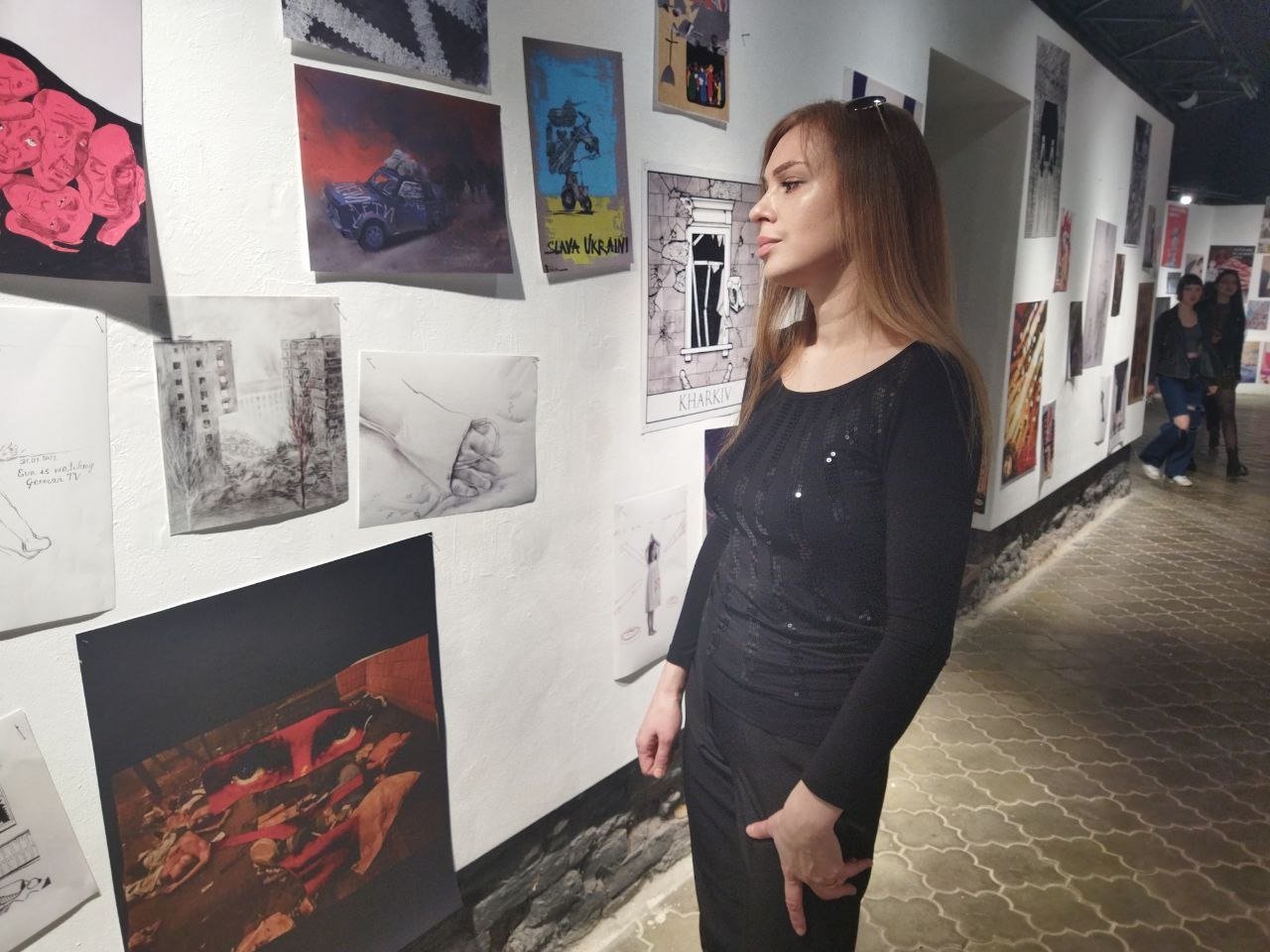
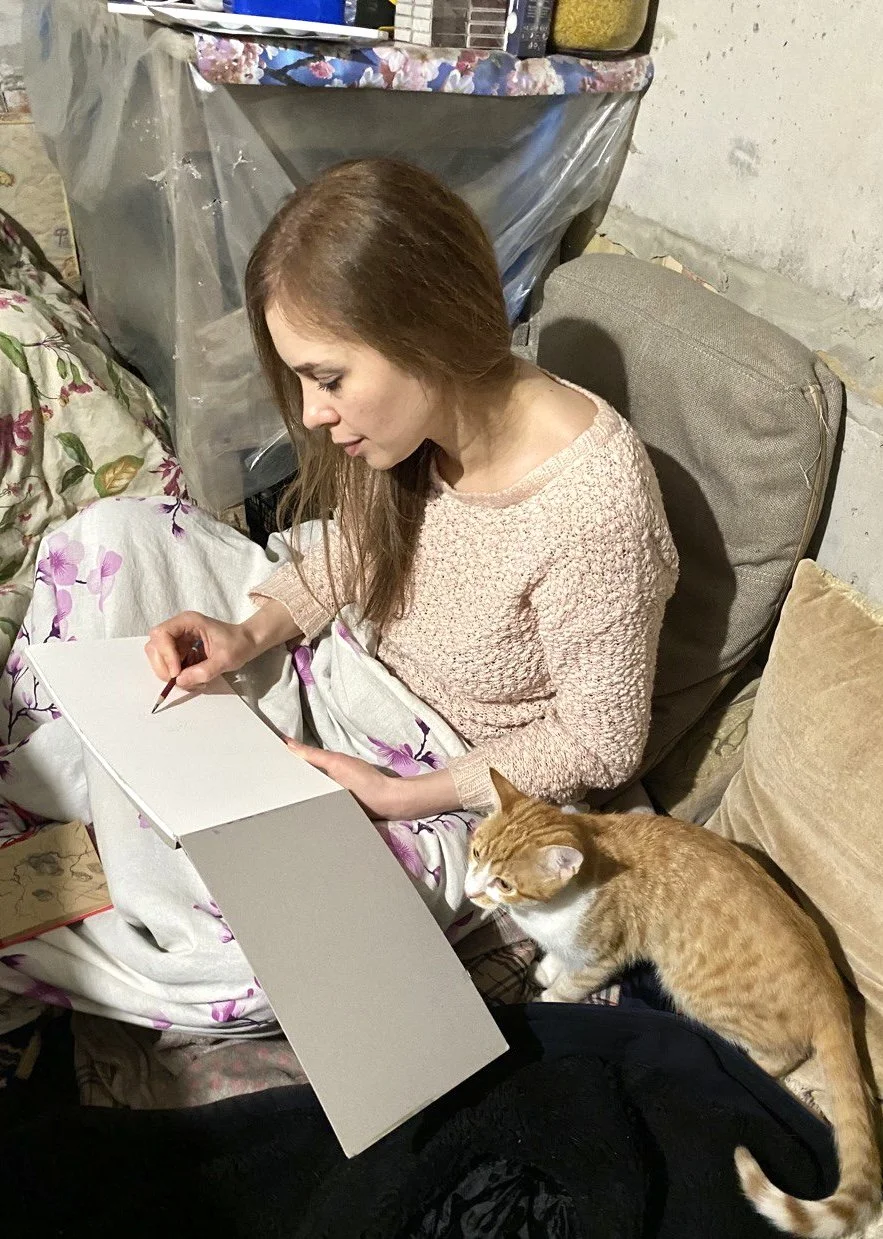
B підвальному сховищі в перші дні війни / In a basement shelter during the first days of the full-scale invasion.
5. What, in your view, are your strengths and superpowers?
Probably, like many Ukrainians, I feel within me resilience and a desire to resist the war, to help our defenders however I can. A desire to change something in this world for the better, whatever is within my power.
I also love animals very much, I help them and give them shelter; right now I have 5 cats and 2 dogs.
6. What specific actions (big or small) have you taken and continue to take to help Ukraine and the Ukrainian people?
I see my role as promoting Ukrainian art, because Ukraine was effectively invisible to the world before russia's invasion. Now we are changing that in real time - our artists and athletes are stepping onto the international stage. They are making the world understand: we are distinctive, independent, with enormous potential in every field. It has always been so, and so it will always be.
I too make my small contribution - my works were presented at international exhibitions dedicated to our struggle in this war, at the CAM museum in Naples, Italy and the Basel Art Center in Switzerland. I also take part in all-Ukrainian exhibitions, not only on wartime themes. Together with my artist friends we organized art events such as several series of exhibitions, "Not Interested" and "Under the Open Sky," collecting donations and popularizing art.
You may not have a world-famous name, but if people want to buy your work, to contemplate it and one day pass it on as an inheritance, that is already a contribution to the heritage of Ukraine.
7. Could you tell other artists abroad what it is like to be an artist in a time of air-raid sirens, how the war affects your work and your views on the future?
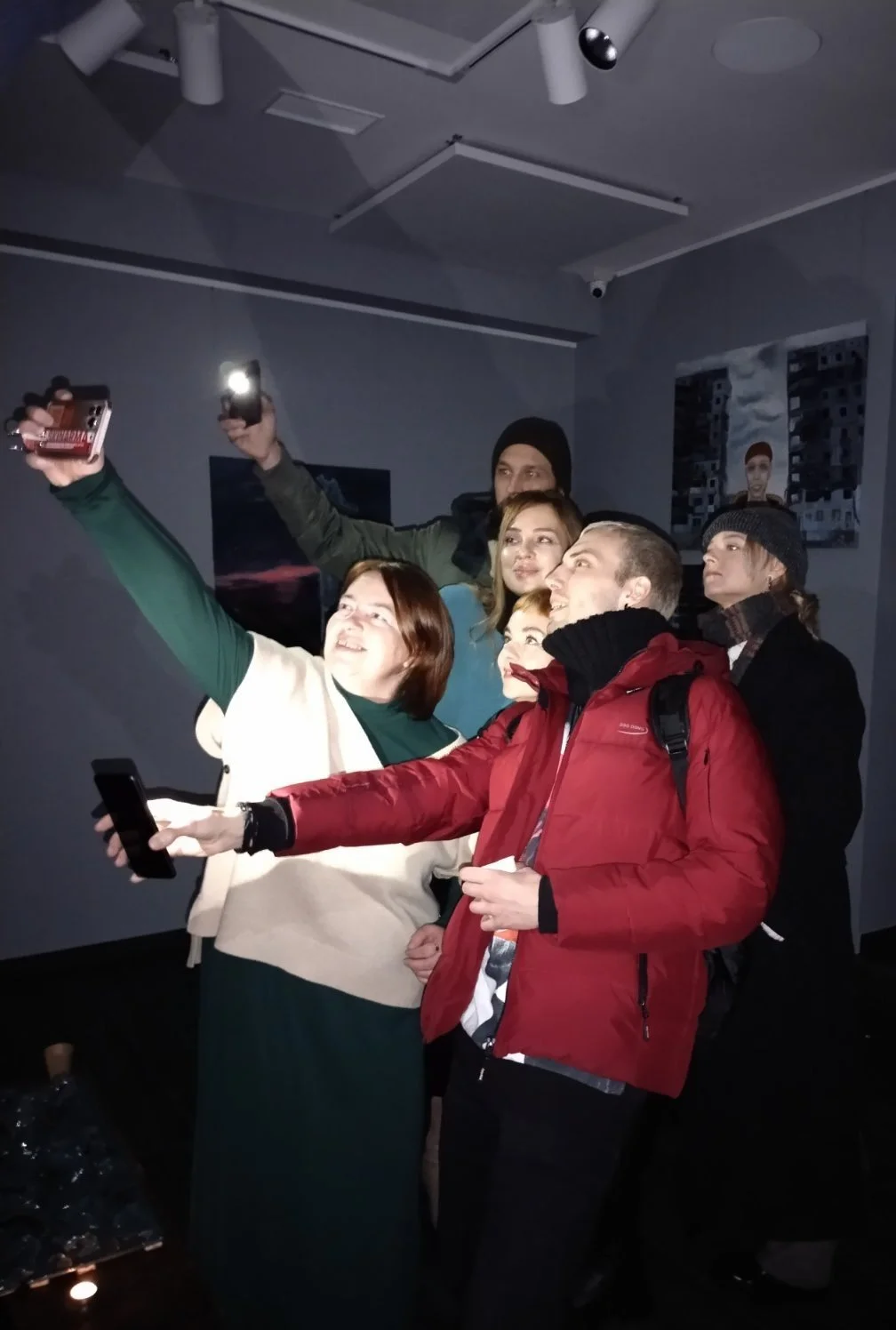
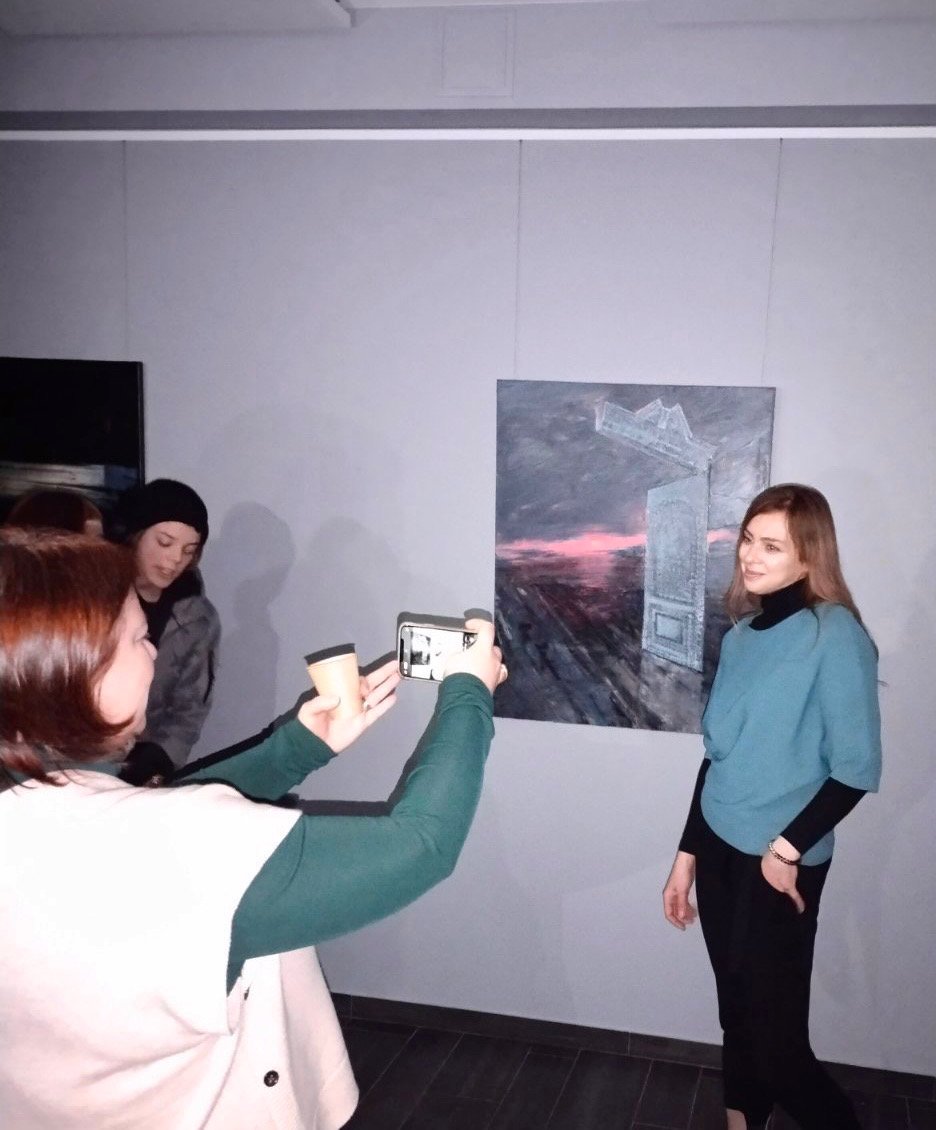
Let me tell one incident, a telling one in my view. In the winter of 2022 my work was to be presented at the gallery "Imagine point" in Kyiv, and on the morning of the opening a russian missile struck in that district. We simply could not get through to the gallery. Finally, I managed to ask the folks at the gallery: “How are you? Will the opening happen?" I received a cheerful answer: "Of course, as long as we have not been hit, we will keep working!" I made it to the art space; it was completely dark inside, but the opening took place. People came from different regions; by candlelight and flashlights they opened and held the exhibition.
Such are Ukrainians, our people, our artists, our gallerists. That is why I have no doubt that our resilience will always serve us well.
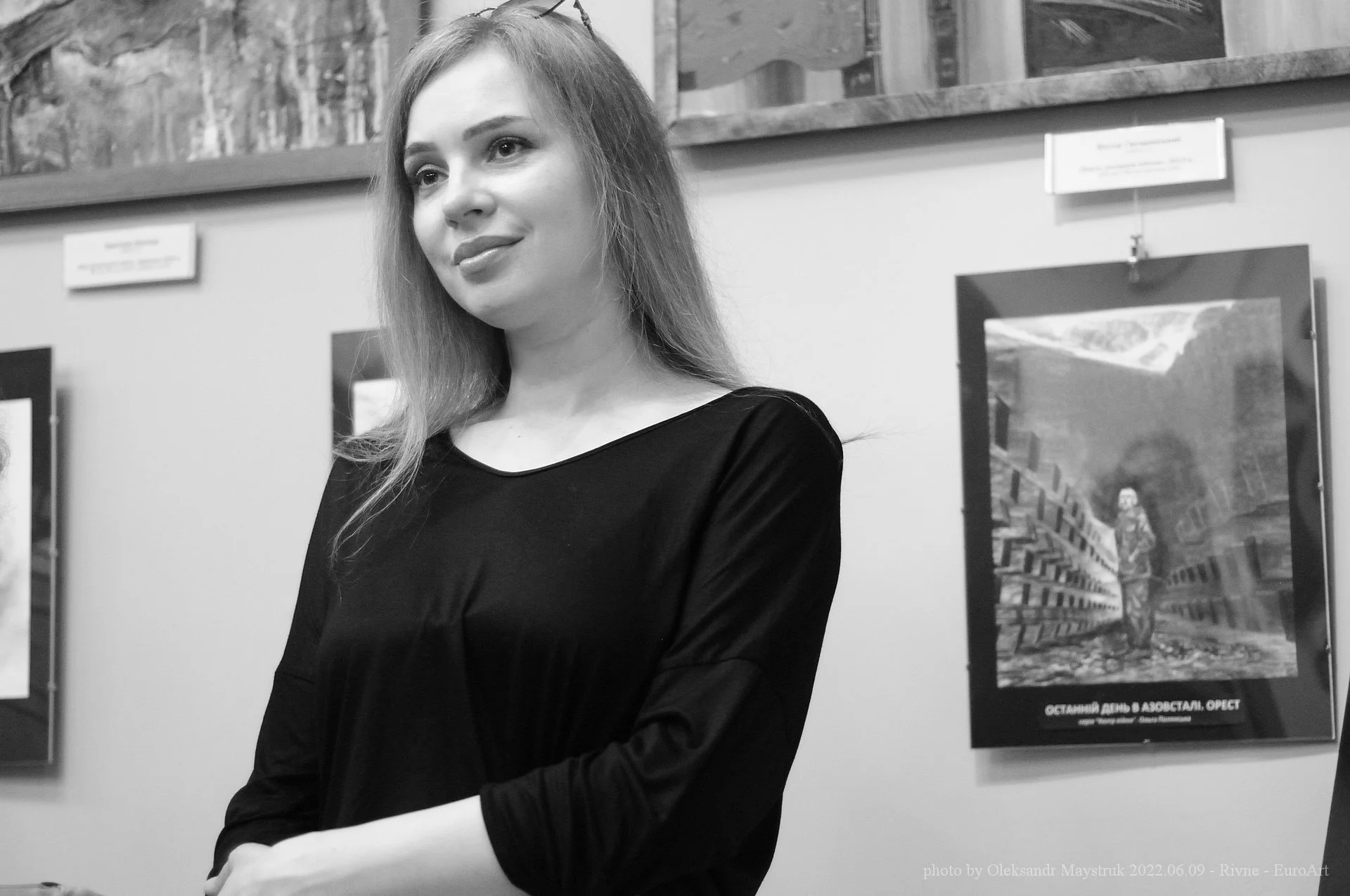
8. How do art and war coexist?
Here I want to speak about the tragedy of that coexistence. When you look at the paintings of the 26-year-old Lutsk artist Oleh Drobotsky, and you realize that he died in the war, it becomes unbearably bitter. And not only him, there are hundreds of talented people.
The same with the volunteers who spread art. Our Kostya Yuzviuk, a 23-year-old Ukrainian soldier, drone operator, and animal rights volunteer, was killed in a hospital on July 18, 2024, after sustaining severe injuries from cluster munition shelling. In 2022 he bought my series of works "The Color of War" at a charity exhibition in order to spread it abroad. And in 2024 Kostya died on one of his volunteer missions.
Such losses are heartbreaking, yet at the same time they inspire us to keep moving forward and not give up on our shared resistance.
Oleh Drobotsky
Born October 29, 1996. Killed by russia on March 6, 2023.
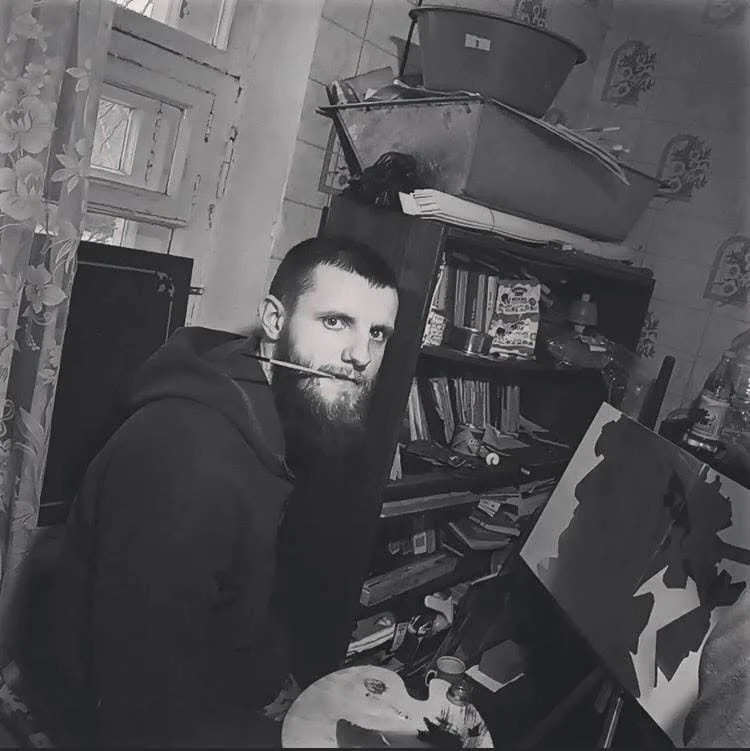
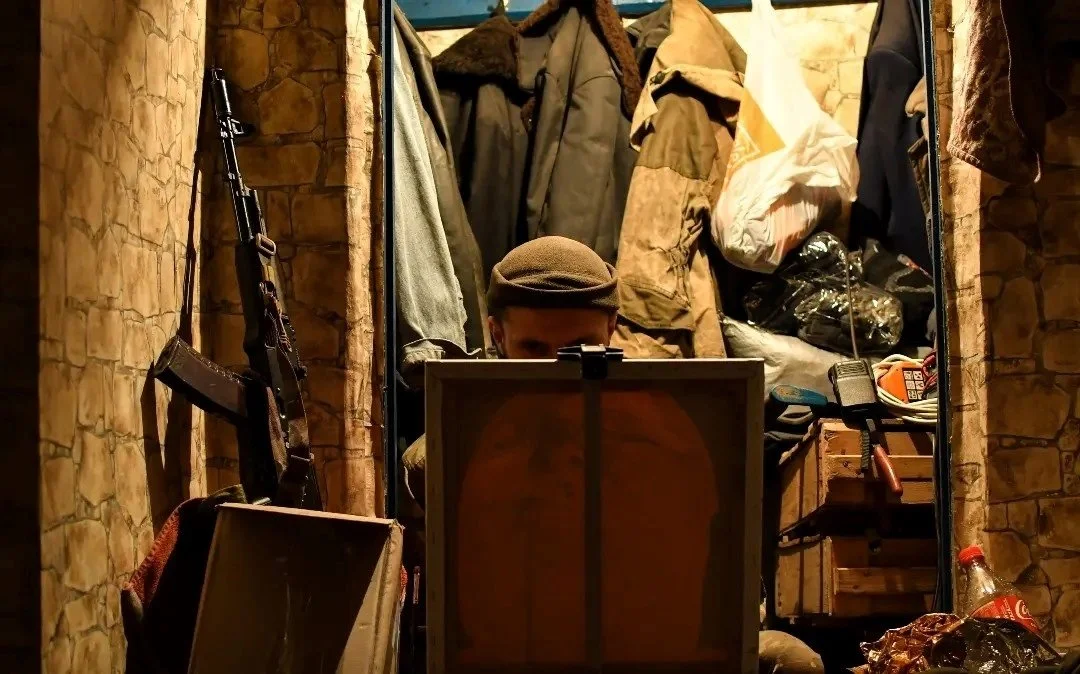
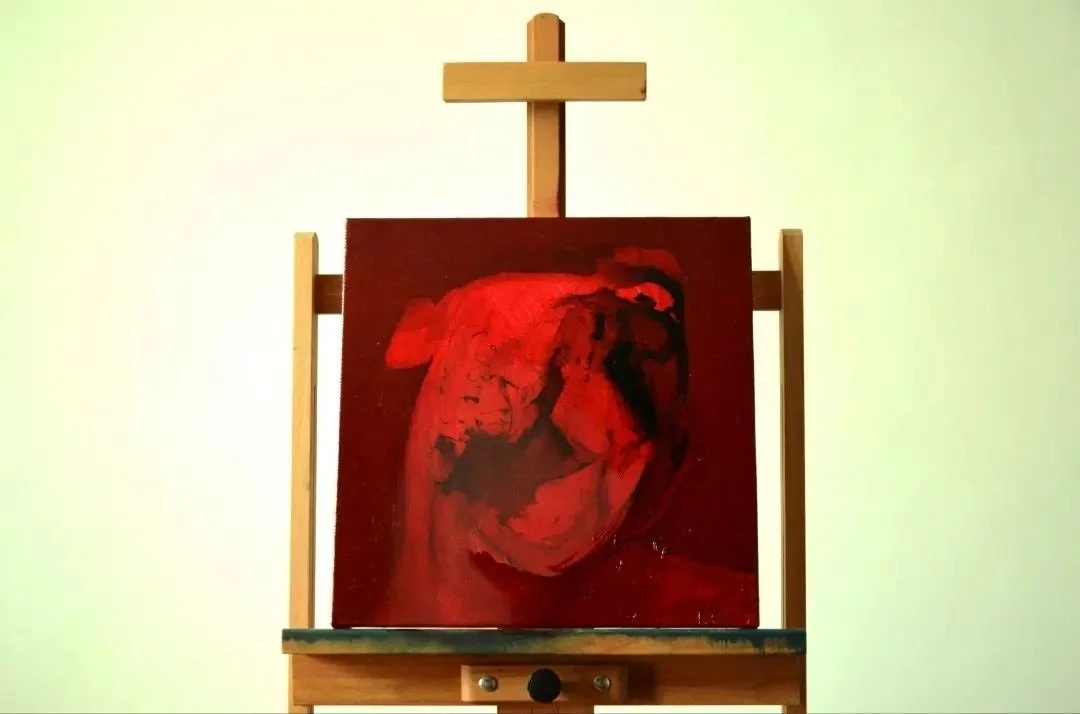
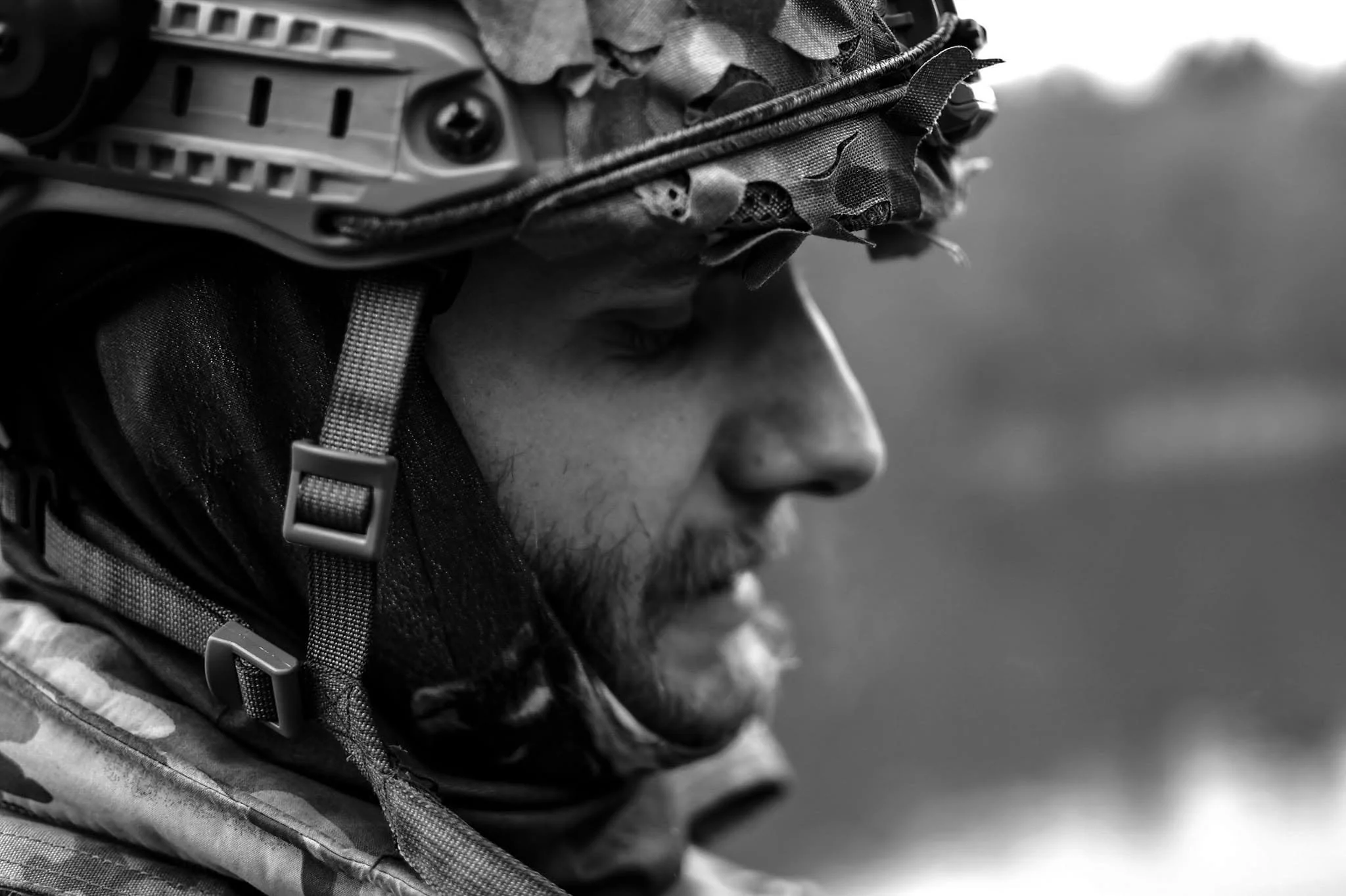
Image source: Oleh Drobotsky Facebook page and Wikipedia page.
Kostya Yuzviuk
Born October 20, 2000. Killed by russia on July 18, 2024.
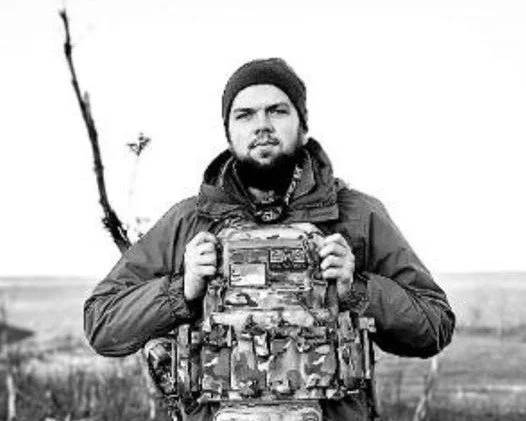
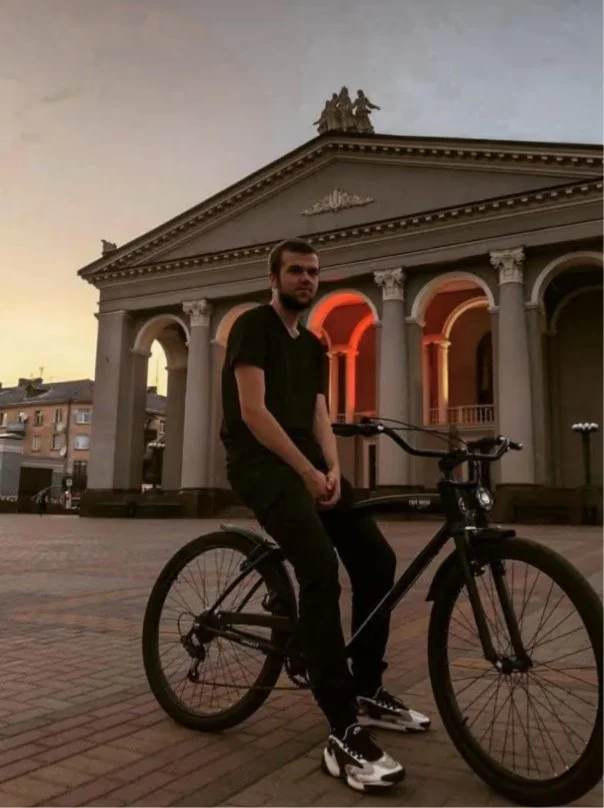
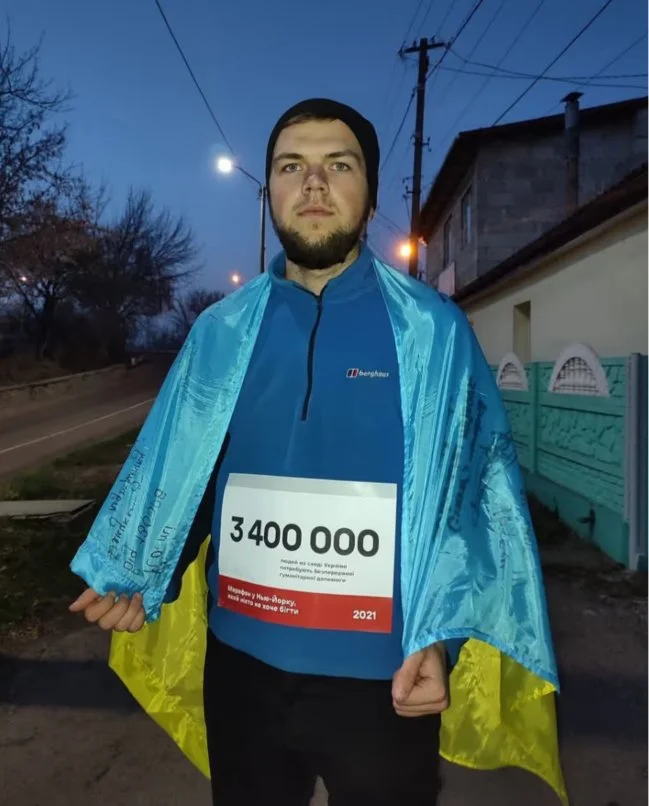
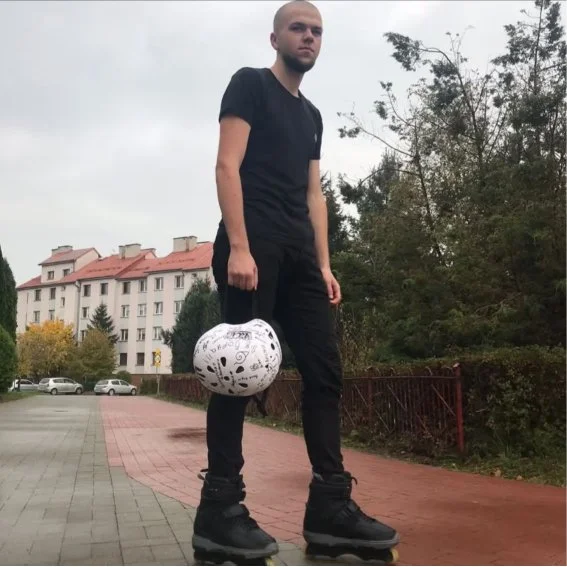
Image source: Heroes Tribute.
9. How do you take care of yourself? Is it even possible to stay morally stable in conditions of war? What exactly helps you pull yourself back together?
Probably few Ukrainians manage without magnesium right now :) But seriously - sometimes it is hard to take it all in, neither the mind nor the heart can accept all this surrealism in real life. But the understanding that I am a support for someone keeps me from sliding into despair. We are like grapevines, we cling to a support and hold on to one another so that the vine can grow upward.
10. Do you feel the war has changed you? In what way? Did you surprise yourself (in how you held on, stayed strong, found inspiration in unexpected sources, and so on), in your country, in your ideas about humanity, in your attitude to the world? What was a revelation for you?
The war strengthened in me the sense of myself as part of a distinctive nation. And I notice this in many people - at last a real gravitation toward our own authentic things has emerged. People are interested, for example, in the origin of this or that ornament on embroidered shirts, they study old songs, they rediscover significant figures among Ukrainian public figures, they read blogs devoted to Ukrainian history and traditions.
And Ukrainians themselves have been a discovery for me and do not stop surprising me - this winter showed how resilient and unbreakable we can be. And at the same time not lose our sense of humor even in the hardest moments. Probably nowhere in the world is there a precedent of people, under shelling, holding street festivities in 20 degrees of frost (-20°C (-4°F)), when the water freezes in the tap in their apartments and the radiators turn to ice. Yet we find a way to warm ourselves in body and soul.
Likewise Ukrainians, despite the shelling, keep doing their work, and how many people have started a new venture, opened a production, often precisely with Ukrainian themes, whether Ukrainian jewelry, authentic clothing, or a woodworking workshop. It is inspiring.
11. What do you want the world to know about Ukrainians right now? About Ukrainian women?
We are unbreakable. Our women form an invisible front that supports and empowers our defenders. They volunteer and donate, knit protective camouflage nets and prepare food, and gather whatever is needed by the military. Women are also fighting on the front lines themselves. My artist friend Katya is currently serving in the military.
12. Which WOW women inspire you?
I’m always captivated by women who are passionate about what they do; that energy is contagious. And also women who have survived captivity. Medical professionals who save lives, female soldiers who defend our country, and volunteers who support the troops on the front lines.
13. What place or activity makes you happiest?
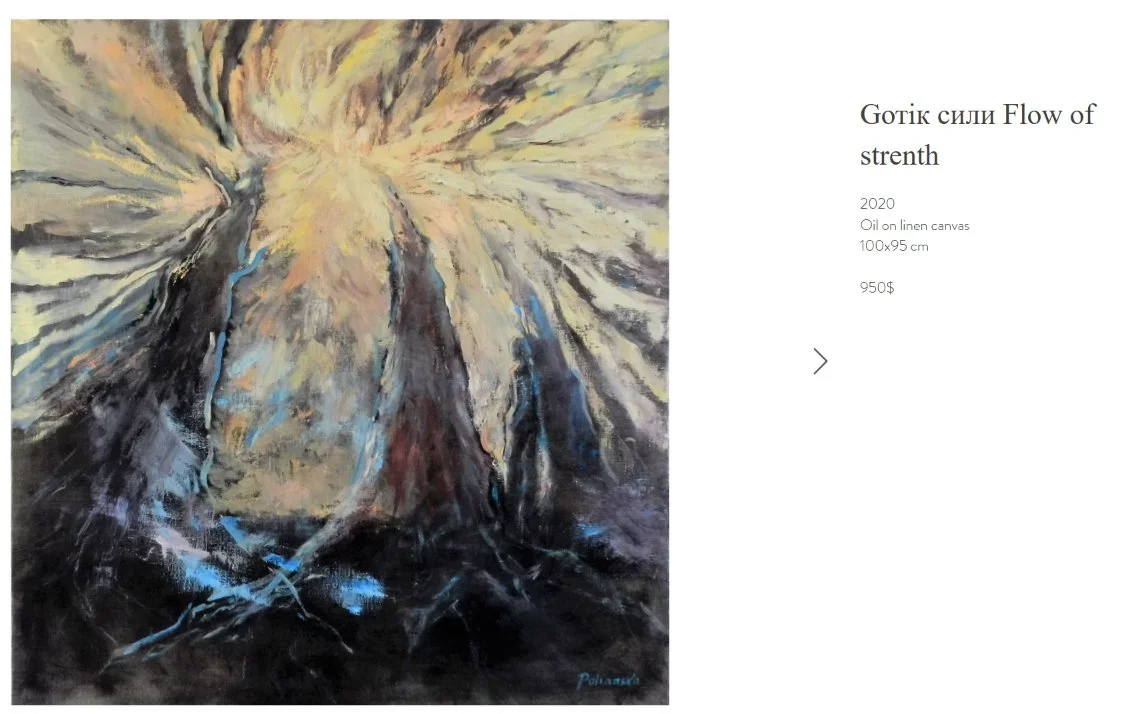
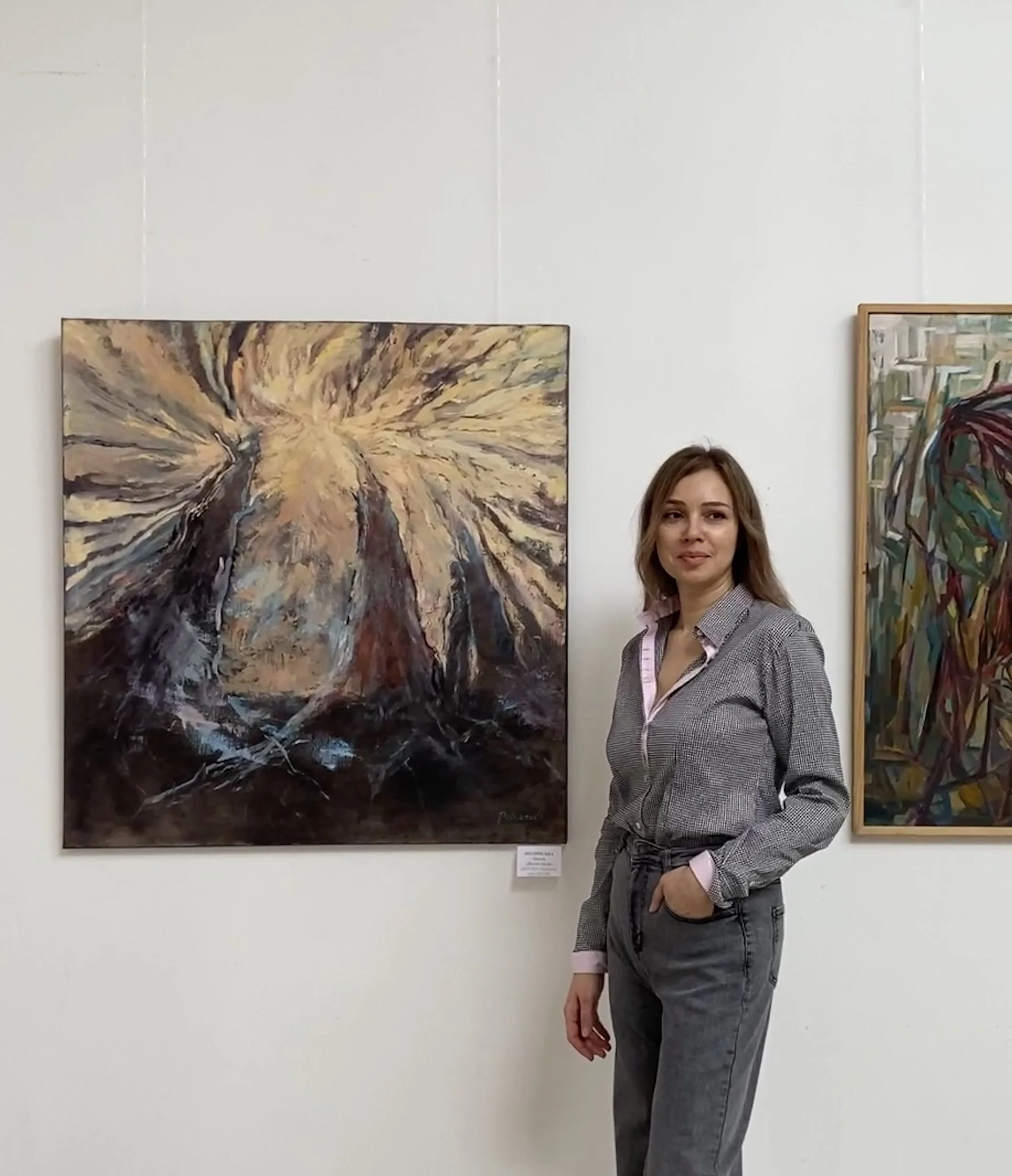
Drawing and nature. I’ve discovered that I have some kind of connection to the sea. I dream about it, but not as “relaxing on a lounge chair.” No, it’s often an unusual landscape, deserted, sometimes windy and gloomy, like late fall, even though I’ve never been there at that time of year. I suppose this is my place of strength. And also the forest, dense and sunny. I have a piece called “The Flow of Strength.” That’s exactly the theme I tried to convey there.
14. What will you do first when Ukraine wins? What do you dream of for yourself and your family after the war ends? Will you relax? Travel?
I’ll finally feel like I’m truly living. Right now, it’s more existence than life. Of course, I’ll plan trips to famous places and to the sea, because I really regret that our family hasn’t traveled for seven years. My children’s childhood passed without these wonderful experiences. It’s simply a childhood stolen by russia.
15. In your opinion, how do russians as a people differ from Ukrainians? Were we aware of these differences before the full-scale conflict? Were we in a state of denial?
The difference is significant: Ukrainians are a freedom-loving people who have always risen up against oppression. Whether we succeeded or not, we never bowed our heads. Russians are a submissive mass for whom it is easier to obey authority than to have their own opinions and free will. They also possess an arrogance and cruelty born of imperialist ambitions. Before the full-scale invasion, most of us didn’t pay attention, but unfortunately, the price of that realization has been extremely high for us.
16. Do you feel that the people who left Ukraine during the wave of departures in 2022, or those Ukrainians who have already lived abroad for years, have some responsibility toward the homeland?
I am certain that even far from Ukraine every Ukrainian, consciously or unconsciously, feels their roots. This shows itself especially over the years, when you see something of your own in an embroidered ornament, or hear a native motif in some melody. As for responsibility, that is each person's own decision. It is wonderful when our people feel a connection to their nation and, where possible, help Ukraine. Special honor to them.
Some Ukrainians left simply to save their lives and continue their family line - and that too is a contribution to our genetic code. It happens that their children or grandchildren feel that Ukrainian little bell and follow its ringing.
17. Where can others find information about you / your activity? (link to website, social media pages, etc.)
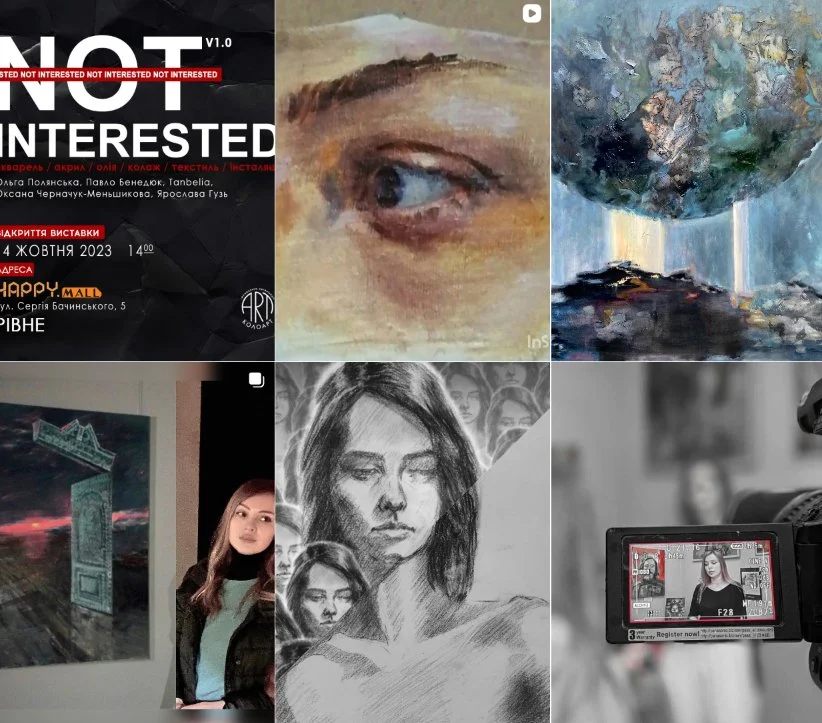
Instagram: @polianska.artist
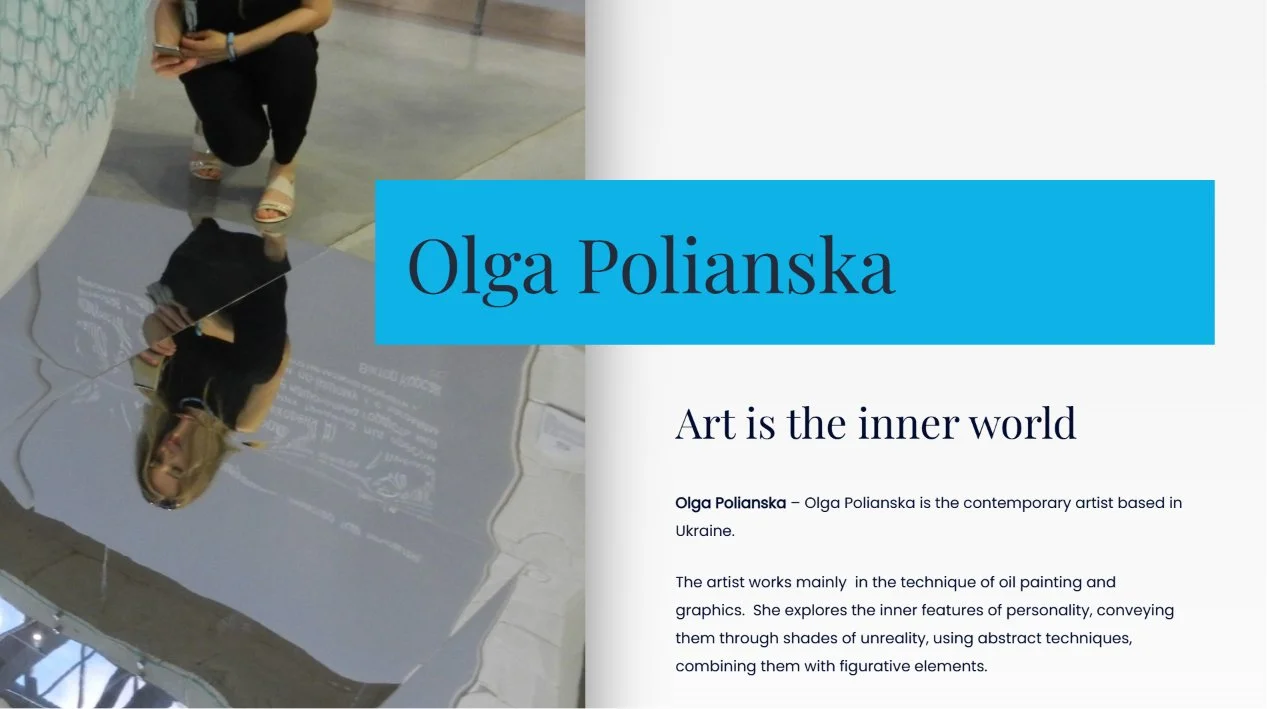
Website: olgapolianska.com
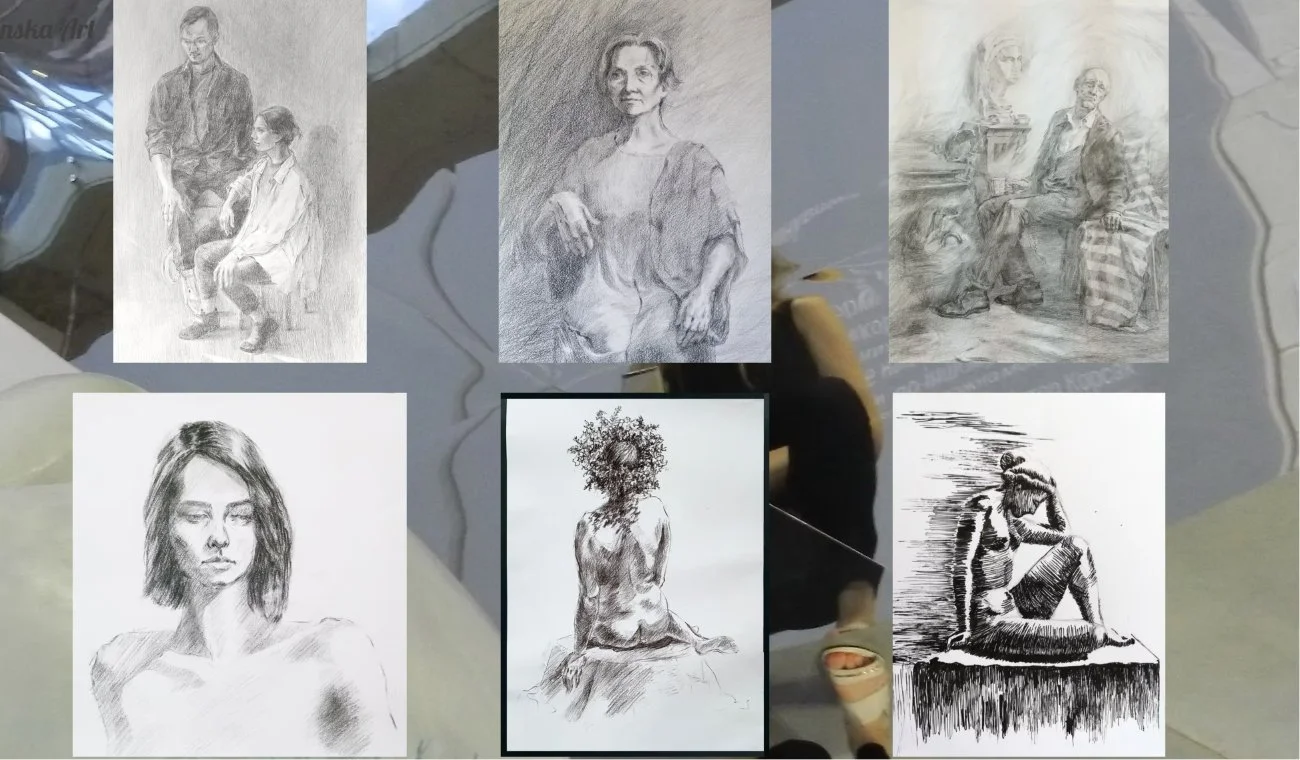
Olga Polianska Art: polianska.wixsite.com/arts
Ця «INSIDE UKRAINE» історія з міста Рівне.
* Всі фотографії та відповіді в матеріалі були надані WOW Woman, якщо вказано інакше.
СЕРІЯ INSIDE UKRAINE/ВСЕРЕДИНІ УКРАЇНИ: МОМЕНТАЛЬНИЙ ЗНІМОК, ОДИН ДЕНЬ З ЖИТТЯ, ПОГЛЯД НА ТЕ, ЯК ЦЕ - ЖИТИ, ЧИНИТИ ОПІР, ВИЖИВАТИ І НЕ ЗДАВАТИСЯ В КРАЇНІ, ЯКА ПЕРЕБУВАЄ ПІД ЗАГРОЗОЮ.
СЛАВА УКРАЇНСЬКИМ ВАУ-ЖІНКАМ, ЯКІ ПІДТРИМУЮТЬ СВОЮ КРАЇНУ І НАБЛИЖАЮТЬ УКРАЇНУ ДО ПЕРЕМОГИ.
Напередодні повномасштабного вторгнення російських військ Ольга Полянська перебувала у своїй рівненській майстерні, завершуючи роботу над абстрактною картиною квітів, написаною олією. О 4-й годині ранку вона почула гуркіт у небі й усе зрозуміла. Провівши три тижні, спаючи в підвалі, Ольга відчула потяг повернутися до роботи. Тільки її руки вже не тягнулися до олійних фарб. Натомість вони тягнулися до вугілля. Творчість в умовах війни, мабуть, є божевільним досвідом, адже потреба самовираження щодня змагається зі страхом, гнівом і втратою. Проте через чотири з половиною роки після початку повномасштабної війни українські митці продовжують малювати, скульптурувати, писати та виступати. Вони опрацьовують травму не лише для себе, а й для всієї нації. Їхні твори стають одночасно свідченням, терапією, опором і надією.
Загарбники завжди насамперед нападають на культуру. Вони грабують музеї, бомблять театри, цензурують книги, забороняють музику та вбивають митців. Саме такою є схема російської агресії в Україні. Вони чітко розуміють те, що підтверджує історія: мистецтво є способом, яким нація, що зазнає нападу, відмовляється зникнути. «Герніка» Пікассо зробила так, що бомбардоване баскське містечко неможливо було забути чи заперечити. Ведран Смайлович, віолончеліст із Сараєво, грав «Адажіо соль мінор» 22 дні поспіль після того, як загинули цивільні особи, які чекали в черзі за хлібом. Снайпери не змогли його зупинити.
Українські митці роблять цю справу саме зараз і платять за це. Ольга згадує 26-річного художника Олега Дробоцького, вбитого на фронті, та Костю Юзвюка, волонтера, який купив її серію робіт про війну, щоб поширити її за кордоном, і був убитий під час виконання завдання у 2024 році. Ольга все одно продовжує малювати. Вона продовжує організовувати виставки та надавати притулок врятованим тваринам (п’ять котів, дві собаки, і їхня кількість зростає), бо, як вона каже, українці подібні до виноградної лози: вони чіпляються за опору й тримаються один за одного, щоб лоза росла вгору.
Це Ольга Полянська. Художниця. WOW Woman. Хранителька воєнного досвіду України.
- Ольга Шмайденко, засновниця WOW Woman
Українська художниця у Рівному
1. Імʼя.
Ольга Полянська.
2. Де ви народилися і де ви зараз живете?
Народилась на Львівщині у м. Самбір. Живу і працюю у м. Рівному.
3. На кого навчались та за якою професією працюєте зараз?
Перша вища освіта – іноземна філологія, наступну вже в дорослому віці обрала за покликанням, яке не відпускало - Образотворче мистецтво.
4. Як виглядав ваш звичайний день до повномасштабного та як змінилася ваше життя після вторгнення в Україну? Який ваш типовий день зараз (якщо це взагалі можливо)?
До повномасштабного вторгнення зазвичай я працювала у майстерні на другому поверсі. Напередодні якраз закінчувала олійну абстракцію на тему квітів. В 4 ранку почула гул в небі і зрозуміла, що почалась війна. Перші тижні, звісно про малювання не йшлося. Невідомість, перші обстріли і бомбардування аеропорту. Ночували в підвалі. Десь через тижні три повного ступору відчула поштовх до творчості. Але він був зовсім іншим – замість звичного олійного живопису, мене потягнуло до вугілля – адже на фоні тих трагічних подій асоціації були з чорним кольором. Так з’явилась серія графічних робіт «Колір війни». Це рефлексія на значимі тогочасні події, такі як зруйнована багатоповерхівка міста Бородянка, знищення найбільшого літака у світі «Мрія», зруйнований театр Маріуполя та розстріляна Алея Свободи, безіменні могили знищених росією людей, потоплення крейсера «москва», захисник Орест на виході з Азовсталі.
Роботи з цієї серії були представлені на міжнародній виставці «Непорушна стіна» у Базелі в Швейцарії, та на всеукраїнських виставках «Час війни. Рефлексії» у Львові (галерея Дзиґа) та «Мистецтво одного калібру» у Рівному (галерея ЄвроАрт).
5. Які, на вашу думку, ваші сильні сторони та надздібності?
Певно, як і багато українців, відчуваю в собі стійкість і бажання чинити опір війні, допомагати захисникам чим можу. Бажання змінити щось в цьому світі на краще, що в моїх силах. А ще я дуже люблю тварин, допомагаю та надаю прихисток, зараз маю 5 котиків і 2 песики.
6. Які конкретні дії (великі чи маленькі) зробили та продовжуєте робити, щоб допомогти Україні та українському народу?
Бачу свою роль в тому, щоб просувати українське мистецтво, адже Україна фактично не була видимою для світу до вторгнення росії. Зараз ми це змінюємо в реальному часі – наші митці і спортсмени виходять на міжнародну арену. Дають світові зрозуміти – ми самобутні, незалежні, з величезним потенціалом у всіх сферах. Так було завжди, і так буде.
Я теж роблю свій невеличкий вклад - мої роботи були представлені на міжнародних виставках, присвячених нашому протистоянню у цій війні - у CAM museum /Неаполь, Італія та Базель Арт Центр/Швейцарія. Також беру участь у всеукраїнських виставках, не лише на воєнну тематику. Ми з друзями-художниками організовували мистецькі події такі як кілька серій виставок “Not interested” та «Просто неба», збираючи донати та популяризуючи мистецтво.
Можна не мати світового імені, але якщо твою роботу хочуть придбати, споглядати і колись передати у спадок – це вже внесок у спадщину України.
7. Чи не могли б ви розповісти іншим митцям за кордоном, як це - бути художником у час повітряних тривог, як війна впливає на вашу творчість та ваші погляди на майбутнє?
Розповім один випадок, показовий на мою думку - взимку 22 року моя робота мала бути представлена в галереї “Imagine point” у Києві, і вранці відкриття стався приліт російської ракети у цьому районі. Нам але ніяк не вдавалося додзвонитись до галереї. Врешті, коли вони вийшли на звязок, на моє запитання «як ви? чи буде відкриття?», отримала бадьору відповідь «Звичайно, поки в нас не поцілили, будемо працювати». Ми дістались в галерею, там була цілковита темрява, але відкриття відбулося. Люди приїхали з різних областей, при свічках і ліхтариках відкрили і провели виставку. Отакі наші люди, наші митці, наші галеристи. Тому я не сумніваюсь, що наша стійкість стане у нагоді завжди.
8. Як мистецтво та війна співіснують?
Тут хочу сказати про трагічність того співіснування. Коли дивишся на картини 26-річного луцького художника Олега Дробоцького, і розумієш, що він загинув на війні, стає нереально гірко. І не лише він, це сотні талановитих людей
Так само волонтери, що поширюють мистецтво - наш Костя Юзвюк у 2022 придбав на благодійній виставці мою серію робіт «Колір війни», щоб поширити її закордоном. А у 2024 Костя загинув в одній з волонтерських місій.
Такі втрати рвуть серце, і в той же час спонукають рухатись далі, не полишати наш спільний спротив.
9. Як ви дбаєте про себе? Чи можна взагалі залишатися морально стабільним в умовах війни? Що саме допомагає вам збирати себе докупи?
Напевно без магнію зараз мало хто з українців обходиться:) А якщо серйозно - іноді важко це все охопити, ні розум, ні серце не сприймає весь цей сюр наяву. Але розуміння, що я є для когось опорою, не дає скотитись у відчай. Ми ж як виноград, чіпляємось за опору і тримаємось один за одного, щоб лоза росла угору.
10. Чи відчуваєте, що війна змінила вас? Яким чином? Чи здивувались ви самій собі (як ви тримались, залишалися сильними, знаходили натхнення в несподіваних джерелах тощо), у своїй країні, у своїх уявленнях про людяність, у своєму ставленні до світу? Що стало для вас прозрінням?
Війна посилила в мені відчуття себе як частини самобутньої нації. І я це помічаю в багатьох – нарешті проявилось справжнє тяжіння до свого автентичного – люди цікавляться наприклад походженням того чи іншого орнаменту вишиванок, вивчають старовинні пісні, віднаходять значимі постаті українських діячів, читають блоги, присвячені українській історії й традиціям.
Та й самі українці стали для мене відкриттям і не припиняють дивувати – ця зима показала, наскільки стійкими і незламними ми можемо бути. І при цьому не втрачати почуття гумору навіть у найскладніші моменти. Ніде у світі певно нема прецедентів, коли люди під обстрілами влаштовують вуличні гуляння в 20-градусний мороз, коли в квартирах замерзає вода у крані і леденіють радіатори. Та ми знаходимо вихід, щоб зігрітись тілом і душею.
Так само українці попри обстріли продовжують робити свою справу, а скільки людей розпочали нову справу, відкрили виробництво, часто саме з українською тематикою, будь то українські прикраси, автентичний одяг чи майстерня дерева. Це надихає.
11. Що ви хочете, щоб світ знав про українців у цей момент часу? Про українських жінок?
Ми незламні. Наші жінки - це такий невидимий фронт, який підтримує і дає сил нашим захисникам. Вони волонтерять та донатять, в’яжуть сітки та готують їжу, збирають все потрібне для військових. А ще жінки і самі воюють. Моя мистецька подруга Катя наразі у війську.
12. Які WOW-жінки вас надихають?
Завжди захоплюють жінки, які «горять» своєю справою, ця енергетика заряджає. А ще жінки, які пережили полон. Медикині, які рятують життя, та жінки-воїни, які його захищають, волонтери, які підтримують військових в строю.
13. Яке місце або заняття робить вас найщасливішою?
Малювання і природа. Я виявила, що маю якийсь зв'язок із морем. Бачу його в снах, але не як «відпочинок на шезлонгу». Ні, це часто незвичний пейзаж, безлюдний, іноді вітряний і похмурий, ніби пізня осінь, хоча я не бувала там в цю пору. Певно, що це є моє місце сили. А ще – ліс, густий і сонячний. В мене є робота «Потік сили». Там саме цю тему я намагалась передати.
14. Що ви зробите в першу чергу, коли Україна переможе? Про що ви мрієте для себе та своєї родини після закінчення війни? Відпочинете? Подорожуєте?
Я нарешті відчую, що живу. Зараз це більше існування. Звісно плануватиму подорожі визначними місцями, на море, адже дуже шкодую, що ми сім’єю не подорожували вже 7 років, дитинство моїх дітей пройшло без цих чудових вражень, це просто вкрадене росією дитинство.
15. Чим, на Вашу думку, росіяни як народ відрізняються від українців? Чи знали ми про ці відмінності до повномасштабного конфлікту? Чи були в стані заперечення?
Відмінність суттєва: Українці – волелюбний народ, який завжди повставав проти гніту. Вдавалось чи ні, але ми не схиляли голову ніколи. Росіяни це підвладна маса, якій легше підкорятись владі, ніж мати свою думку та волю. А ще вони мають зверхність та жорстокість, породжену імперіалістичними амбіціями. До повномасштабного вторгнення більшість не звертали на це уваги. На жаль ціна розуміння стала для нас надто високою.
16. Чи відчуваєте ви, що люди, які виїхали з України під час хвилі виїзду у 2022 році, або ті українці, які вже роками живуть за кордоном, чи мають вони якусь відповідальність перед батьківщиною?
Я впевнена, що навіть далеко від України кожен українець свідомо чи несвідомо відчуває своє коріння. Особливо це проявляється з роками, коли ти бачиш щось рідне в вишитому ортнаменті, чи чуєш рідний мотив у якійсь мелодії. Щодо відповідальності – це рішення кожного. Чудово, коли наші люди відчувають причетність до своєї нації, по можливості допомагають Україні. Особлива шана їм.
Деякі українці виїхали просто, щоб зберегти життя і продовжив свій рід – і це теж є вкладом у наш генетичний код. Буває так, що їх діти чи внуки відчувають той український дзвіночок і йдуть на його дзвін.
17. Де інші можуть знайти інформацію про вас/вашу діяльність? (посилання на вебсайт, сторінки в соцмережах тощо)