
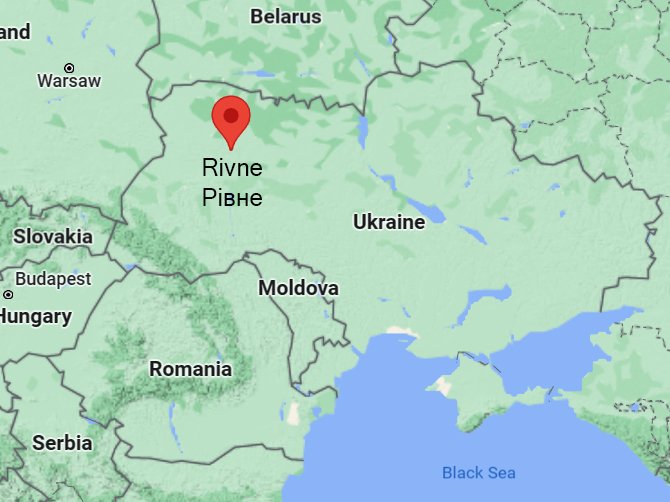
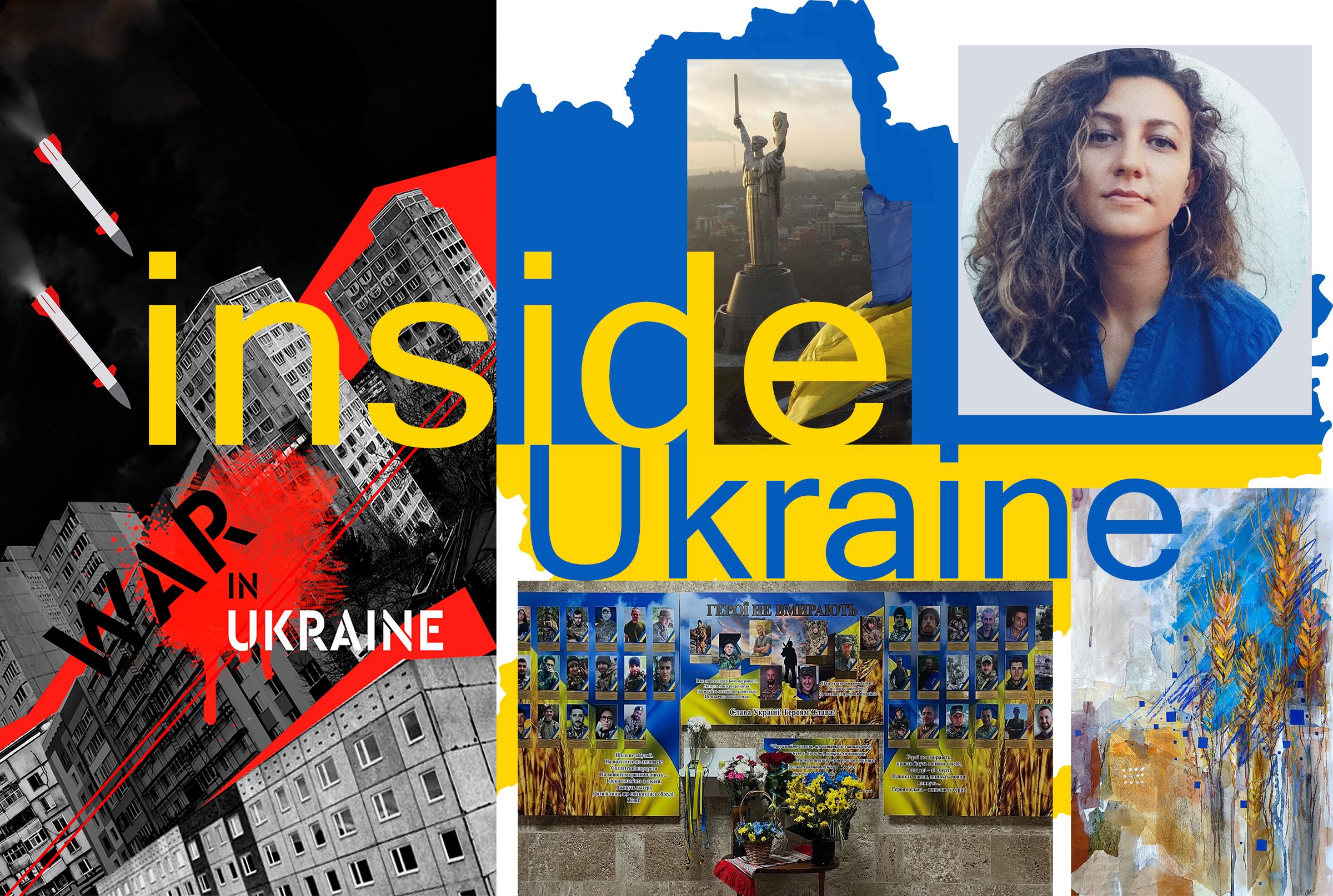
THIS INSIDE UKRAINE STORY IS FROM Rivne
* All images and answers in the feature were provided by the WOW Woman, unless otherwise specified.
INSIDE UKRAINE SERIES: A SNAPSHOT, A DAY-IN-THE-LIFE, A GLIMPSE OF WHAT IT’S LIKE TO LIVE, RESIST, SURVIVE AND PERSEVERE IN A NATION UNDER ATTACK.
GLORY TO THE UKRAINIAN WOW WOMEN, for SUPPORTING THEIR COUNTRY AND BRINGING UKRAINE CLOSER TO VICTORY.
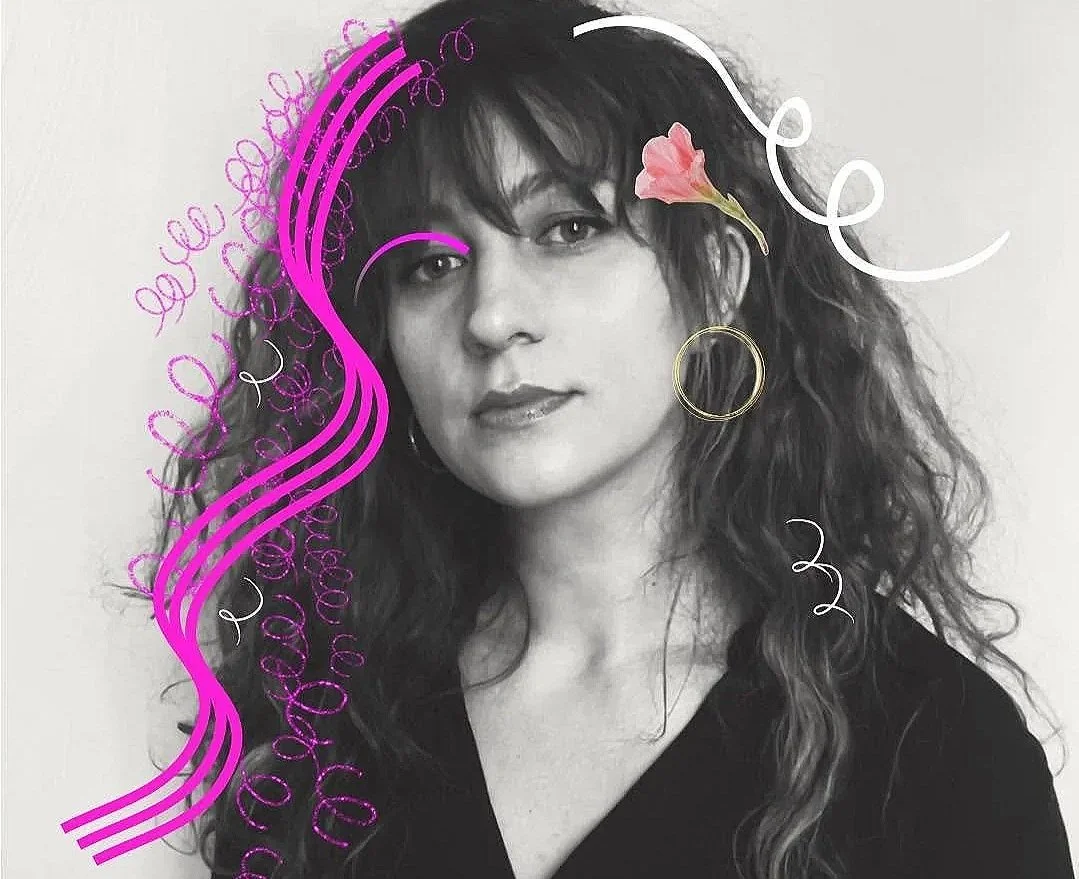
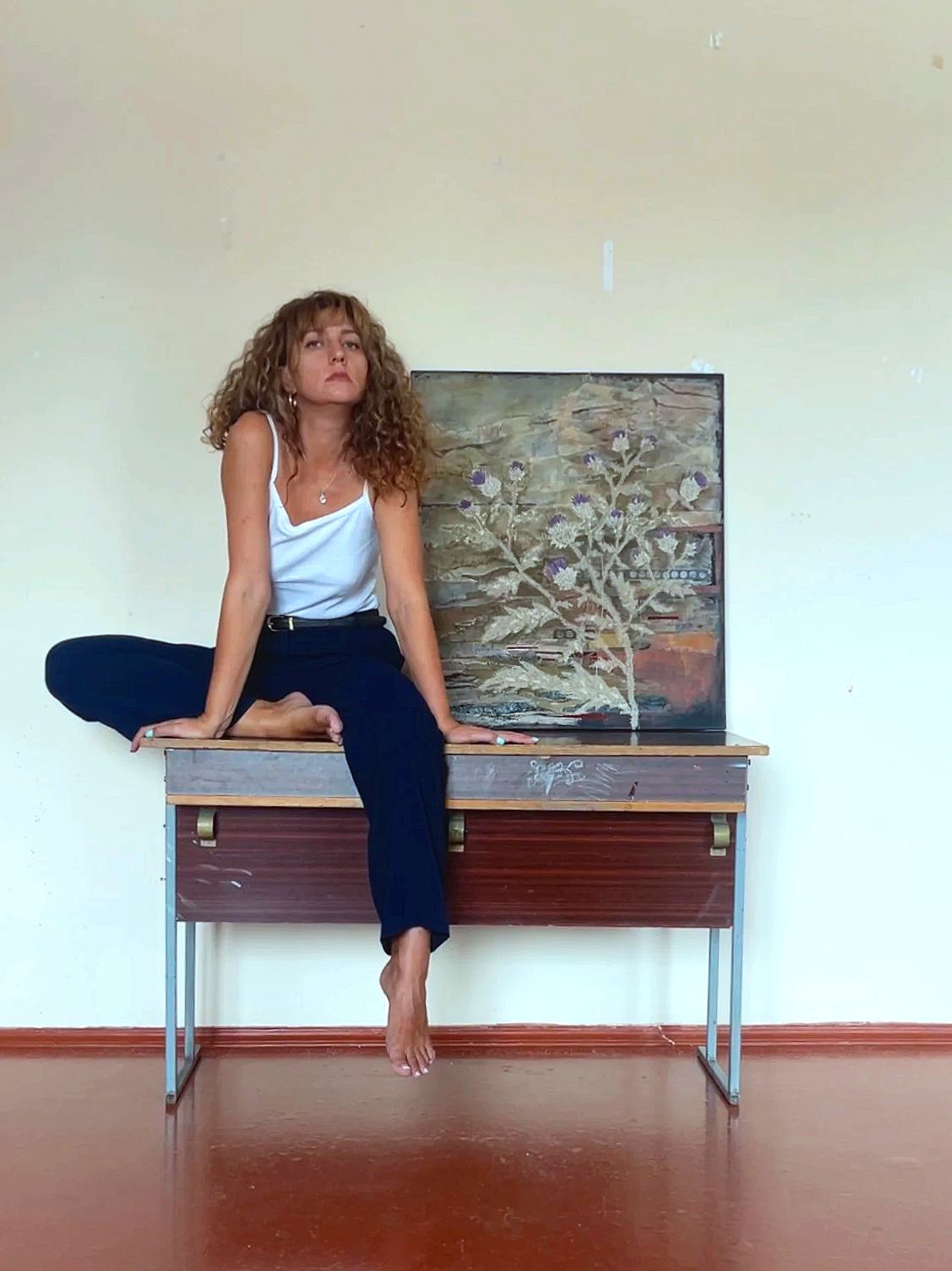
In early February 2022, Ukrainian artist and university lecturer Yaroslava Huz was at a high point in her career. Sixteen days before the invasion, she opened a solo exhibition in Rivne. Fourteen days before the invasion, she received the President of Ukraine's Scholarship for young visual artists. Then, on February 24, 2022, russia invaded, and the lives of Ukrainians changed forever.
Yaroslava stayed in Rivne and continued teaching at Rivne State University of Humanities. As the war stretched from months into years, her students began dealing with things no classroom could prepare them for. Some of her students have fled occupied territories. Others have fathers and brothers at the front. Many have lost people they love. One student escaped occupied Kherson alone; she travelled through russia, eventually reached Rivne and went back to university.
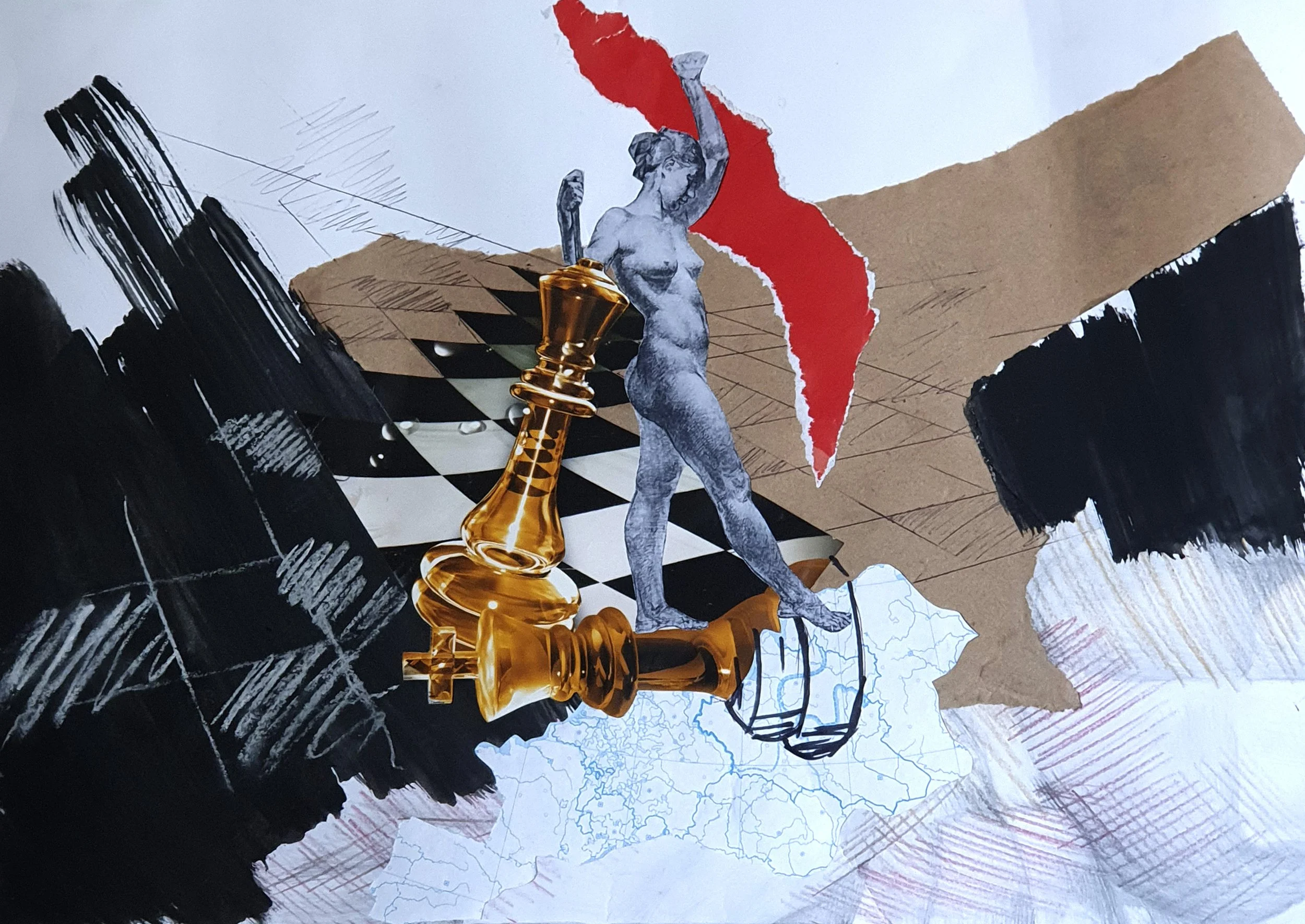
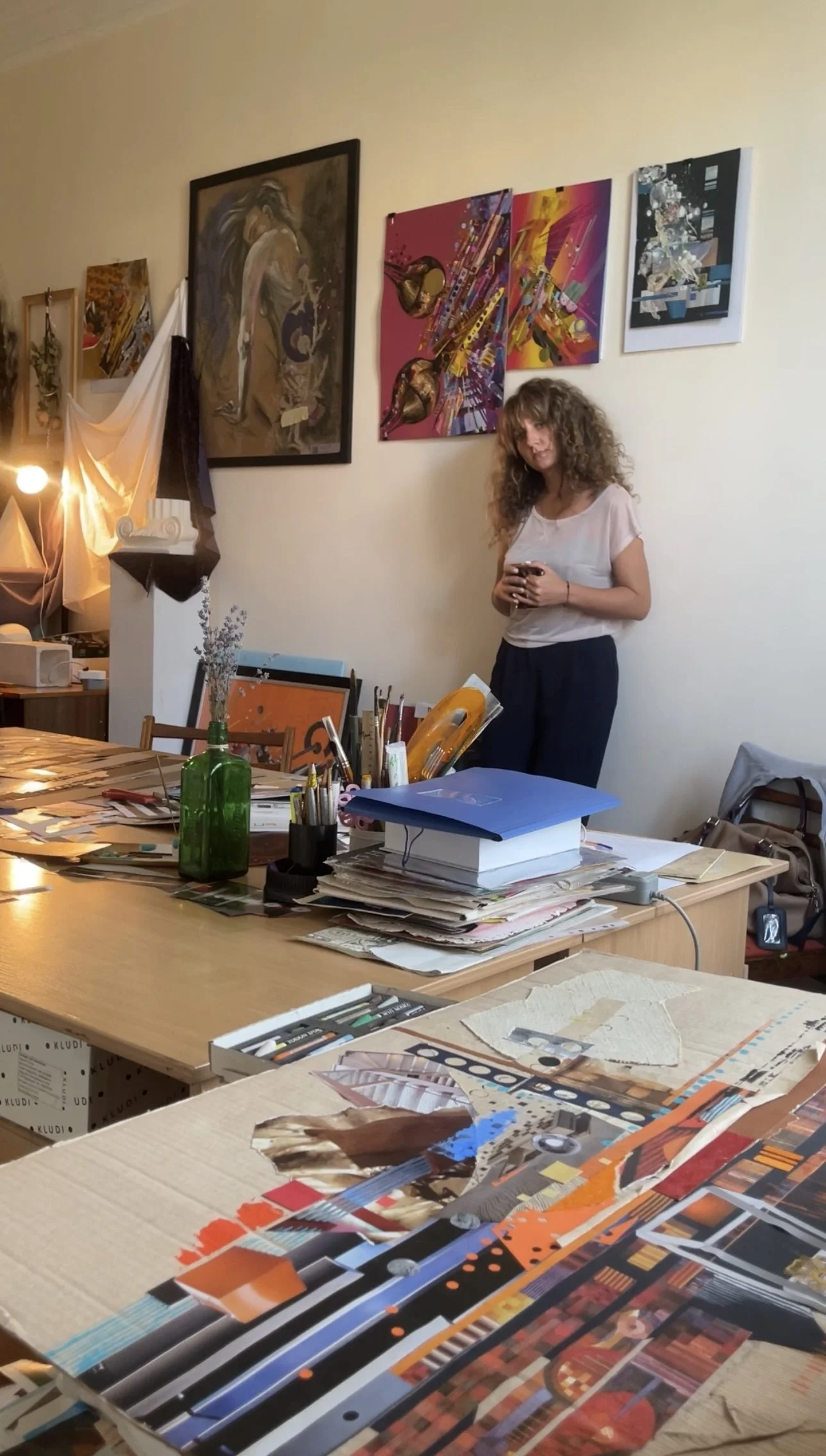
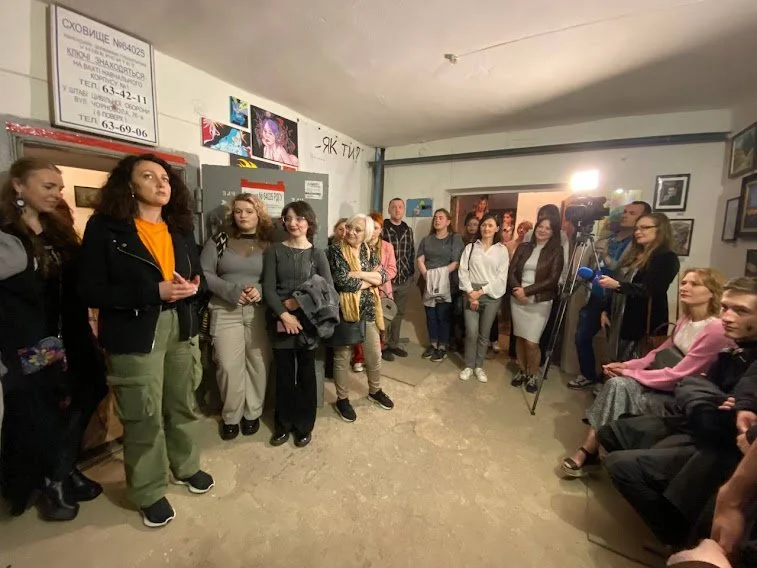
Yaroslava doesn’t sit still. She helped create a memorial for students killed defending Ukraine and invited local artists to exhibit inside the university’s bomb shelter. She makes her own art. She volunteers. At the university, she tries to give her students room to make sense of what is happening to them through their work. The war has followed them into the classroom and into their family lives.
It has also changed what it means to be their teacher. What struck me most was how deeply Yaroslava cares. “How am I supposed to grade a 17-year-old girl who doesn’t attend classes because her father was killed in the war, who cries constantly, and who’s dealing with paperwork, which isn’t easy at all?” Yaroslava writes.
There is no good answer to that question. For the past four and a half years, Yaroslava has watched a generation of young Ukrainian artists come of age checking their phones for incoming missile alerts and then returning to whatever they were working on. She knows what is happening in their families. She knows who has left, who is fighting, and who has been killed. She worries about what all of this is doing to them. This is what russia has made ordinary for Ukrainians.
Then there are classes to teach and students to grade. Yaroslava goes back to work and makes art.
— Olga Shmaidenko, Founder of WOW Woman
Artist, Lecturer, Volunteer
1. Name.
Yaroslava Huz.
2. Where were you born, and where do you live now?
I was born in 1992 in the village of Ulyanovka, Kirovohrad region, which is my mother’s hometown. My father is from Bila Tserkva. But since my father is in the military, he was later assigned to serve in the city of Rivne, so my family has lived in Rivne my whole life.
3. What did you study, and what is your current profession?
I studied at Rivne State University of Humanities, majoring in fine and decorative-applied arts. I also studied design concurrently at the SHAG Computer Academy.
I work as a lecturer in the Stepan Shevchuk Department of Fine and Decorative-Applied Arts at Rivne State University of Humanities; I participate in all-Ukrainian and international art exhibitions, art projects, and open-air workshops; I volunteer with organizers of cultural and artistic events and festivals, providing design support; and I teach master classes.
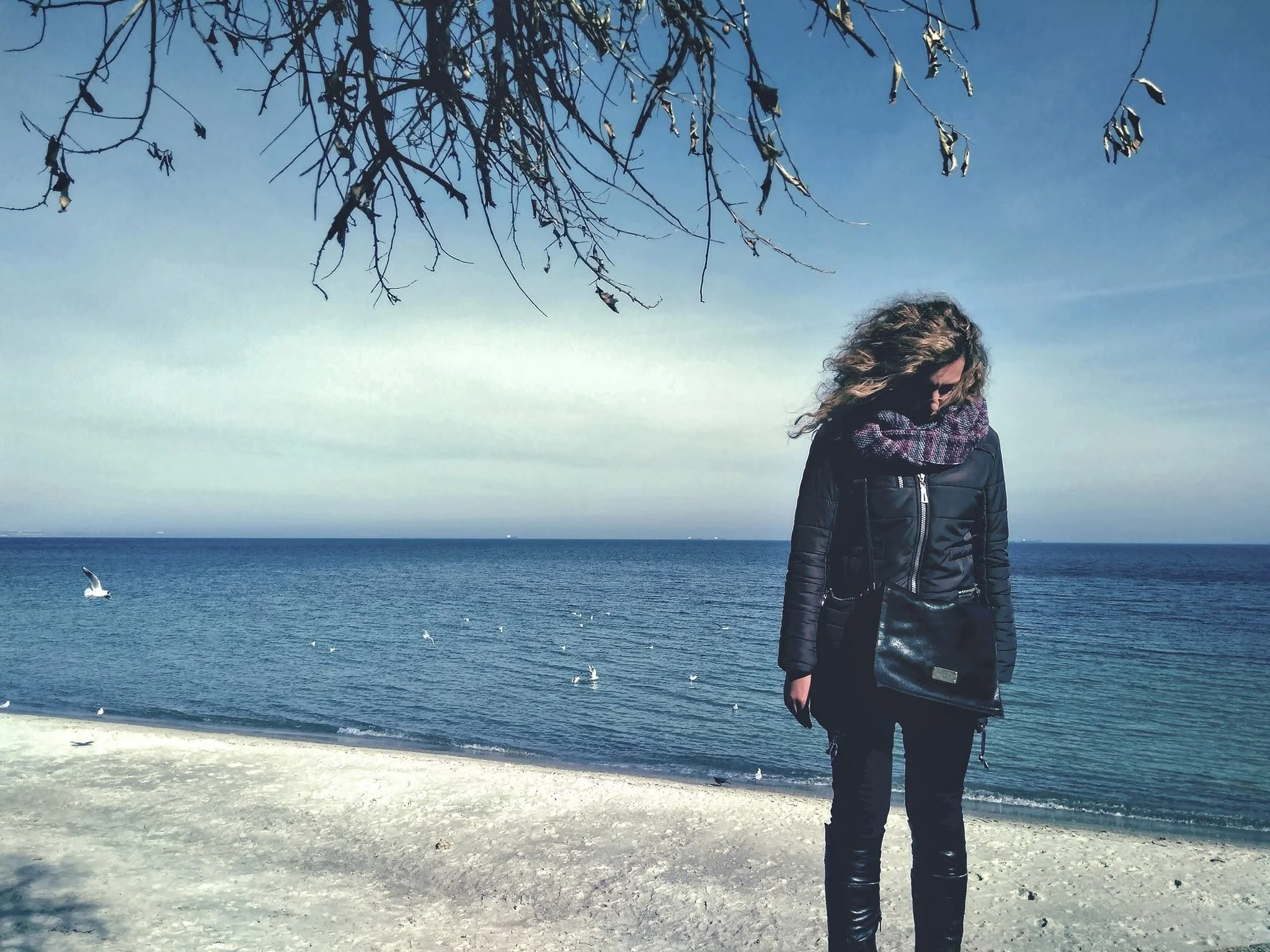
4. What was your typical day like before the full-scale invasion, and how has your life changed since the invasion of Ukraine? What is your typical day like now (if that’s even possible)?
Actually, the last few months (before rull-scale invasion) were very anxiety-filled because everyone was talking about war so often. I remember crying and talking to my mom; she calmed me down and said, “Don’t worry, there definitely won’t be a war because it’s not realistic, it’s not economically viable, etc.”
It was precisely during that period that I was planning a solo exhibition in Rivne. I was preparing a series of works where bodies intertwined with plants. The exhibition was titled “Romeo Hurries to Juliet,” exploring the timeless theme in Art - LOVE. Each work had its own story filled with love.
The opening took place on February 8, 2022. On February 10, 2022, Presidential Decree No. 50/2022 was issued, and I became a recipient of the President of Ukraine’s Scholarship for young artists in the field of visual arts.
Then, on February 24, full-scale war broke out.
Before.
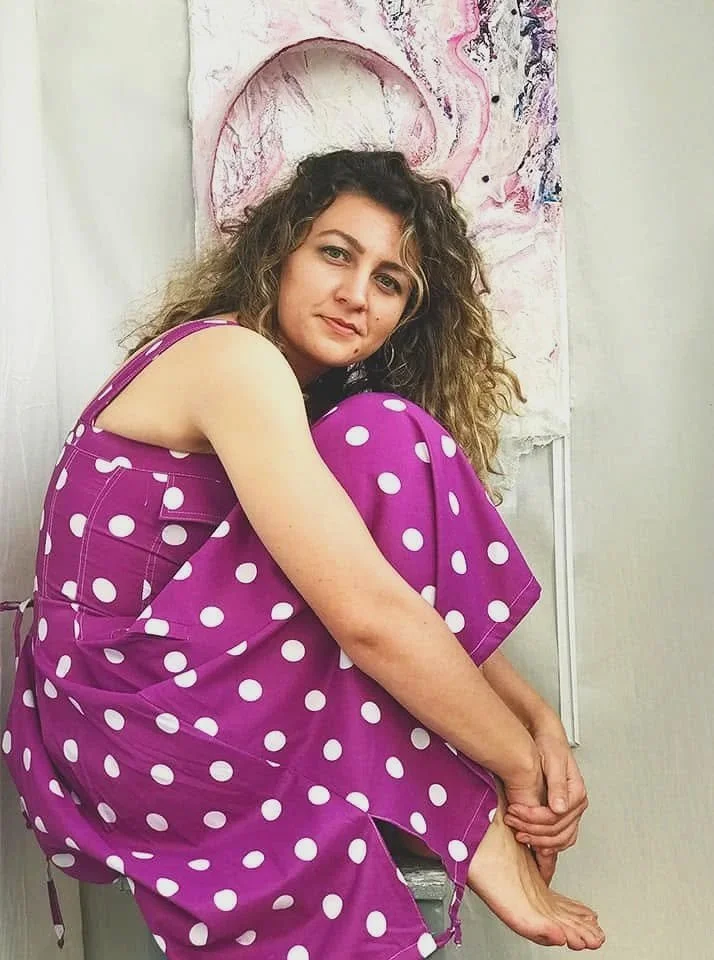
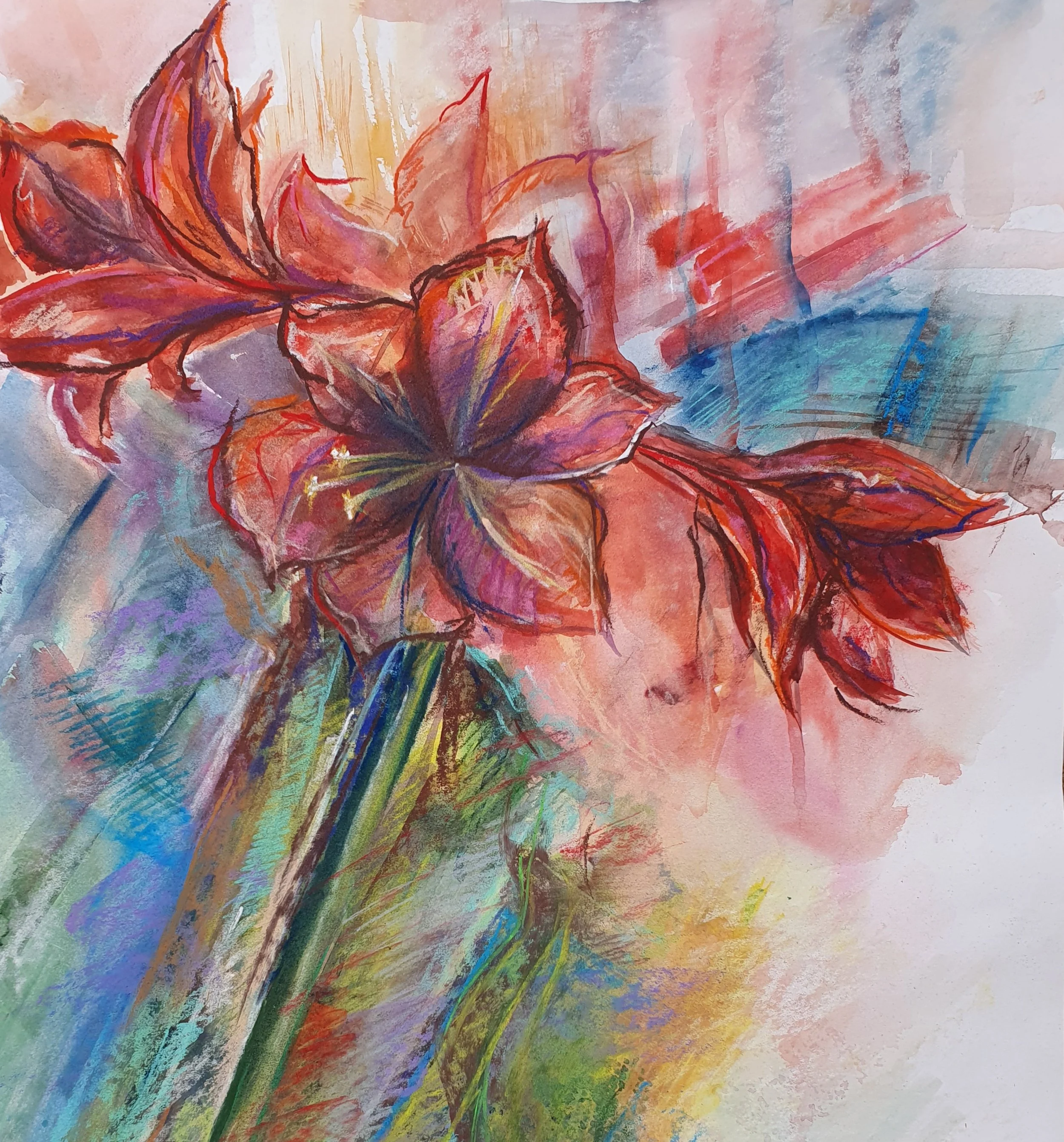
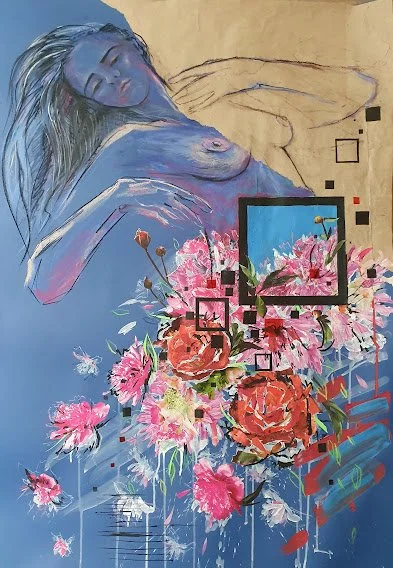
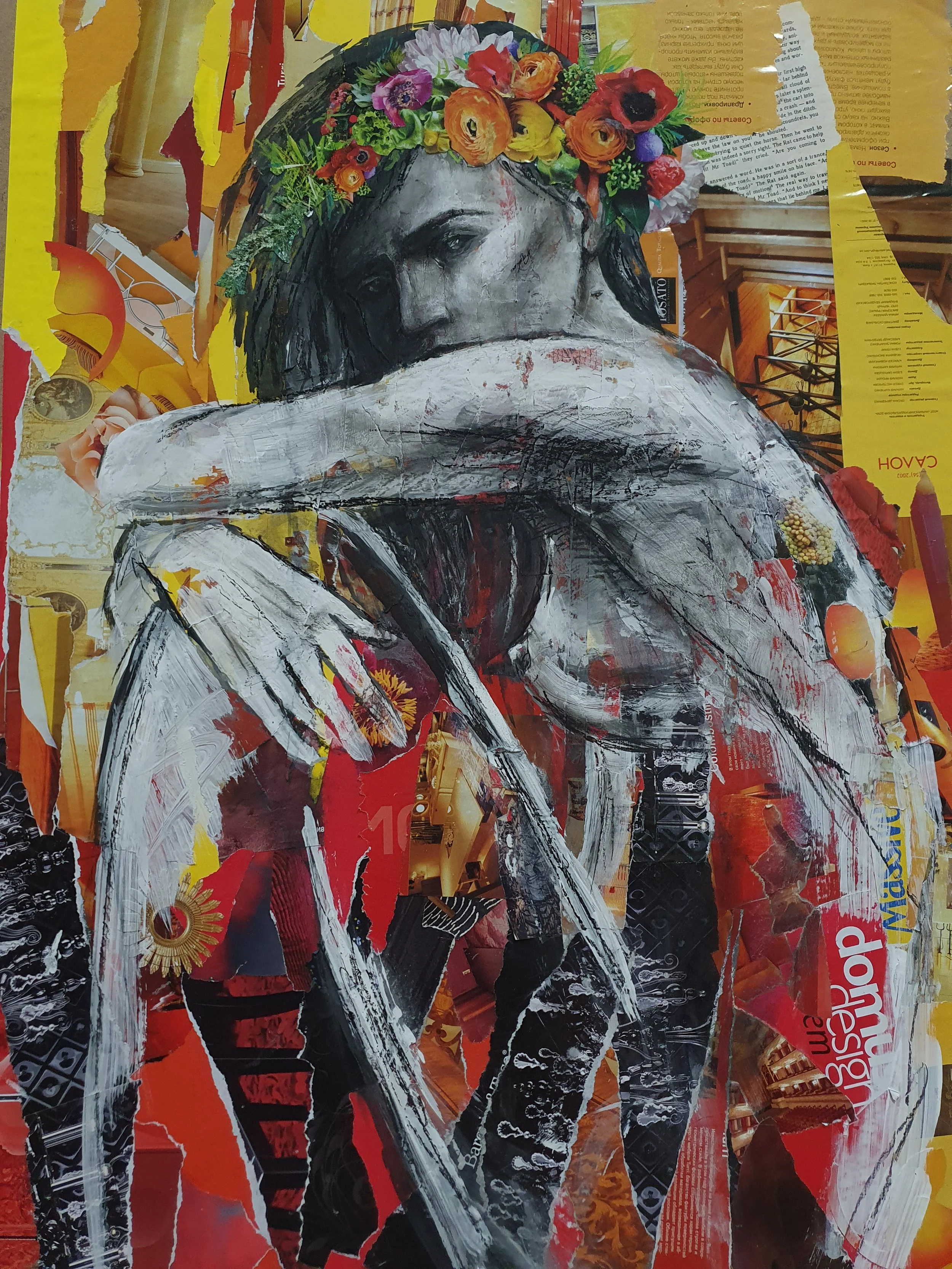
How my life changed since the invasion of Ukraine: I cry a lot and am constantly worried. I’m someone who loves to plan and values stability. But now, none of that exists anymore.
Typical day now (if such a thing is even possible): Every day I get up and go to the university. There, I either have classes, or students just come because it’s a creative major, and they work in the studios outside of class hours, so I’m constantly at the university. I paint, do collage, and do a lot of creative work myself. I also help and advise the students. Plus, I deal with paperwork at the department, because the ministry keeps making changes, and not for the better, with constantly tightening requirements.
For example, a professor is required not only to teach classes but also to organize field trips, produce creative work, participate in exhibitions, write an article, participate in an academic internship, and so on… and all of this comes at a cost, while the monthly salary is 9,501 UAH (USD $213).
Although I really enjoy this level of involvement and constant productivity, the demands lately are simply not commensurate with it.
NOW.
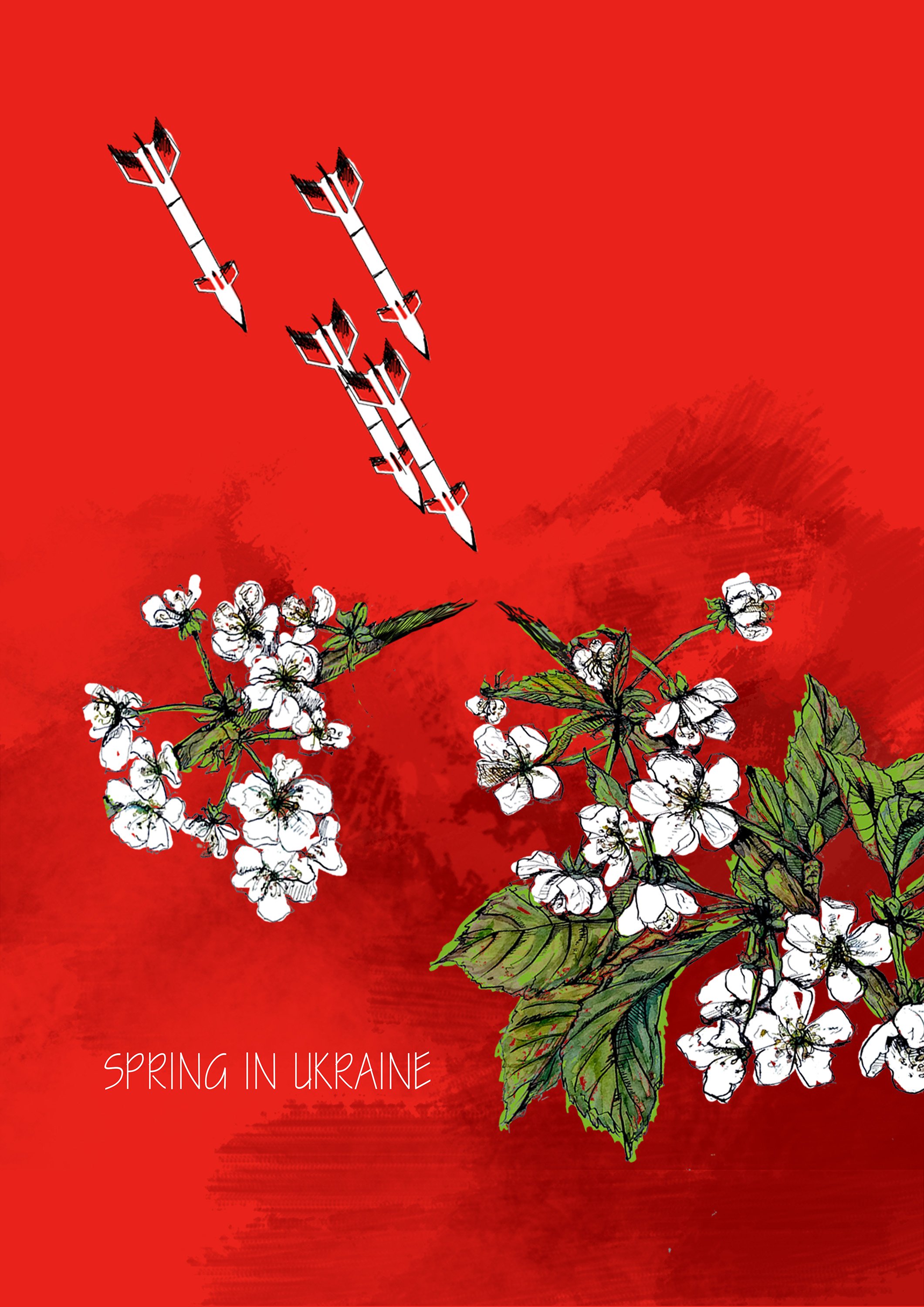
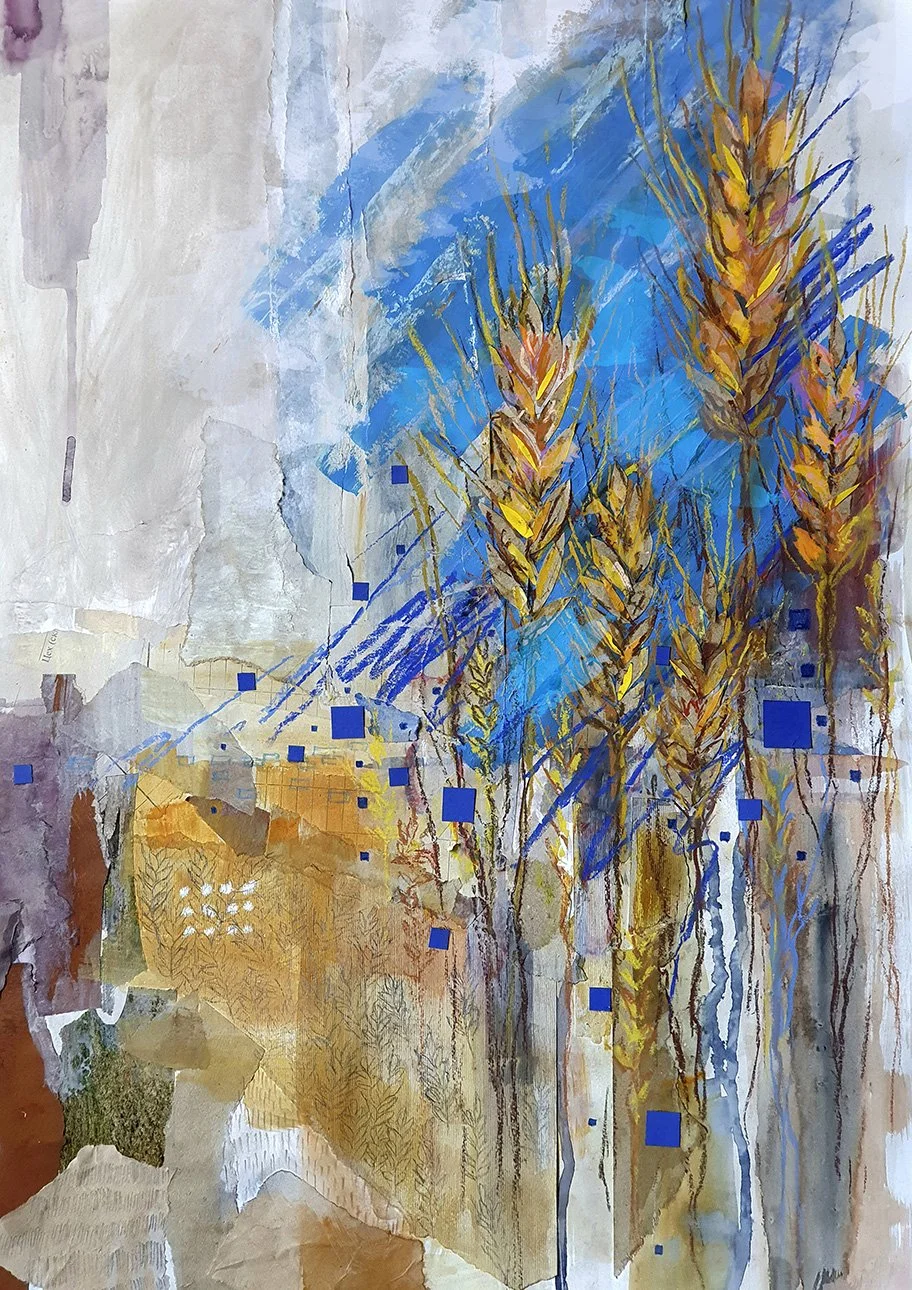
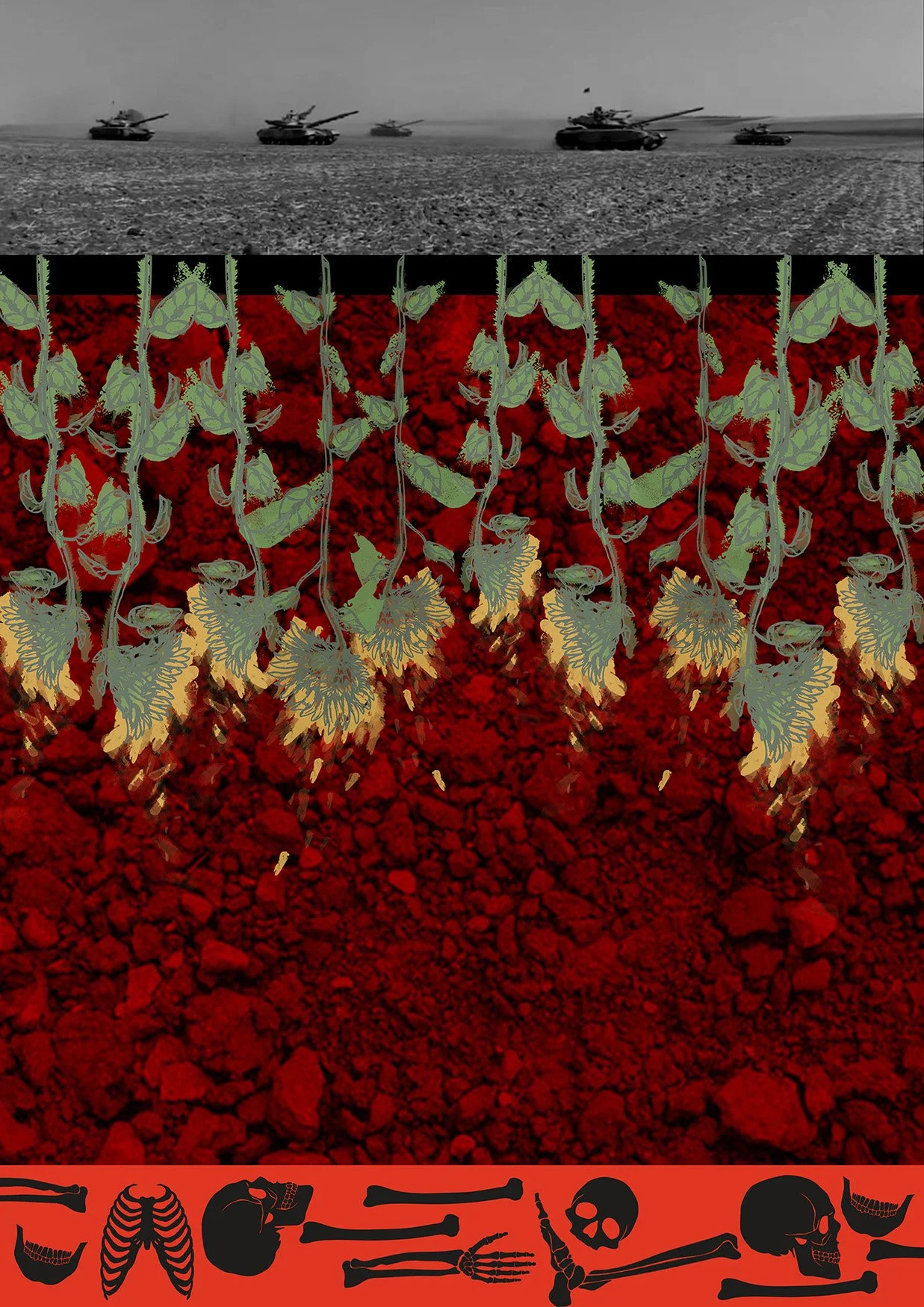
5. Where were you, and how did you find out about or sense the start of the russian offensive? What difficulties did you face after the invasion?
At home. Just in my apartment in Rivne. I never went to a bomb shelter even once. I had panic attacks and felt nauseous; I was constantly lying down because my body hurt so much that I couldn’t walk, so I took a sedative. I didn’t go outside; I thought there would be planes flying around like in World War II movies, dropping bombs…. We were all watching the news back then and didn’t think it would drag on for so long.
6. What do you think are your strengths and superpowers?
Finding beauty while wandering the streets, observing. That’s why my work is so vibrant. I make a point of spending a lot of time in nature. I don’t post on social media, and I don’t complain about problems at all. It’s like I just keep living my life, and everything will work out somehow because I’m surrounded by the vibrant world of nature.
It's a strength, but therapists say it's actually very bad—and for me, it means just enduring.
7. What specific actions (big or small) have you taken and continue to take to help Ukraine and the Ukrainian people?
I probably wrote more about the children in Q4. And I constantly feel guilty.
I also suffer from savior syndrome.
I work at a government institution; I consider myself a pretty good teacher. I try to create an environment where everyone feels comfortable, where there’s a sense of community, and where the children get along and support one another. Because when I was a student, I was part of a very close-knit group. But these kids, what do they know? When they share their stories, I’m in shock. They were learning online during the pandemic. The war now, that’s online, too. They haven’t seen people in person, and it’s difficult for them to communicate with one another. But in our program, they’re supposed to attend in-person classes. And they’re rebelling against it. That’s why I’m constantly at the university, encouraging them to attend the workshops so they can work, draw, and come up with ideas, because that distracts them from their problems and fosters camaraderie. Besides, art is about communicating with the viewer. You have to convey your ideas to people. What did you, as the artist, want to express through your work?
I also came up with the idea of honoring the memory of the student soldiers who died. It was very difficult. The Ukrainian Cultural Foundation didn’t give us any grant money. So at the university, we just got everything in order and unveiled a memorial board, which we’re now decorating with portraits of the fallen heroes. It’s horrifying. Because these are students I taught, and they’re already gone. More on that initiative here.
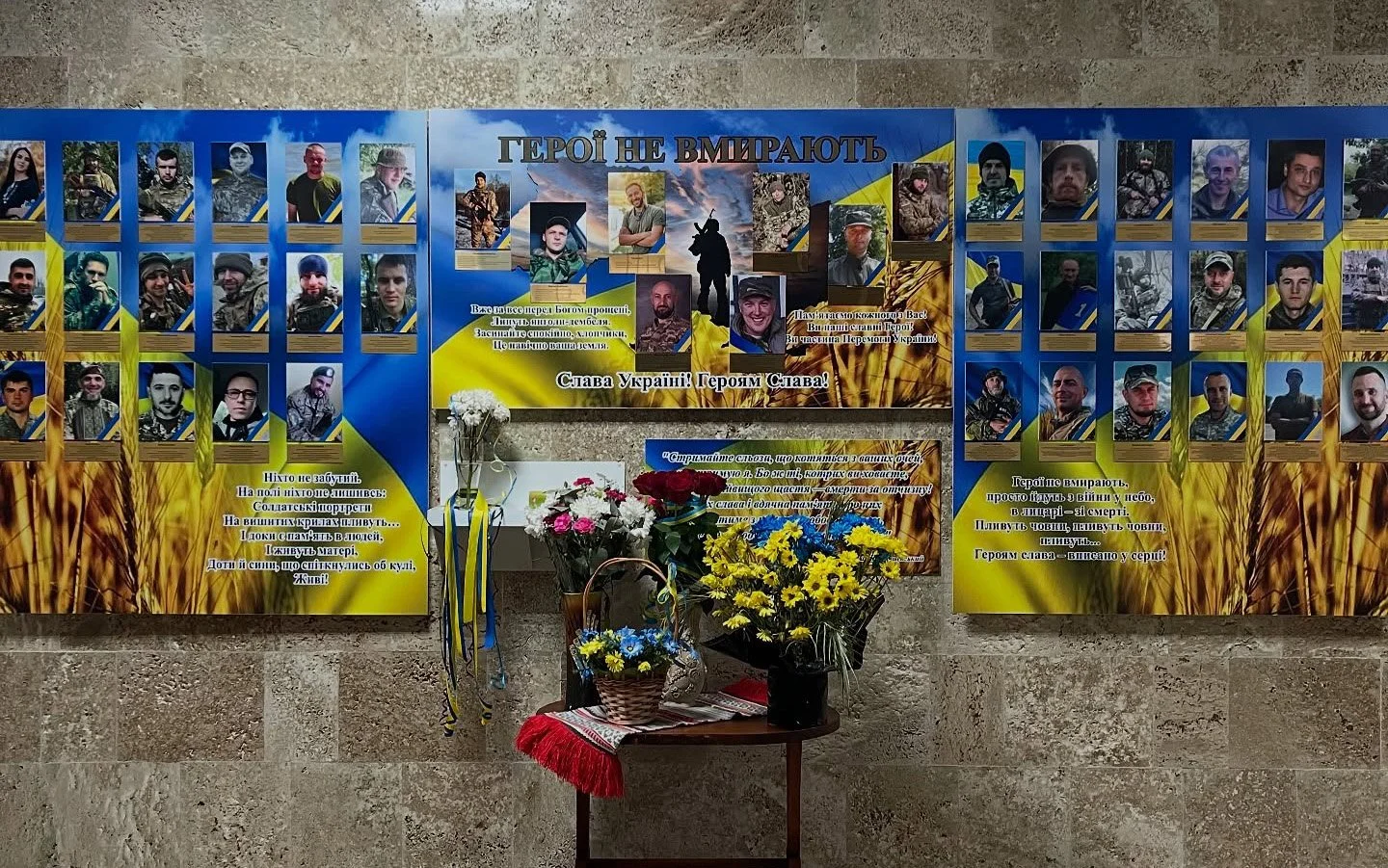
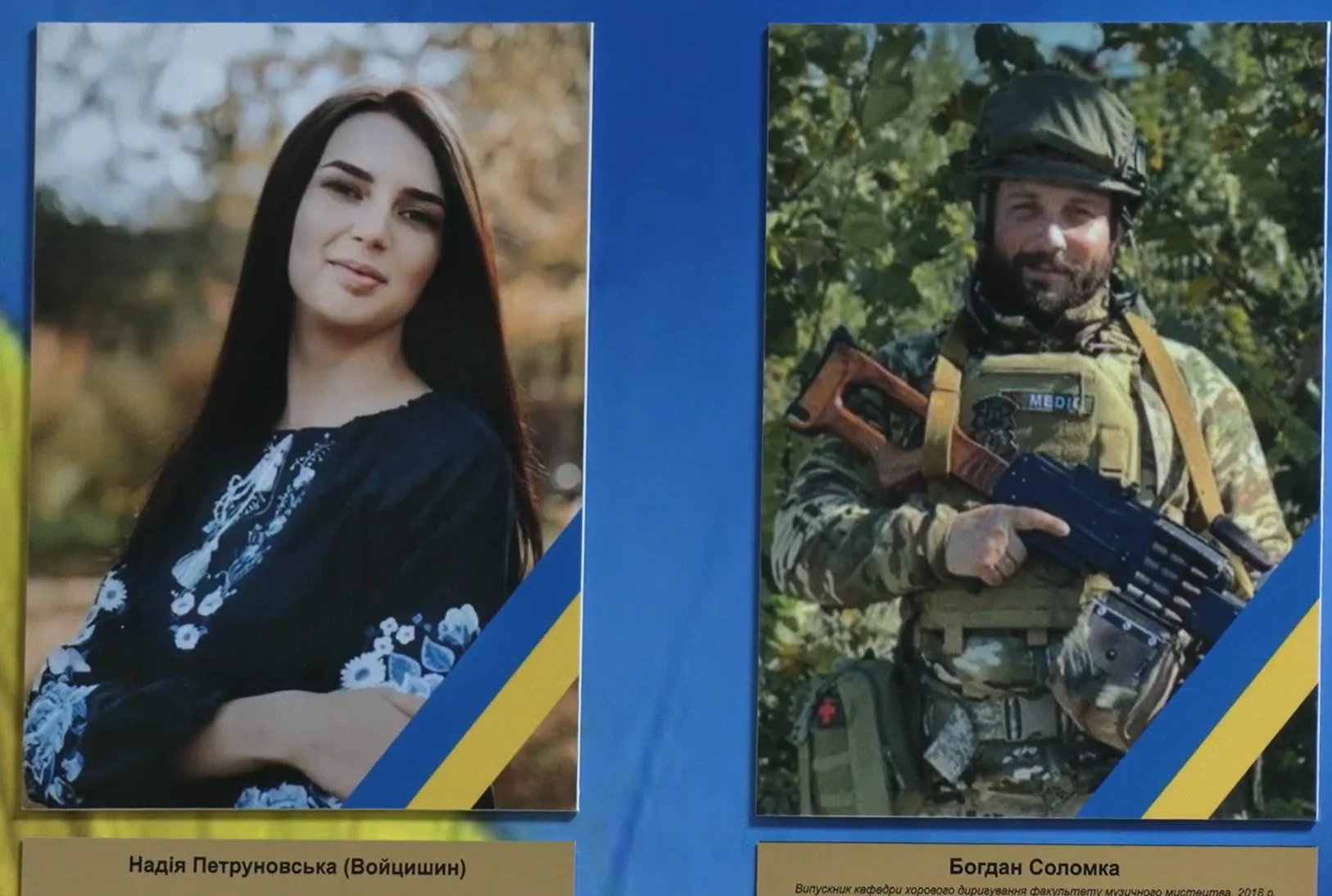
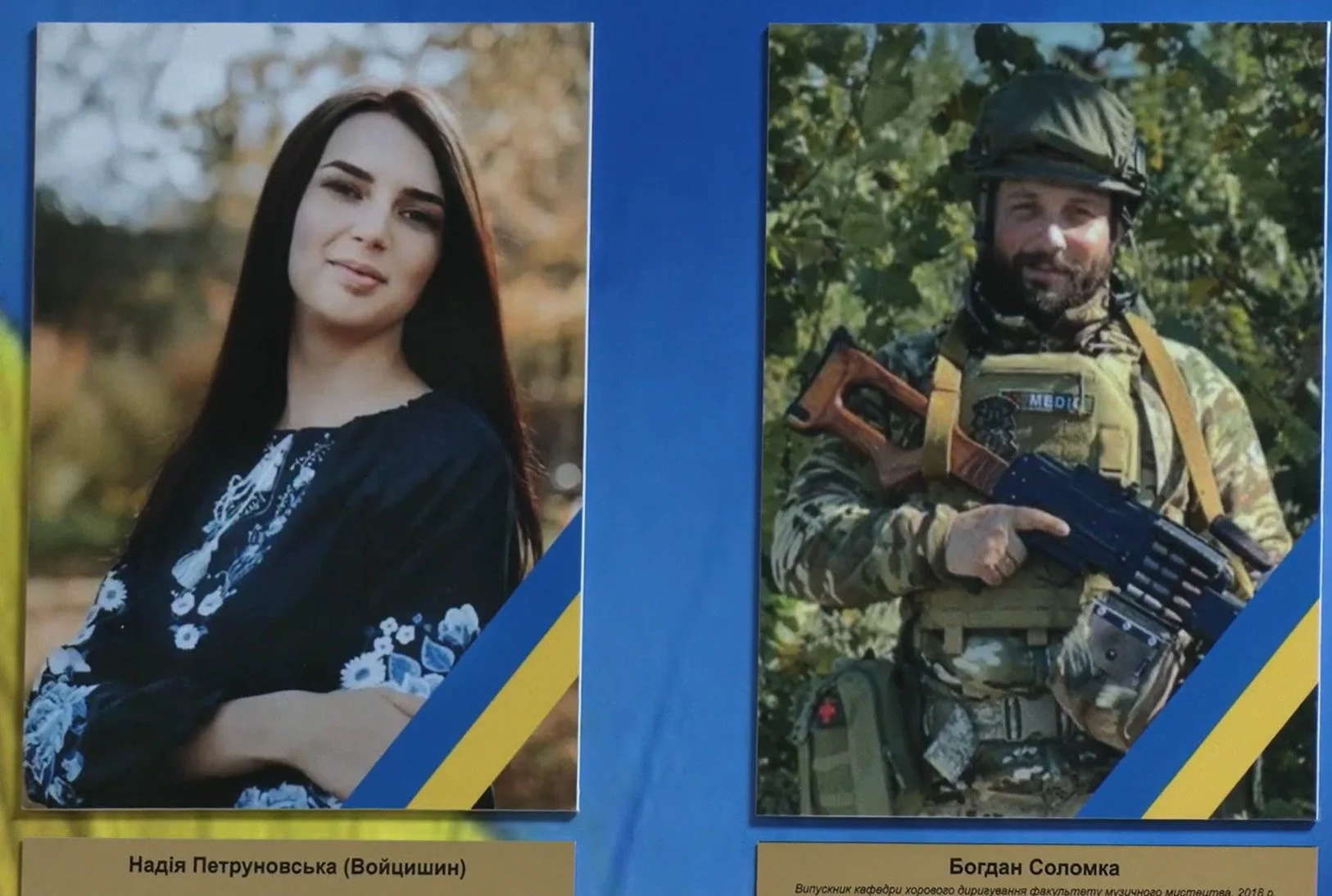
Yaroslava’s students who were killed while heroically defending Ukrainians from russian aggressors:
Roman and Dima, I knew them both because I handle paperwork at the department and taught courses. Roman was a part-time student - and you know what part-time students are like - he came in for a few weeks and then for exam periods. He comes from an artistic family - they worked with smoked ceramics - so we professors know all the artists in the Rivne region. Dima, on the other hand, was a full-time student and was at the university more often. I taught his course: Artistic Computer Graphics.
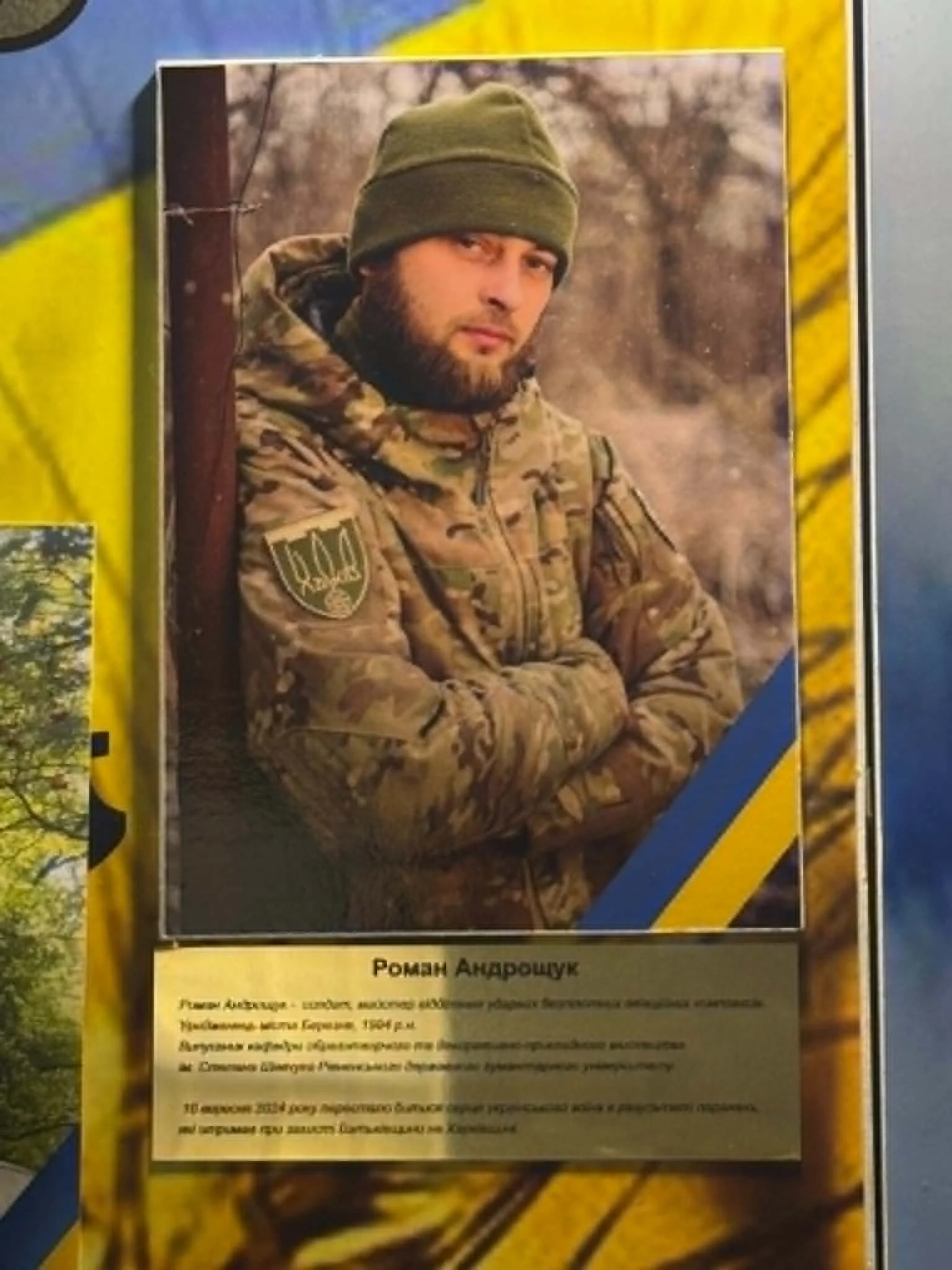
Roman Androshuk
Roman was a soldier, specialist in the strike unmanned aerial systems unit. Born in Berezne in 1994.
Graduate of the Stepan Shevchuk Department of Fine and Decorative-Applied Arts at Rivne State University of Humanities.
On October 10, 2024, the Ukrainian soldier’s heart stopped beating as a result of wounds he sustained while defending his homeland in the Kharkiv region.
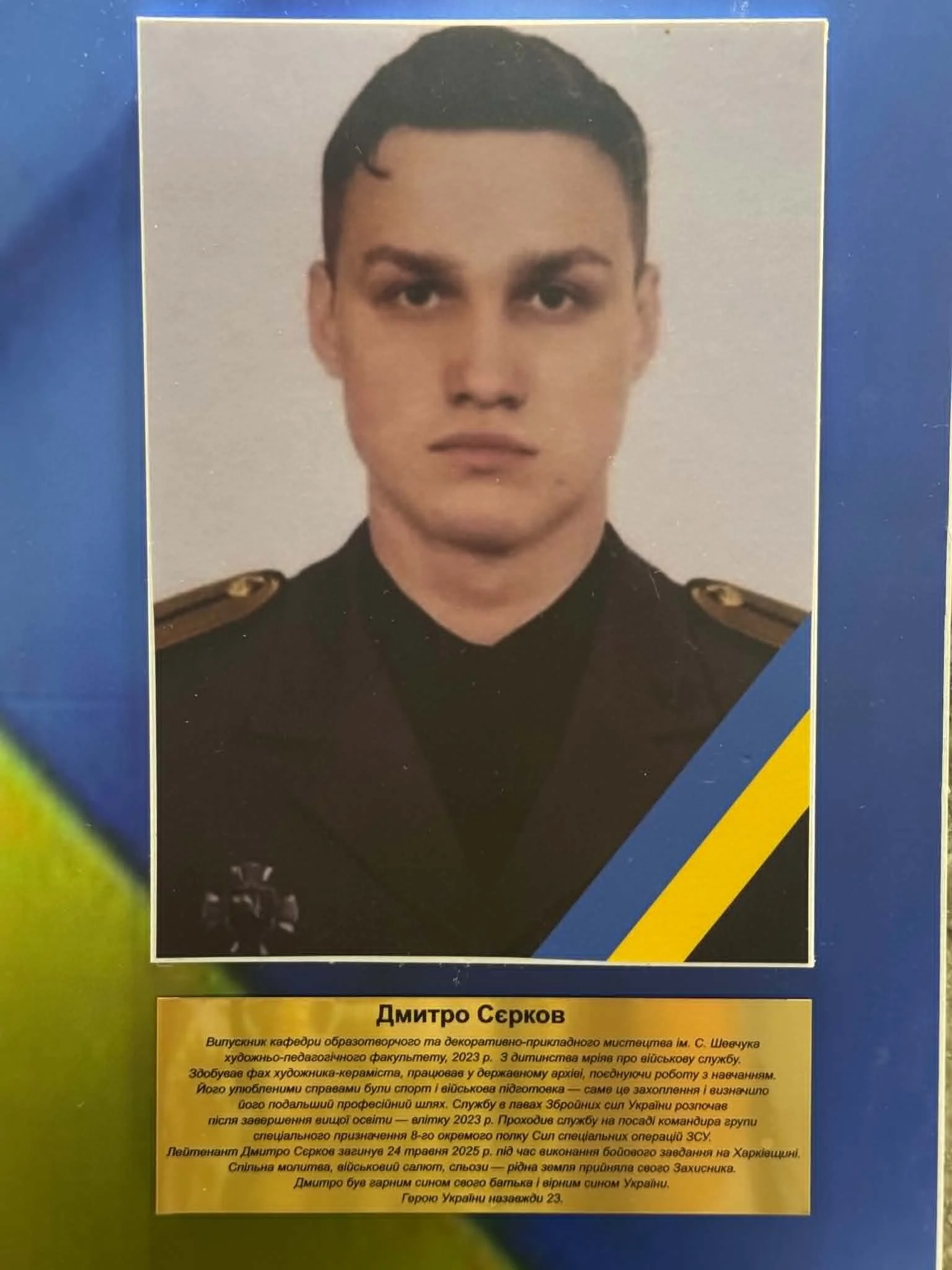
Dmytro (Dima) Serkov
A 2023 graduate of the S. Shevchuk Department of Fine and Decorative-Applied Arts at the Faculty of Art and Education. Since childhood, he had dreamed of a career in the military. He trained as a ceramic artist and worked at the state archives while balancing his job with his studies.
His favorite activities were sports and military training, and it was precisely these passions that shaped his future career path. He began his service in the Armed Forces of Ukraine after completing his higher education in the summer of 2023. He served as commander of a special operations group in the 8th Separate Regiment of the Special Operations Forces of the Armed Forces of Ukraine. Lieutenant Dmytro Serkov was killed on May 24, 2025, while carrying out a combat mission in the Kharkiv region.
A communal prayer, a military salute, and tears — his homeland welcomed back its Defender. Dmytro was a good son to his father and a loyal son of Ukraine. Hero of Ukraine will forever be 23.
I can write about a project that I consider very worthy. It made a huge impression on many people, even when I went to an artist residency in Przemyśl, Poland. They did a separate report on it.
“NOT Interested” Exhibit
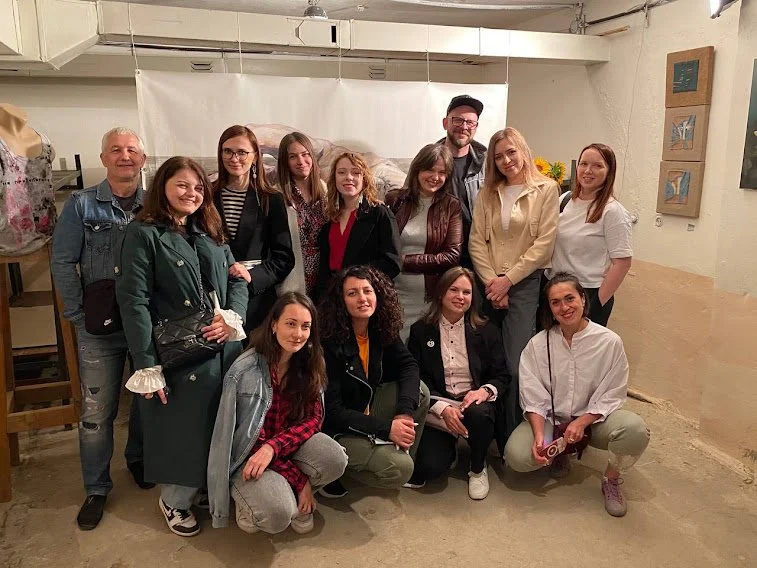
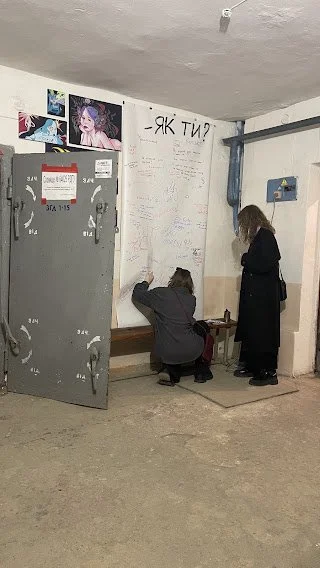
We have a bombshelter at our university. I went down and saw that it’s in good condition. And I got really excited about the idea of putting on an exhibition there. A lot of artists and students from Rivne responded. There were 40 artists and even more works. It was really, really cool!
All of that inspired me, and I created an installation in the bomb shelter on the theme of the lost peaceful sky.
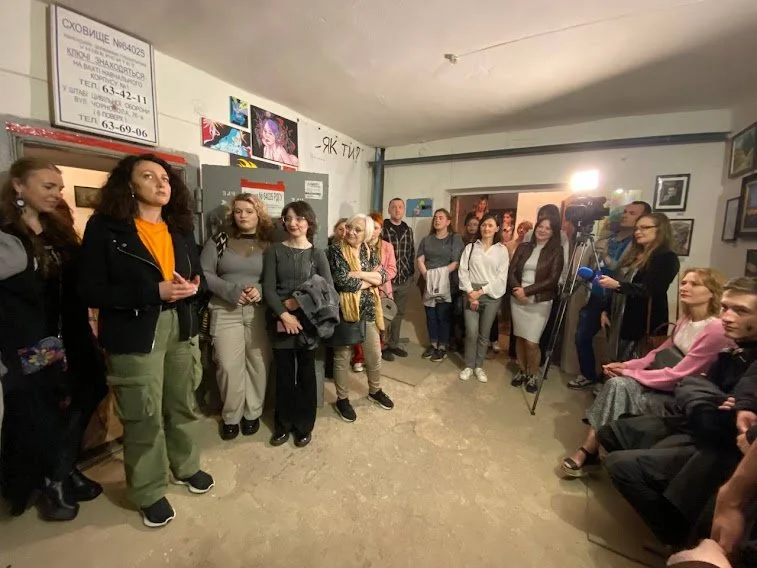
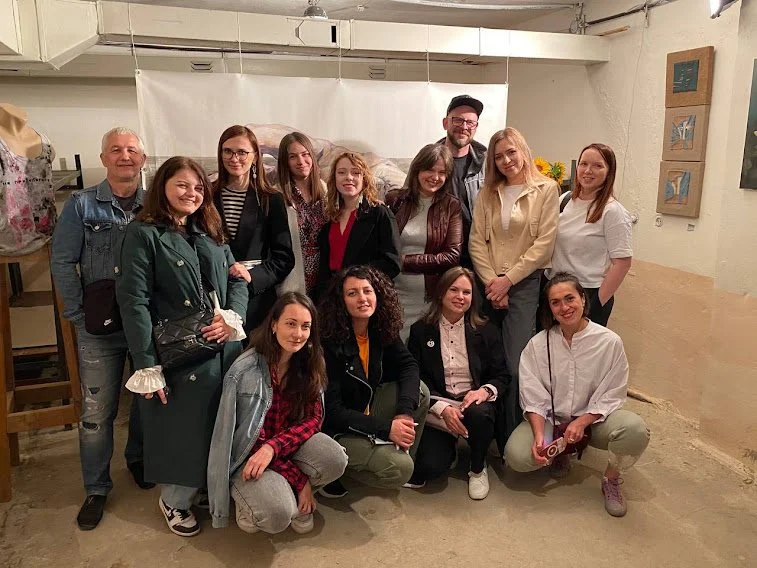
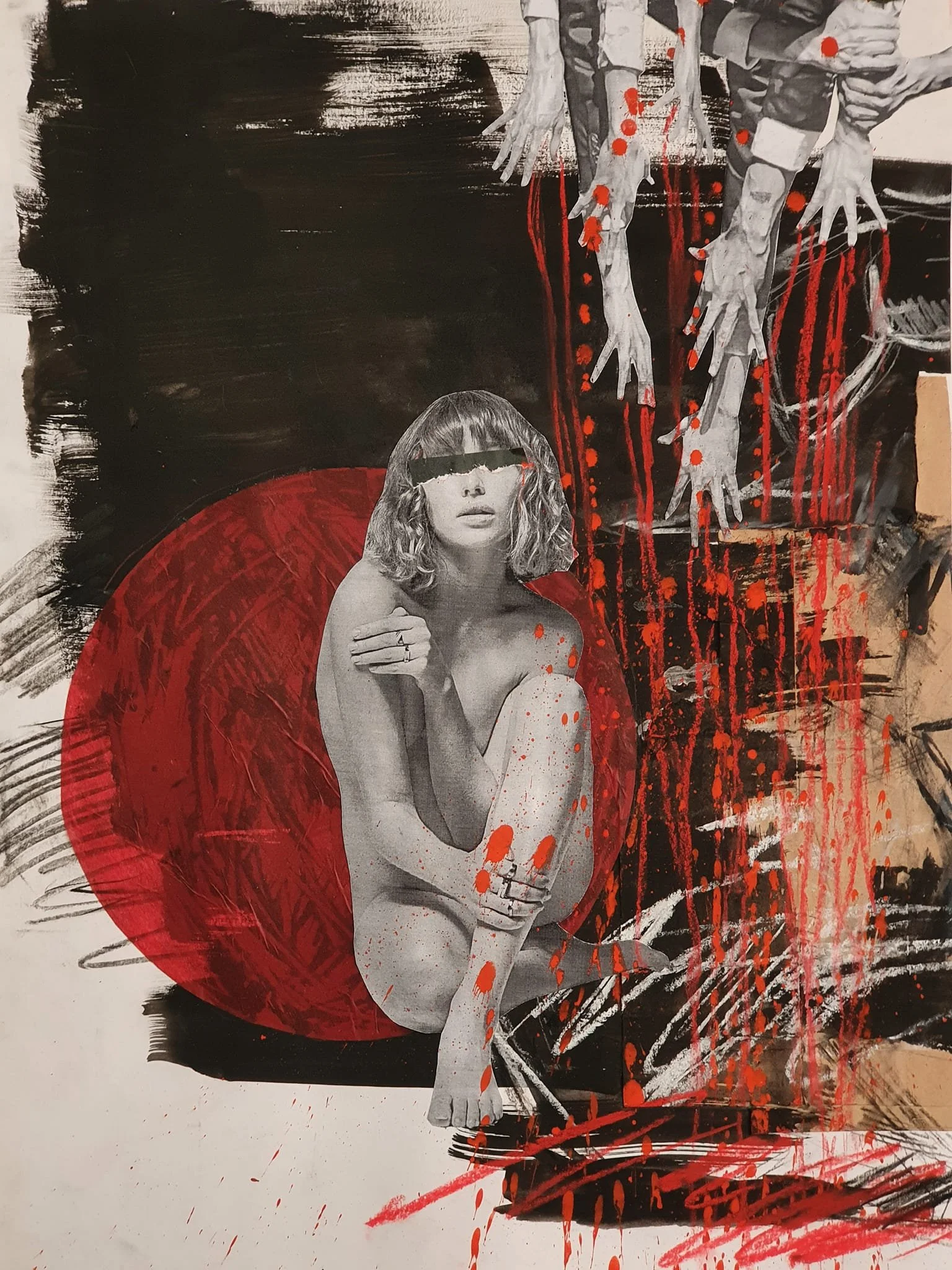
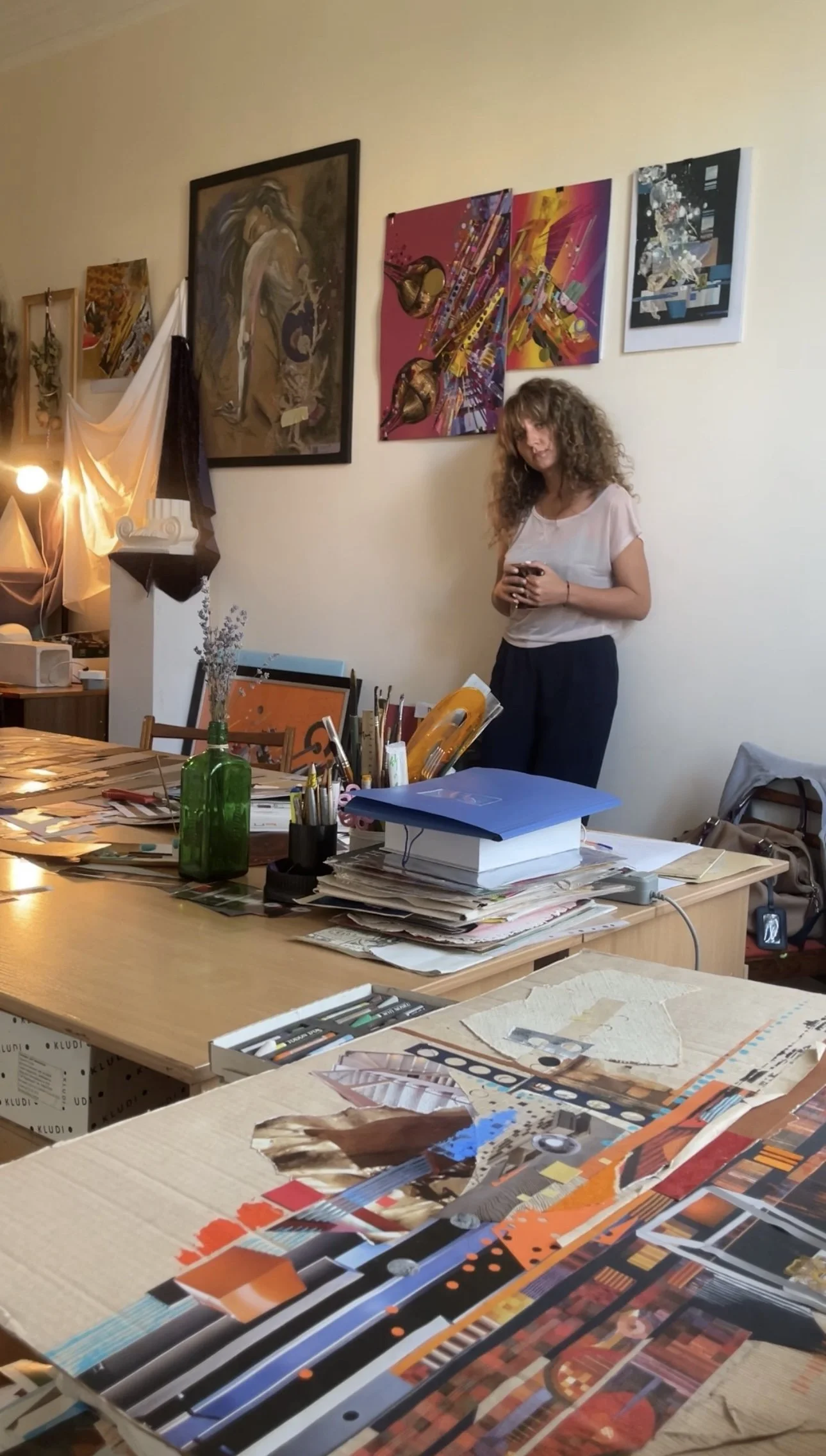
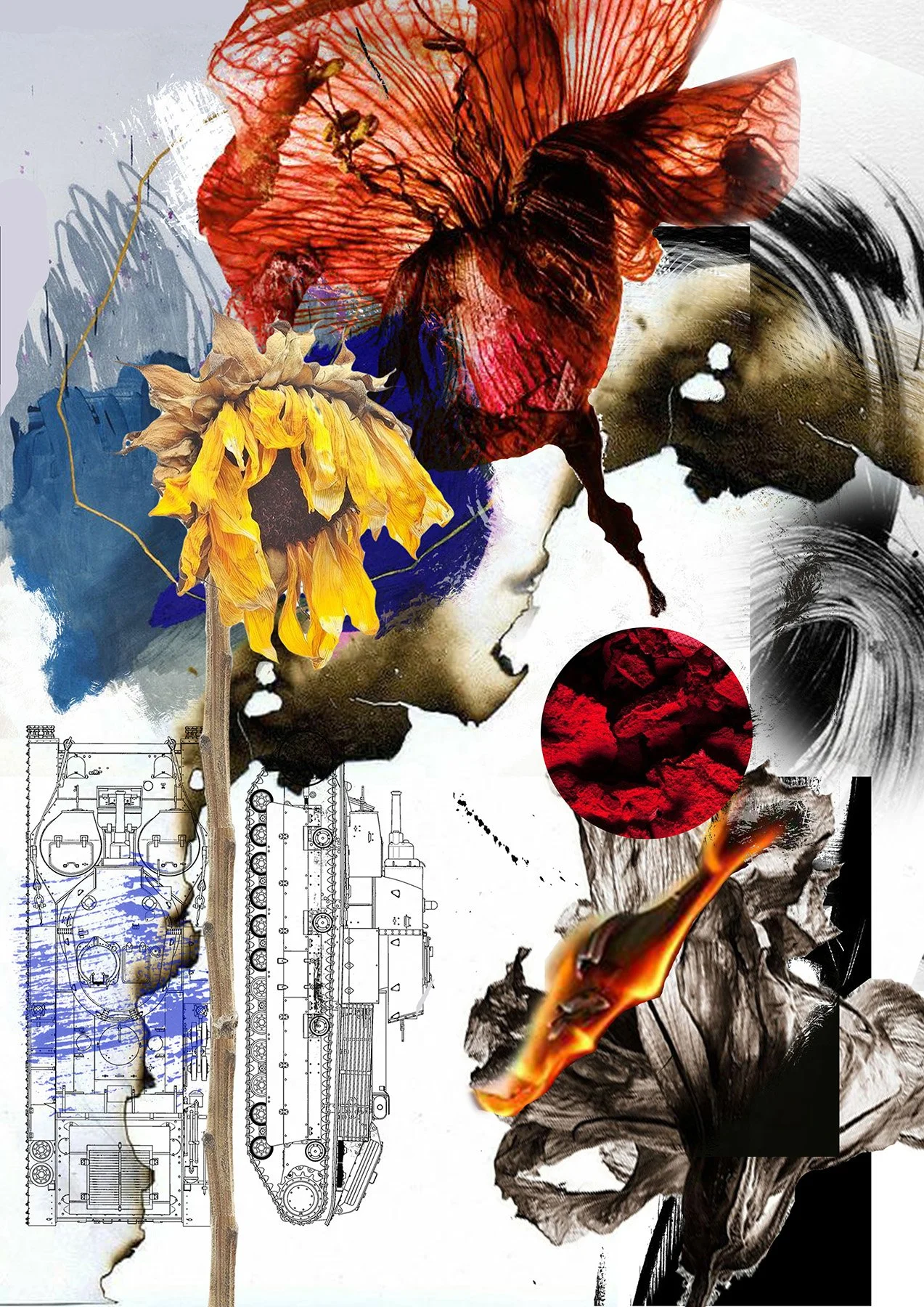
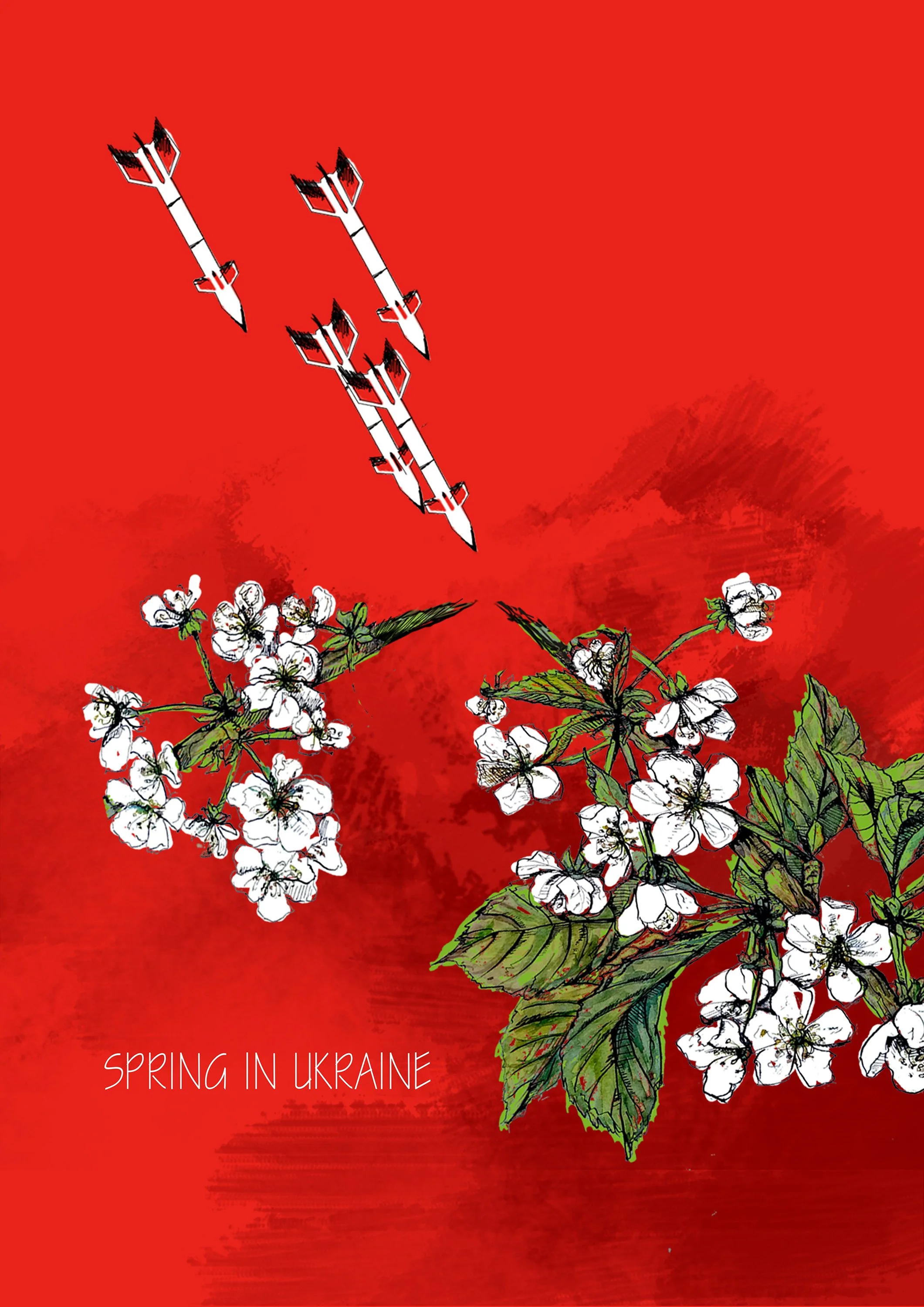
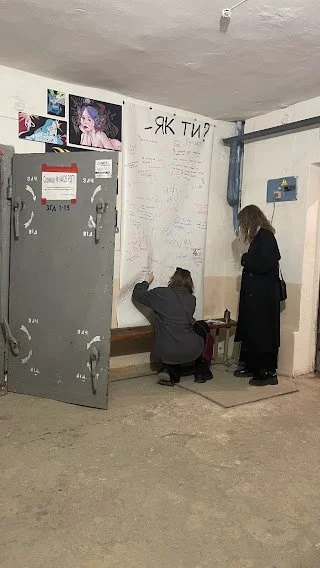
“Free Sky” installation
I was more focused on getting artists from Rivne to participate in the “NOT Interested” exhibition and submit their works, since I physically, conceptually, and emotionally didn’t have the capacity or time to create a new piece specifically for this exhibition.
But this was one of those times when the space itself inspired me to create a new work. Over the past few months, I’ve gotten used to the bomb shelter, but at first, just going down there myself was absolutely terrifying. I hadn’t been to a bomb shelter since the war began. And then came the realization that I was, in fact, going underground not of my own free will, and the idea of holding an exhibition in the basement—not because life is wonderful, but because of the circumstances we’ve all found ourselves in. I think a lot about life… and back then I was also thinking about how much I love fresh air, the feel of the wind, the sky, the clouds, nature…. I was flipping through a magazine and came across a really beautiful photo showing the sky, the earth, and houses in the distance…. I looked at it and thought how sad it is that we’re living through a war and that it feels like it will never end.
So I decided I’d definitely tear out that page and create a free-form sky and earth. Yes, it’s a primitive idea. Plus, it’s a non-commercial piece. But I want to make it because it’s dear to me. I measured out the small hallway. I found some non-woven fabric in the closet and attached it.
Separately, I made collages of the sky, with fragments falling onto the visitor’s head, and sewed them on to create a primitive sky. A week before the opening, I planted some sprouted wheat. It sprouted, and by the opening there was a pretty little tuft of green. At first it even grew and flourished, and I watered it, but then it started to die.
What’s the point? In that basement, I think about Azovstal. Did I know anything about it before the war? No. I had no idea how vast the area was. How long can a living creature survive in captivity, even with the most basic care? A month. But at Azovstal plant in Mariupol, defenders and civilians had to survive for roughly 80 to 82 days of intense siege during the spring of 2022.… You become aware of your own mortality. And yet there is the sky.
8. Could you tell other artists abroad what it’s like to be an artist during air raid alerts, how the war is affecting your creativity, and your views on the future?
I would love for someone to explain it to me. What’s it like? How am I supposed to grade a 17-year-old girl who doesn’t attend classes because her father was killed in the war, who cries constantly, and who’s dealing with paperwork, which isn’t easy at all? And another student is from Bakhmut, where they’ve lost everything; yet another is very creative, but her work doesn’t turn out right because the materials are so cheap (due to cost cutting and shortages) and everything runs off the page, and she doesn’t have the money for more expensive sheets. So we teachers chip in money and help those kids however we can. There are so many challenges.
9. How do art and war coexist?
They coexist.
Thanks to art, you can detach yourself from reality. You can create whatever works you want. Live in an imaginary world. This is our bubble, and it can be whatever we imagine it to be!
I’m part of a group where the vast majority of people write poetry. So right now, all the kids’ poems are about the war.
However, we can address the themes of war through completely different, deeper means. For example, here’s a link to an installation I created last year during a residency in Vinnytsia. It’s called “Cherry”.
“CHERRY”
Vinnytsia. June 2025.
I live in a house where time has stood still.
War. The woman and children have left. Only the man remains, along with children’s drawings on the walls, and the imprints of small hands frozen in the concrete floor.
In the yard—a cherry tree.
“My grandfather planted this cherry tree. ‘Eat them. There’s no one else to pick them anyway,’ he said.
I pick these round, red berries, just like the ones in my childhood memories of summer.
The cherries fall onto a plate.
Children’s hands sort through them, laughing.
But these children aren’t here. They’re somewhere else. And will they ever return?….
The cherry tree grows, even when no one needs it anymore…
This work is about heritage, emptiness, memory, and a childhood that is no longer there.
About love. About hope. About dreams.
Who am I in this performance?
I am an observer.
I am between the past and a strange future.
I am the one who sees and gently touches the story of a stranger’s family.
I am the one who recalls the story of my own family.
I am the one who picks the cherries, because otherwise they’ll fall and rot.
I am the one for whom trees were also planted.
WHY I'M making and teaching art now, in the time of war
To preserve the language of generations, which isn’t always found in words.
To let other people’s children, even for a moment, feel the warmth and love of a family they don’t know.
To pause in the moment, to reflect on what matters here and now.
To see. To love. To not put it off.
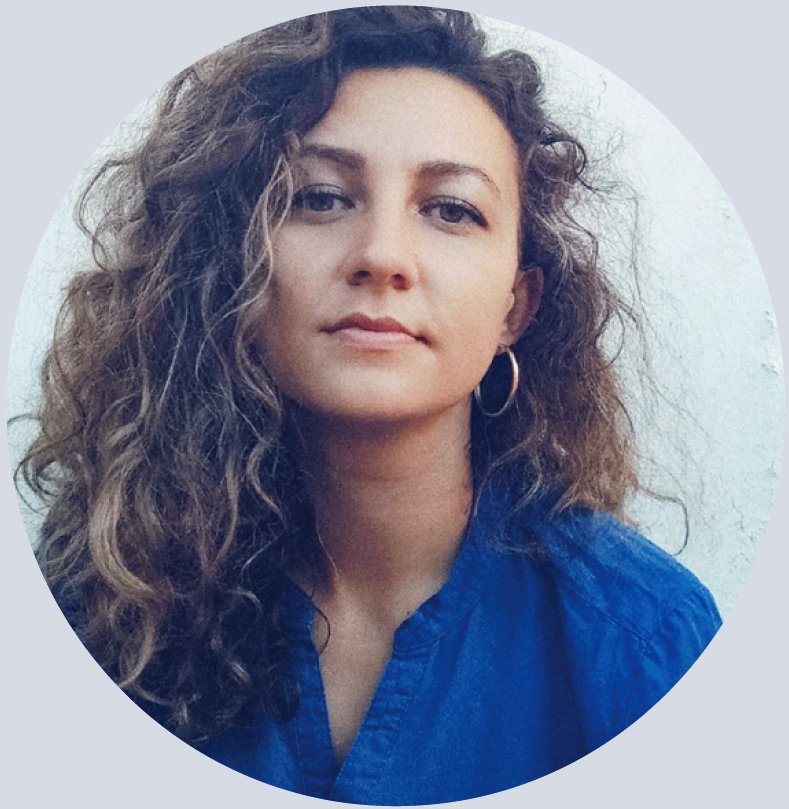
10. How do you take care of yourself? Is it possible to remain mentally stable at all in the midst of war? What helps you pull yourself together?
My imagined world where there’s lots of art. You come into the studio, and that’s it. You turn on the music, light some incense…Every time, I bring some flowers or twigs, tell you what I’ve read or watched recently, and the kids play the guitar. No gossip. We read poems; the kids write poems, share what they’ve written, talk about where they’re trying to get published, and show off their artwork. We’re in a bright studio, filling ourselves with bits of light and goodness, even if we touch on the theme of war in our work.
11. Do you feel that the war has changed you? In what ways? Have you surprised yourself (in how you’ve held up, stayed strong, found inspiration in unexpected places, etc.) in your country, in your ideas about humanity, or in your attitude toward the world? What has been a revelation for you?
Yes. The war has changed everyone. I, for example, have aged a lot. It’s like a piece of chewing gum in my head, constantly thinking, “How much worse can it get?” The realization that no one is going to help you was a wake-up call. And I have to strike a balance in helping others when I’m in this “rescuer” mode. Because if I just keep giving more and more, the other person won’t know when to stop, and I can’t handle it all—I can’t spread myself too thin trying to make sure everything’s okay on all fronts. Objectively speaking, things are getting even harder for people in Ukraine—there’s massive corruption and bureaucracy, like an iron curtain. Air raid sirens are blaring, yet the children are still playing in the sandbox just as they always have—for them, this is already the norm. There are no people on the streets. There are no people on public transportation—just retirees. Universities are facing massive enrollment shortfalls. Parents are definitely sending all their sons to study abroad—that’s for sure. And the girls are looking for ways to leave. Everyone is on their own, surviving as best they can. There’s no way out, you just survive.
12. What do you want the world to know about Ukrainians right now? About Ukrainian women?
They’re just getting by as best they can. They find joy in going to Pilates and yoga classes and getting manicures. They might go to the pool, sunbathe, and take a dip, and then, great, the day’s over.
13. Which WOW Women inspire you?
From what I've read in your Inside Ukraine WOW Women, this story resonates with me, and I understand the profound idea behind the pain involved in preserving memory, and just how much I cried when I launched my memorial platform, MEMORIAL by Haiane Avakian.
I’ve been following Tata Kepler for quite some time now. I think she’s really beautiful, smart, and strong. I love how involved she is in volunteer work and the powerful pieces she writes. I don’t understand how she’s constantly doing something, seeking sponsors and partnerships, navigating the medical system, and yet isn’t broken by the pain of loss and the immense injustice. How does she recover? How is it possible to juggle so many projects at once? How can you trust people, the authorities? How does she find the strength to do anything when she herself writes: “That’s not up to standard, they’ve already stolen that, that wasn’t delivered, we can’t come to an agreement with them, ‘On the Shield’ was created by me, my mom, and my friends, but some jerk is filing it for a trademark…” Personally, I’m not like that. I’m very afraid, I cry often, I withdraw, I don’t reach out, and I avoid people.
14. What place or activity makes you the happiest?
Participating in an art workshop.
An outdoor painting session.
15. What will you do when Ukraine wins? What do you dream of for yourself and your family once the war is over? Will you take a break? Travel?
I want peace.
Not war, document checks, endless orders, outrageous prices—and all those people in the city without limbs.
16. In your opinion, how do russians as a people differ from Ukrainians? Were we aware of these differences before the full-scale war? Were we in a state of denial?
When I used to go on vacation abroad even before the full-scale invasion, I was surprised by their rude behavior and how loud they were in public spaces.
17. Do you feel that people who left Ukraine during the exodus in 2022, or those Ukrainians who have been living abroad for years, have any responsibility toward their homeland?
I don’t think so. But I know the void they feel inside, how those from the Donetsk region are suffering—those who’ve lost everything, all those cities that have been wiped off the map. Nothing is left. I know the deep sense of guilt felt by those who left with their families in the first days of the war. It’s all such immense grief.
18. Where can others find information about you or your activities? (links to your website, social media pages, etc.)
Instagram @slavahuz
Facebook @yaroslavahuz
ЦЯ «INSIDE UKRAINE» – ІСТОРІЯ З Рівного
* Всі зображення та відповіді у матеріалі були надані WOW Woman
СЕРІЯ «ВСЕРЕДИНІ УКРАЇНИ»: ЗНІМОК, ОДИН ДЕНЬ ІЗ ЖИТТЯ, ПОГЛЯД НА ТЕ, ЯК ЖИТИ, ОПИРАТИСЯ, ВИЖИВАТИ ТА НЕ ВІДСТУПАТИ В КРАЇНІ, ЩО СТРАЖДАЄ ВІД НАПАДУ.
СЛАВА УКРАЇНСЬКИМ НЕЙМОВІРНИМ ЖІНКАМ, ЯКІ ПІДТРИМУЮТЬ СВОЮ КРАЇНУ ТА НАБЛИЖАЮТЬ УКРАЇНУ ДО ПЕРЕМОГИ.
На початку лютого 2022 року українська художниця та викладачка університету Ярослава Гузь перебувала на вершині своєї кар’єри. За шістнадцять днів до вторгнення вона відкрила власну виставку в Рівному. За чотирнадцять днів до вторгнення вона отримала стипендію Президента України для молодих художників. А потім, 24 лютого 2022 року, росія напала, і життя українців змінилося назавжди.
Ярослава залишилася в Рівному та продовжувала викладати в Рівненському державному гуманітарному університеті. Коли війна перетворилася з місячної на багаторічну, її студенти почали зіштовхуватися з тим, до чого жодна авдиторія не могла їх підготувати. Деякі з них втекли з окупованих територій. В інших батьки, брати та кохані перебувають на фронті. Багато хто втратив близьких. Одна студентка самотужки втекла з окупованого Херсона; вона проїхала через росію, зрештою дісталася Рівного й повернулася до університету.
Ярослава не сидить склавши руки. Вона допомогла створити меморіал для студентів, які загинули, захищаючи Україну, та запросила місцевих митців виставити свої роботи в університетському бомбосховищі. Вона також займається мистецтвом. Є волонтеркою. В університеті вона намагається дати своїм студентам простір для того, щоб вони зрозуміли через свою творчість, що з ними відбувається. Війна прокралася за ними в аудиторії та в їхнє сімейне життя.
Також змінилося те, що означає бути їхньою викладачкою. Найбільше мене вразило, наскільки глибоко Ярослава переймається цим. «Як я маю ставити оцінки дівчинці, якій 17 років, яка не ходить на пари, бо в неї загинув тато на війні, вона постійно плаче, оформлює документи, а це не так просто?» - пише Ярослава.
На це питання немає відповіді. Протягом останніх чотирьох із половиною років Ярослава спостерігала, як дорослішає покоління молодих українських митців, які перевіряють свої телефони на наявність сповіщень про ракетні удари, а потім повертаються до того, над чим працювали. Вона знає, що відбувається в їхніх родинах. Вона знає, хто виїхав, хто воює, а хто загинув. Вона турбується про те, як усе це на них впливає. Ось що росія зробила звичним для українців.
А ще є заняття, на яких треба викладати, і студенти, яких треба оцінювати. Ярослава повертається до роботи та продовжує творити.
- Ольга Шмайденко, засновниця WOW Woman
Художниця, викладачка, волонтерка
1. Імʼя.
Ярослава Гузь.
2. Де ви народилися і де ви зараз живете?
Народилась я в 1992 році в Кіровоградській області с. Ульяновка, це батьківщина моєї мами. Тато з Білої церкви. Але мій тато військовий тому його направили потім служити в місто Рівне тому моя сімя все життя прожила в м. Рівне
3. На кого навчались та за якою професією працюєте зараз?
Навчалась: в Рівненському державному гуманітарному університеті Спеціальність: образотворче та декоративно-прикладне мистецтво, Також паралельно навчалась в комп’ютерній академії ШАГ на дизайні.
Працюю: викладачка кафедри образотворчого та декоративно-прикладного мистецтва імені Степана Шевчука Рівненського державного гуманітарного Університету, учасниця всеукраїнських та міжнародних художніх виставок, мистецьких проєктів та пленерів, волонтерю з організаторами культурно-мистецьких акцій і фестивалів у питанні їх дизайнерського супроводу, проводжу майстер класи.
4. Як виглядав ваш звичайний день до повномасштабного?
Насправді останні місяці було дуже багато тривоги бо дуже часто всі говорили про війну. Я пам’ятаю як плакала і говорила з мамою вона мене заспокоювала і казала не переживай війни точно не буде бо це не реально, економічно не вигідно ітд…
Як раз в той перод я планувала персональну виставку в Рівному. Я готувала серію робіт де тіла перепліталися з рослинами. Виставка мала назву «Ромео спішить до Джульєтти» про одвічну тему в мистецтві – КОХАННЯ. Кожна робота мала свою історію сповнену любові
Виставка відкриття відбулося 8.02.2022
А 10 лютого 2022 року вийшов Указ Президента України № 50/2022 і я стала Стипендіаткою Президента України молодим митцям у сфері образотворчого мистецтва
Ну а 24 лютого вже почалась повномасштабна війна.
Як змінилася ваше життя після вторгнення в Україну? Багато плачу і постійно переживаю. Я людина яка любить планувати і стабільність. А тепер нічого цього не має.
Який ваш типовий день зараз (якщо це взагалі можливо)? Кожен день встаю і йду в університет. Там або пари в мене, або студенти просто приходять, бо це творча спеціальність, вони в майстернях працюють поза межами пар, і я постійно тому в університеті, бо і сама малюю, клею, творчо працюю багато, ну і допомагаю, консультую студентів. Плюс розбираюся з документами на кафедрі, бо з міністерства постійні зміни і не в кращу сторону, постійні жорсткі вимоги.
Наприклад викладачу потрібно не лише провести пари, а й організувати екскурсії, зробити творчу роботу, взяти участь у виставках, написати статтю, поїхати на стажування ітд… а це все платно і зарплата 9,501 грн.
І мені дуже подобається ця залученість постійна активність. Але це не співрозмірні останнім часом вимоги.
5. Де ви були і як дізналися/відчули початок російського наступу?
Вдома. Просто в квартирі в м. Рівне. В сховище я жодного разу не ходила. В мене були панічні атаки, тошнота, я постійно лежала я не могла ходити бо дуже боліло тіло, пила заспокійливе. Я не виходила на вулицю, я думала що там будуть літати літаки як у фільмах про другу світгову війну і скидати бомби…. Ми всі тоді дивились новини і не думали що це на так довго затягнеться.
З якими труднощами вам довелося зіткнутися після вторгнення? Те, жо треба бути сильною. Найважче зараз коли всі думають що тут на заході в тилу все ок. А тут ціни не реальні. Плюс я працюю з дітьми. Це студенти. В групі вони різні. Внутрішньо преміщені, вони втратили все, тут живуть в гуртожитках, в кого тато на війні, в кого тато загинув, якщо раніше в групі одиниці були хворі, то зараз більша половина дітей на антидепресантах, діти-інваліди, проблеми з серцем. Я навіть не знаю скільки разів лише за цей рік в нас на парі студенти просто втрачали свідомість, відключалися. Також вони не всі йдуть на взаємодію, хтось закритий дуже сильно. В мене на днях в моєї учениці яка повернулася в Харків загинув ще й її молодший брат від осколків. Як викладач з такої спеціальності, ти маєш допомогти студенту розкритися у творчості, щоб він те, що він відчуває зміг створити роботу, навчився передавати враження, відчуття….. ви уявляєте які зараз роботи в них, які почуття? Я сама вивожу це життя, а тут ще й діти і їх треба направити, бо це мистецтво, все має бути на відчутті…. Це дуже цікава кухня з середини, але об’єктивно – це дуже важко….. коли учениця розказує як в неї не має сімї, як вона сама у 17 років через окупований Херсон добиралася через росію, як випадково потрапила в Рівне, як просто пішла куди небудь вчитися щоб дали гуртожиток і було де жити.
6. Які, на вашу думку, ваші сильні сторони та надздібності?
Знаходити прекрасне, ходити по вулиці, спостерігати. Тому в мене яскраві роботи. Я багато стараюся бути на природі. В соцмережах не пишу, не нию про проблеми взагалі. Типу я живу далі, і все якось буде бо навколо мене яскравий світ природи.
Це сильна сторона але це дуже погано кажуть психотерапевти та для мене – це терпіти.
7. Які конкретні дії (великі чи маленькі) зробили та продовжуєте робити, щоб допомогти Україні та українському народу?
Напевно я більше написала в пункті 4 про дітей. Та і відчуття провини постійно.
І ще синдромом рятівника страждаю.
Я працюю в державній установі, я вважаю я доволі непогана викладачка. Стараюся створити всі умови щоб всім було добре, був колектив, діти дружили, підтримували одне одного. Бо коли я навчалась в мене була дуже дружня група. А ці діти, що вони знають? Вони як розказують я в шоці. Вони під час ковіду вчились онлайн. Війна – теж онлайн. Вони людей не бачили, їм дуже важко спілкуватися між собою. А в нас навчання – вони мають ходити на пари. А вони – бунтують. Тому я постійно в універі і їх заохочую просто приходити в майстерні, щоб вони працювали, малювали, щось придумували, бо це і відволікає від проблем і здружує. Плюс мистецтво це про комунікацію з глядачем. Треба донести ідею до людей. Що ти як автор хотів сказати роботою?
Ще в мене зародилась ідея вшанування памяті студентів-воїнів які загинули. Це було дуже важко. Гроші на грант нам УКФ не дав. Тому в університеті ми лише все впорядкували і відкрили дошку, яку тепер довішуємо портретами загиблих героїв. Це жах. Бо я студенти яких я вчила і які вже загинули.
Більше тут.
Можу написати за проект який я вважаю дуже гідним. Він дуже багато кого вразив. Навіть коли я поїхала в мистецьку резиденцію в Перемишль, Польща. Вони зробили про це окремий репортаж. Я вам всі силки прикріплю.
В нас в університеті є сховище. Я туди спустилась – воно в хорошому стані. І я загорілась ідеєю робити там виставку. Дуже багато рівненськиї художників і студентів відгукнулося. Було 40 авторів і ще більше робіт. Це реально було дуже круто!
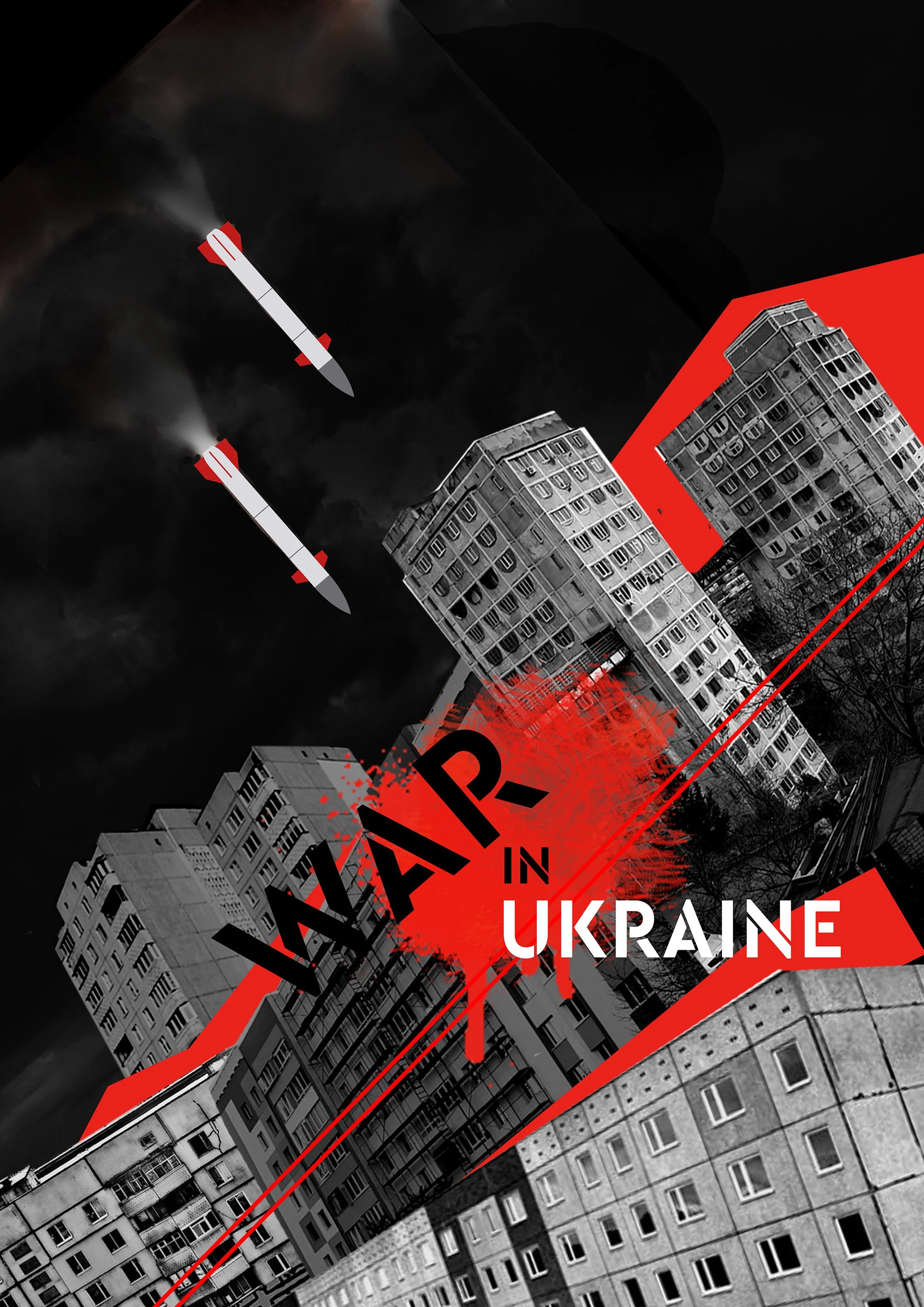
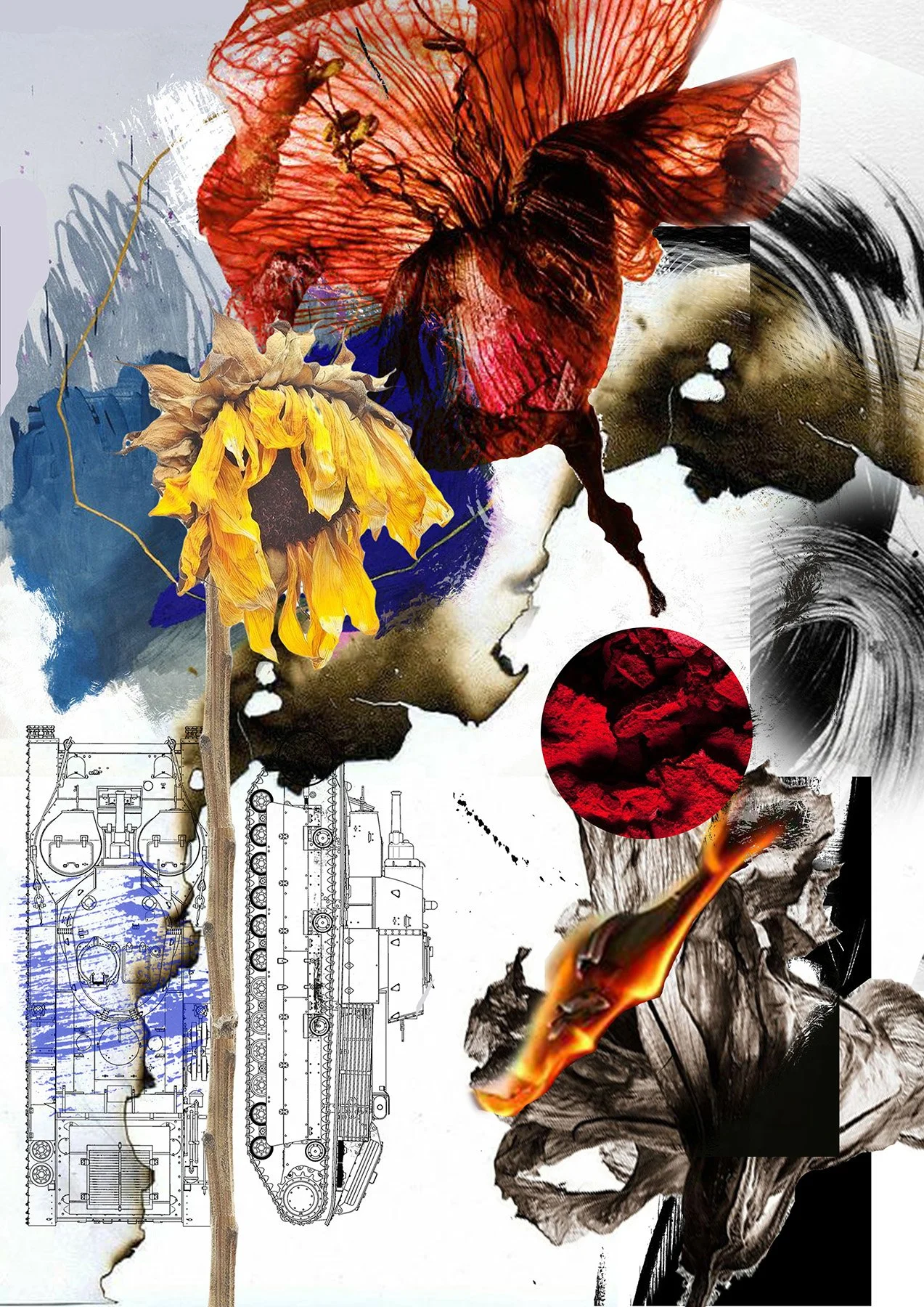
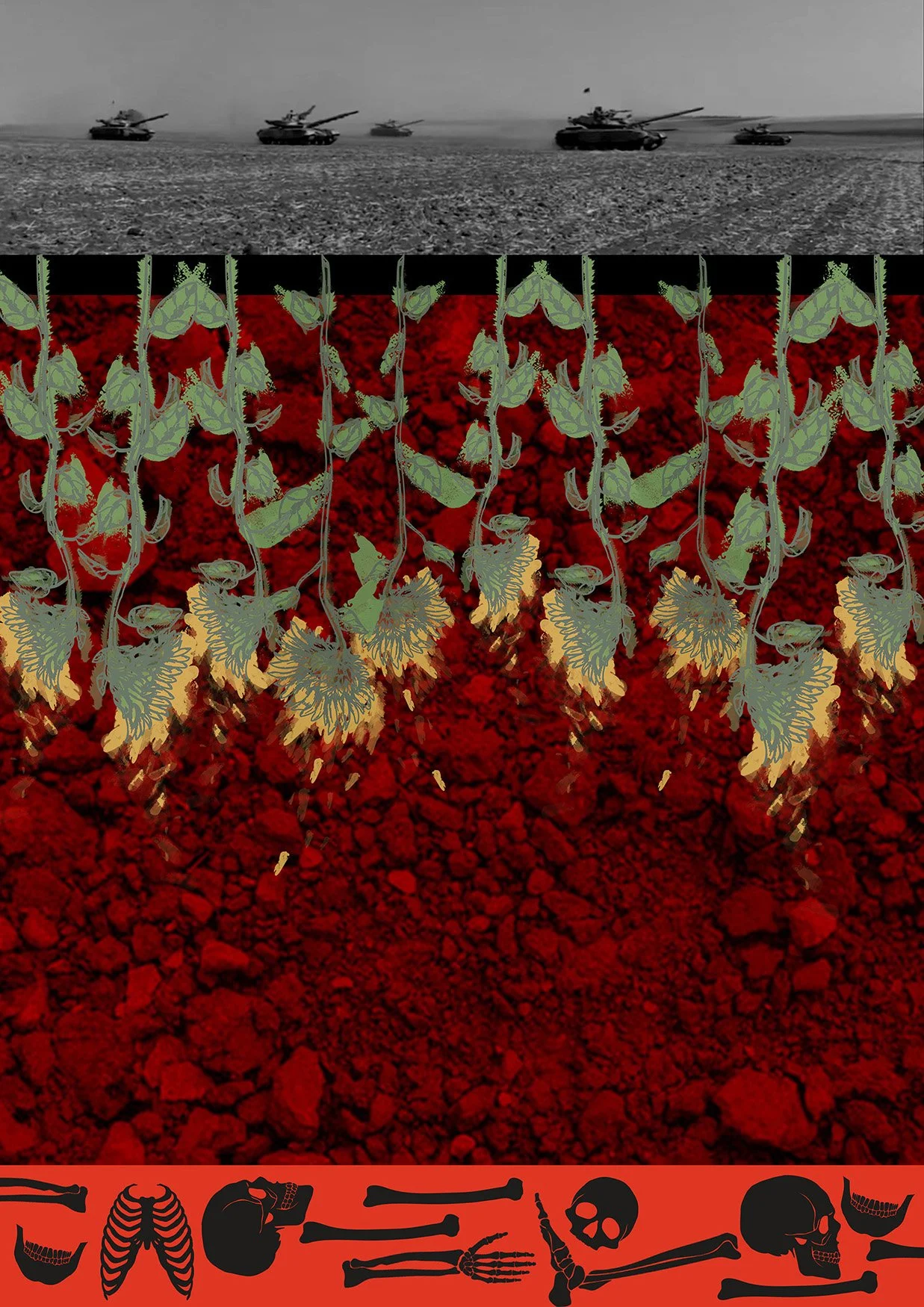
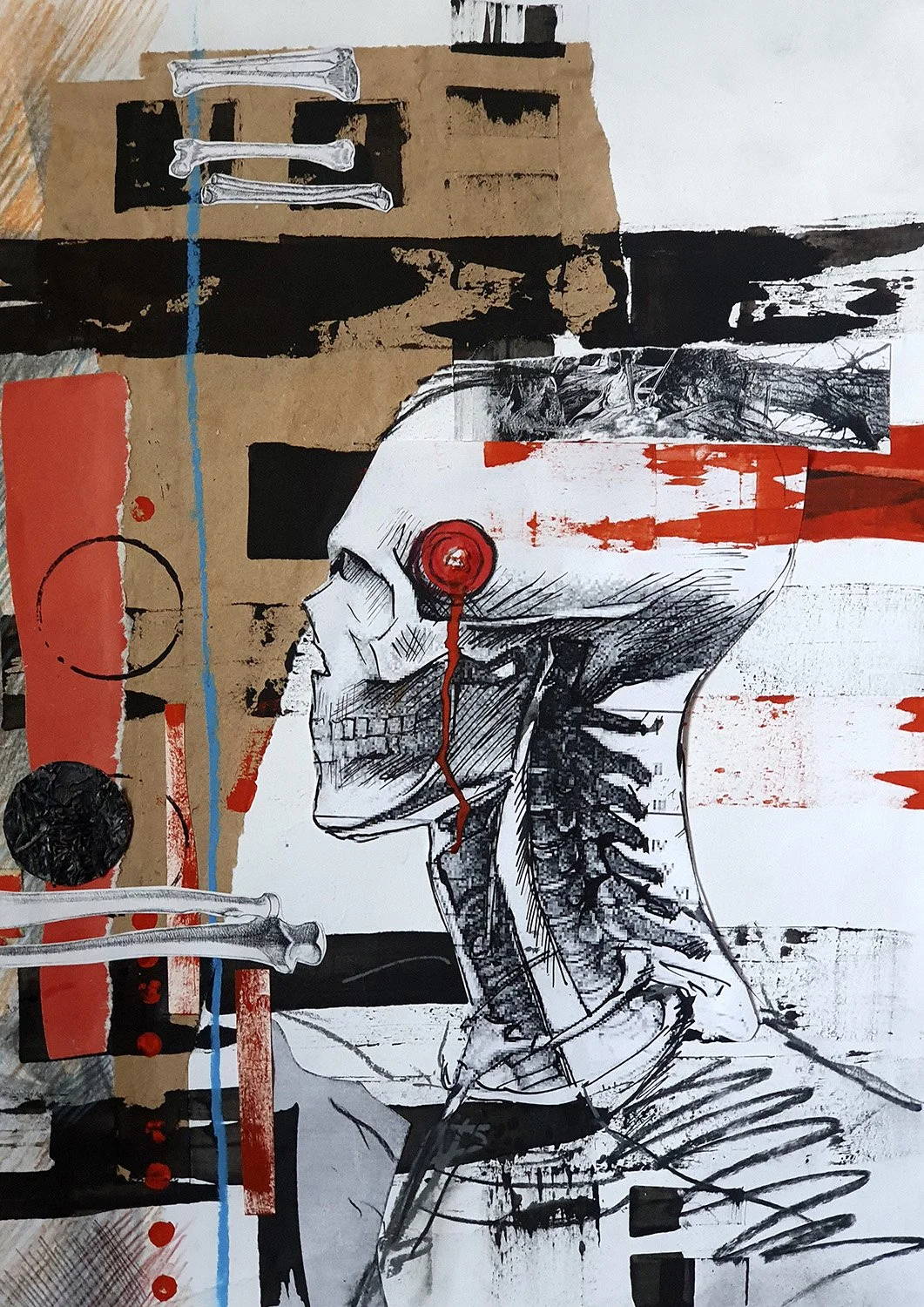
Мене то все надихнуло і я зробила там в бомбосховищі інсталяцію на тему втраченого мирного неба.
«Вільне небо» інсталяція
Я більше ставила акцент на те, що рівненські художники відгукнуться до участі у виставці NOTinterested і дадуть роботи, а я спеціально під цю виставку робити нову роботу фізично, ідейно, емоційно не маю змоги і часу.
Але це був той випадок коли створити нову творчу роботу мене надихнуло приміщення. За останні місяці я вже звикла до сховища, але спочатку мені самій туди спускатися було капець як страшно. Із війною я в сховища не ходила. І от усвідомлення того, що я по факту лізу під землю взагалі не з власної волі, і ідея зробити виставку в підвалі не через прекрасне життя, а через умови в яких всі опинились. А я багато думаю по життю… і тоді я теж думала наскільки я люблю свіже повітря, відчуття вітру, небо, хмари, природу….я гортала журнал і мені попалось дуже гарне фото на якому небо, земля, вдалині будинки….я дивилась на нього і думала як мені шкода що ми живемо у війні і це відчуття що це не закінчиться ніколи. І я вирішила що я точно вириваю цю сторінку і буду робити вільне небо і землю. Так це примітивна ідея. Плюс не комерційна робота. Але я хочу її зробити бо воно мені дороге. Я переміряла маленький коридор. Знайшла в шкафу нетканку, прикріпила її. Окремо зробила колажі з небом яке уламками падає відвідувачу на голову і попришивала зробивши примітивне небо. За тиждень до відкриття посадила пророслу пшеницю. Вона зійшла і на відкритті була гарненька щіточка зелені. Спочатку вона навіть росла, буяла, я її поливала але потім вона почала помирати.
В чому суть? В тому підвалі я думаю про Азовсталь. Чи знала я щось про нього до війни? Ні. Я уявлення не мала які це гігантські площі. Скільки в неволі може прожити живе створіння навіть якщо за ним хоч елементарно доглядати? Місяць. А в Азовсталі людям треба було вижити….і ти усвідомлюєш свою смерть. А є небо.
8. Чи не могли б ви розповісти іншим митцям за кордоном, як це - бути художником у час повітряних тривог, як війна впливає на вашу творчість та ваші погляди на майбутнє?
Я б сама хотіла щоб мені розказали. Як це? Як я маю ставити оцінки дівчинці якій 17 років, яка не ходить на пари бо в неї загинув тато на війні, вона постійно плаче, оформлює документи, а це не так просто. А інша студентка з Бахмута, де вони втратили все, а ще в інша дуже творча, але роботи не виходять, бо дуже дешеві матеріали і воно все тече, а на дорожчі грошей немає. І ми викладачами скидаємося грошима і допомагаємо тим дітям чим можемо. Дуже багато проблем.
9. Як мистецтво та війна співіснують?
Співіснують.
Завдяки мистецтву ти можеш абстрагуватися. Можеш робити роботи які ти хочеш. Жити у вигаданому світі. Це наша бульбашка і вона може бути такою, як ми собі придумаємо)!
От в мене є група там преважна більшість пише вірші. Так от тепер всі вірші дітей про війну.
Хочем, можем порушувати теми війни через якісь геть зовсім інші, глибші засоби. Наприклад от я вам скину про інсталяцію яку я робила минулого року на резиденції у Вінниці. Називається «Вишня»
Хто: Ярослава Гузь
Що: проєкт-роздум
Як: відеоінсталяція, художнє осмислення концепту, вечеря
резиденція в рамках фестивалю @sunterytoria
куратор: @glibzelgin
локація: @montazhcentre
«ВИШНЯ»
Про проєкт від автора:
Вінниця. червень 2025 р.
Я живу у будинку, де зупинився час.
Війна. Жінка з дітьми виїхали. Залишився чоловік і дитячі малюнки на стінах, а у цементі підлоги застиглі відбитки маленьких долонь.
В дворі - вишня.
«Цю вишню посадив мій дід. Їжте. Бо все одно нема кому обривати» - сказав він.
Я обриваю ці круглі та червоні ягоди, такі самі як у моїх дитячих спогадах про літо.
Вишні падають у тарілку.
Руки дітей розбирають їх, сміються.
Але цих дітей тут нема. Вони - десь. І чи повернуться?….
Вишня росте, навіть коли вже нікому не треба…
Це робота про спадковість, порожнечу, пам’ять і дитинство, якого вже немає.
Про любов. Про надію. Про мрії.
Хто я в цьому перформансі?
Я спостерігачка.
Я між минулим і дивним майбутнім.
Я та, хто бачить і обережно торкається історії чужої родини.
Я та, хто згадує історію своєї родини.
Я та, хто обриває вишні, бо інакше вони впадуть і згниють.
Я та, для кого теж садили дерева.
ЯК? (РЕАЛІЗАЦІЯ)
Відеоперформанс
4 відеоряди
1 гілка з вишнями і обривання ягід
2 тарілка вишні падають
3 дитячі ручки які з тарілки забирають вишні
4 дитячі обличчя крупним планом
НАВІЩО ТИ ЦЕ РОБИШ? (шоб що?)
Щоб зберегти мову поколінь, яка не завжди в словах.
Щоб хоч на мить дати чужим дітям доторкнутись до тепла і любові однієї незнайомої їм родини.
Щоб зупинитись у моменті, подумати про цінності тут і тепер. Бачити. Любити. Не відкладати.
10. Як ви дбаєте про себе? Чи можна взагалі залишатися морально стабільним в умовах війни? Що саме допомагає вам збирати себе докупи?
Мій вигаданий світ де я багато мистецтва) Ти приходиш в майстерню і все) Вмикаєш музику, палиш аромапалички….. кожного разу приношу якісь квіти, гілки, розказую що прочитала нове, подивилась, діти грають на гитарі. Жодних пліток. Ми читаєм вірші, діти пишуть вірші, розказують що написали, де стараються публікуватися, які роботи зробили. Ми знаходимося в світлій майстерні наповнюємо себе хоч тут частинками світла і добра, навіть якщо ми в своїх творах порушуємо тему війни.
11. Чи відчуваєте, що війна змінила вас? Яким чином? Чи здивувались ви самій собі (як ви тримались, залишалися сильними, знаходили натхнення в несподіваних джерелах тощо), у своїй країні, у своїх уявленнях про людяність, у своєму ставленні до світу? Що стало для вас прозрінням?
Так. Війна змінила всіх. Я наприклад дуже постаріла. Як жувачка в голові постійні думки куди вже гірше? Прозрінням стало те, що ніхто тобі не допоможе. І треба тримати рівновару в допомозі коли я в режимі ось цього рятівника. Бо тільки буду давати більше і ще більше все інша людина не відчуває берегів, а я не можу справитися і розіватися щоб все було по всіх фронтах ок. Людям в Україні об’єктивно стає ще важче, величезна корупція, бюрократія, як залізна завіса. Повітряна тривога, літає а діти як гралися в пісочниці так і граються для них це вже норма. Людей по місту не має. Людей в транспорті не має одні пенсіонери. В університетах величезні недобори. Всіх хлопців на навчання за кордон батьки відправляють – точно. А дівчата шукають як виїхати. Кожен сам в собі і виживає як може. Виходу не має ти виживаєш.
12. Що ви хочете, щоб світ знав про українців у цей момент часу? Про українських жінок?
Що вони справляється як можуть. Шукають радість в тому що ходять на пілатес, йогу, роблять манікюр. Поїхали в басейн, позагаряли, покупались – от і супер, день пройшов.
13. Які WOW-жінки вас надихають?
З того що я прочитала, мені близька історія і я розумію яка глибока ідея болю, щоб зберегти пам'ять і взагалі скільки проплакала, коли запускала свою меморіальну платформу МЕМОРІАЛ Гаяне Авакян.
Я ще до повномасштабного слідкувала за Татою Кеплер. Вона мені дуже красива, розумна, сильна. Мені подобається те, як вона включена у волонтерство, які сильні тексти пише. Я не розумію як вона постійно щось робить, шукає спонсорів, співпраці, розбирається у медичній допомозі і її не ламають ці болі від втрати і величезна несправедливість. Як вона відновлюється? Як постійно можна так багато проєктів вести паралельно? Як можна довіряти людям, владі? Як вона знаходить сили щось робити коли вона сама пише: «те не якісне, там вже вкрали, те не довезли, з тими не можем домовитися, «На щиті» зробила я, мама, друзі, а якийсь шматков подає це на реєстрацію торгової марки»… а я не така. Я багато боюся, часто плачу, віддаляюся, не контактую і уникаю людей.
14. Яке місце або заняття робить вас найщасливішою?
майстерня)))))))
пленер на природі)!!
15. Що ви зробите в першу чергу, коли Україна переможе? Про що ви мрієте для себе та своєї родини після закінчення війни? Відпочинете? Подорожуєте?
Я хочу спокою.
А не війна, перевірки документації, повно наказів, дикі ціни, а скільки людей без кінцівок у місті
16. Чим, на Вашу думку, росіяни як народ відрізняються від українців? Чи знали ми про ці відмінності до повномасштабного конфлікту? Чи були в стані заперечення?
Я коли їздила на відпочинки за кордон ще до повномасштабного вторгнення – то мене дивувала їхня хамська поведінка і наскільки вони голосні в громадських просторах.
17. Чи відчуваєте ви, що люди, які виїхали з України під час хвилі виїзду у 2022 році, або ті українці, які вже роками живуть за кордоном, чи мають вони якусь відповідальність перед батьківщиною?
Я думаю що ні. Але я знаю яка в них дірка в середині, як вони мучаться з Донецької області, ті які втратили все, ті всі міста які стерті. Нічого не залишилося. Я знаю яке глибоке відчуття вини в тих хто виїхав в перші дні війни сімями. Це все таке велике горе.
18. Де інші можуть знайти інформацію про вас/вашу діяльність? (посилання на вебсайт, сторінки в соцмережах тощо).
Інстаграм @slavahuz
Фейсбук @yaroslavahuz